The Resilient Home Reviews and Complaints 2026 USA: The Hidden Cost Of Doing Nothing
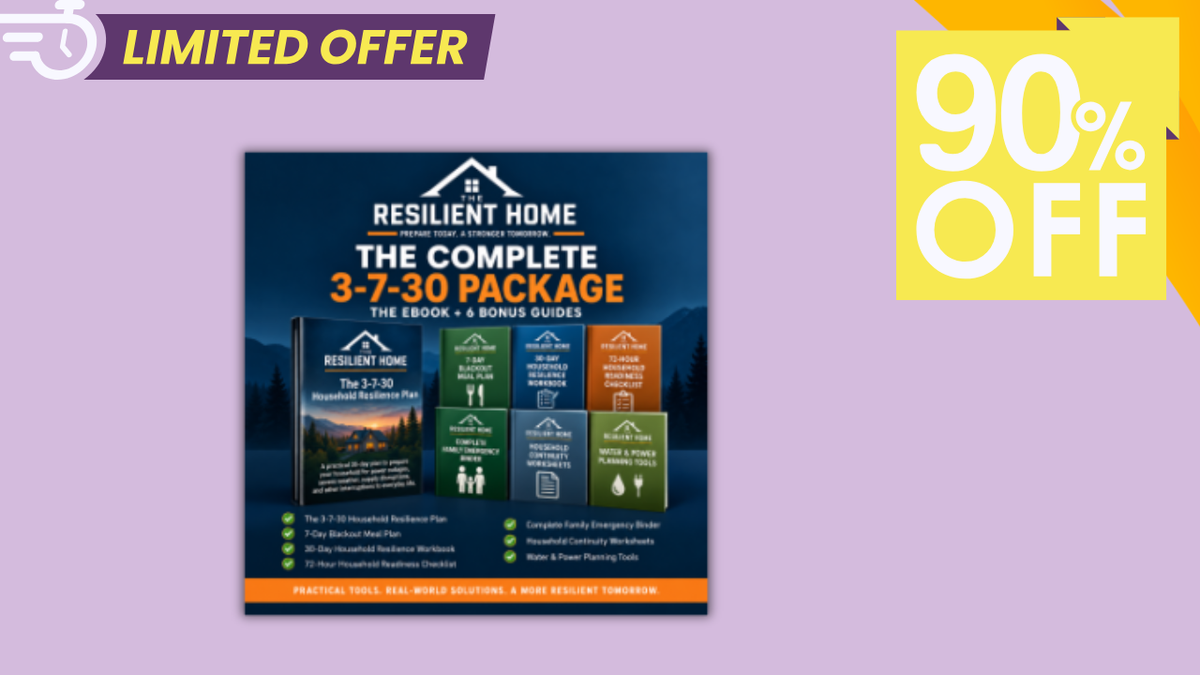
⭐ Readiness Goal: Build a practical 7-day household readiness plan
📝 Assessment Type: Personalized household readiness assessment
💵 Original Price: $149
💵 Usual Price: $49
💵 Current Deal: $49
⏰ Results Begin: After completing the readiness assessment
📍 Made For: USA households preparing for disruptions
🧘 Core Focus: Water, food, power, health, communication, and planning
✅ Who It’s For: Families wanting a clear preparation path
🔐 Refund: 60 Days. No questions asked.
🟢 Our Say: A structured household planning resource for practical readiness.
The Person Who Thinks Nothing Needs To Change
The hardest person to convince is not someone who ignores preparation.
It is someone who believes they already handled everything.
They have supplies.
They have food storage.
They have batteries.
They have flashlights.
They have emergency items sitting in their home.
When they look around, they feel prepared.
Their belief is simple.
“I already have enough.”
That thought feels safe.
It feels practical.
But it hides an important question.
Are supplies alone enough to create household readiness?
The answer changes how families prepare.
Because owning items and having a complete plan are two different things.
A family can have many useful items.
But without knowing how those items work together, gaps can remain.
The Daily Cost Of Not Having A Clear Readiness Plan
Many people believe emergency planning only matters during a crisis.
That is why they wait.
They think they will handle problems when they appear.
But waiting creates hidden costs.
Without a clear plan, families keep searching.
They look for new information.
They compare different products.
They save emergency checklists.
They watch more videos.
They collect more ideas.
But they still do not have a clear direction.
The problem is not that they do not care.
The problem is that they do not know what matters first.
A household readiness plan helps solve that confusion.
It helps families understand their current position.
It helps them identify areas that need attention.
It helps them create clear next steps.
The Money Cost Of Random Emergency Preparation
Many families spend money preparing.
That is a good step.
The problem begins when purchases happen without a system.
A person may buy:
- Extra batteries
- Water containers
- Food supplies
- Emergency tools
- Storage items
Each item can be useful.
But each item only solves one part of the problem.
A family may keep buying more supplies.
They may still miss important areas.
They may have food but no cooking plan.
They may have water but no treatment plan.
They may have phones but no backup communication method.
The question should not only be:
“What should I buy next?”
The better question is:
“What does my household actually need?”
The Resilient Home assessment focuses on this idea.
It helps families review different readiness areas before making decisions.
The Hidden Problem With Having Supplies Without A System
Imagine a family with stored food.
At first glance, they seem prepared.
But important questions remain.
How long will the food last?
How will they prepare meals?
Who knows where supplies are stored?
What happens after several days?
These questions reveal the difference between supplies and readiness.
Supplies solve individual problems.
A plan connects solutions.
A flashlight helps during darkness.
But a family also needs to know what happens next.
Food helps during shortages.
But families also need cooking options.
Water storage helps today.
But longer disruptions require more planning.
Why Weekly Delays Create Bigger Readiness Gaps
Every week without a plan creates another delay.
Families continue normal routines.
They assume services will always work.
They postpone decisions.
They avoid reviewing weak areas.
But unanswered questions remain.
How much water is available?
How will meals change?
How will family members communicate?
Where are important documents?
Who handles important tasks?
These questions do not disappear.
They stay unanswered until a problem forces attention.
That is when decisions become harder.
The Stress Cost Of Uncertainty
Many people think planning creates stress.
But uncertainty creates stress too.
Not knowing what to do creates pressure.
Searching for answers during a problem creates pressure.
A family without a plan must make many decisions quickly.
They must decide what matters most.
They must decide who handles each responsibility.
They must decide what action comes first.
A clear plan reduces confusion.
It gives families a starting point.
The Relationship Cost Inside A Household
Preparedness is not only about supplies.
It is also about people.
Families need communication.
They need shared expectations.
They need clear roles.
Without planning, family members may react differently.
One person may focus on food.
Another may focus on communication.
Someone else may not know their responsibility.
This creates confusion.
A household plan helps everyone understand their role.
It creates better coordination.
Why A 7-Day Household Readiness Plan Matters
A short disruption may feel manageable.
A longer disruption creates different challenges.
After several days, families need more answers.
They need stronger systems.
They need better planning.
A 7-day household readiness plan focuses on this gap.
It helps families look beyond the first few hours.
It reviews important areas such as:
- Water planning
- Food preparation
- Power needs
- Health supplies
- Communication methods
- Household planning
The goal is not fear.
The goal is clarity.
A clear plan helps families understand what they have.
It also helps them understand what needs improvement.
How The Resilient Home Assessment Helps Families Find Gaps
The Resilient Home starts with assessment.
The purpose is understanding the current readiness level.
The assessment reviews eight important areas.
Water
Families review storage, treatment, and water planning.
Food And Cooking
Families review food options and cooking methods.
Power And Climate
Families review backup power needs and temperature planning.
Health And Sanitation
Families review hygiene and sanitation needs.
Communication And Information
Families review backup communication options.
Mobility And Evacuation
Families review routes, transportation, and planning.
Home And Financial Continuity
Families review important documents and backup options.
Household Planning And Community
Families review roles, contacts, and household decisions.
The 3-7-30 Path To Better Household Readiness
The Resilient Home uses a staged approach.
It helps families avoid trying to solve everything at once.
3-Day Ready
The first stage focuses on the first 72 hours.
Families build their foundation.
They review basic needs.
They improve short-term readiness.
7-Day Ready
The second stage focuses on longer disruptions.
Families strengthen weak areas.
They create better systems.
They prepare for a full week.
30-Day Resilient
The final stage focuses on deeper planning.
Families build stronger habits.
They improve backup options.
They create more organized systems.
The Resilient Home Reviews 2026 USA: Final Thoughts
The biggest cost of doing nothing is not only missing supplies.
It is living with uncertainty.
It is spending money without direction.
It is collecting items without a system.
It is waiting for a problem before making decisions.
The Resilient Home Reviews and Complaints 2026 USA focuses on turning preparation into a clearer process.
It helps families understand their current readiness.
It helps them identify areas that need attention.
It helps them build a practical 7-day household readiness plan.
Start with the readiness assessment today and find the first area your household can improve.
Frequently Asked Questions
1. What is The Resilient Home Reviews and Complaints 2026 USA?
The Resilient Home Reviews and Complaints 2026 USA refers to a household readiness assessment and planning resource.
It helps families review important preparation areas.
It focuses on creating a clearer readiness path.
2. Are emergency supplies enough for household readiness?
Emergency supplies are useful.
But a complete readiness plan also connects supplies with actions.
Families need planning for water, food, power, health, and communication.
3. What is included in the 3-7-30 Household Resilience Plan?
The plan includes three stages:
- 3-Day Ready
- 7-Day Ready
- 30-Day Resilient
Each stage focuses on improving household readiness step by step.
4. How much does The Resilient Home cost?
The original price is $149.
The usual price is $49.
The current deal price is $49.
It is a one-time digital purchase.
5. Who is The Resilient Home designed for?
The Resilient Home is designed for families wanting a structured readiness plan.
It helps households organize preparation steps.
Related Hashtags
#TheResilientHome #TheResilientHomeReview #TheResilientHomeReviews2026 #TheResilientHomeAppReview2026 #TheResilientHomeBonus #TheResilientHomeProduct #TheResilientHomePrice #TheResilientHomeOffers #TheResilientHomeBonuses #TheResilientHomeBuy #TheResilientHomeWebsite #TheResilientHomeSite #TheResilientHomeApp #TheResilientHomeHonestReviews #TheResilientHomeLatestReviews #TheResilientHomeUsersExperience #TheResilientHomeUsersReview #TheResilientHomeDemo #TheResilientHomeTutorial #TheResilientHomePurchaseOnline #TheResilientHomeBuyit