Pattern Trader’s Atlas Reviews and Complaints 2026 USA: The Question Traders Ask Is Wrong
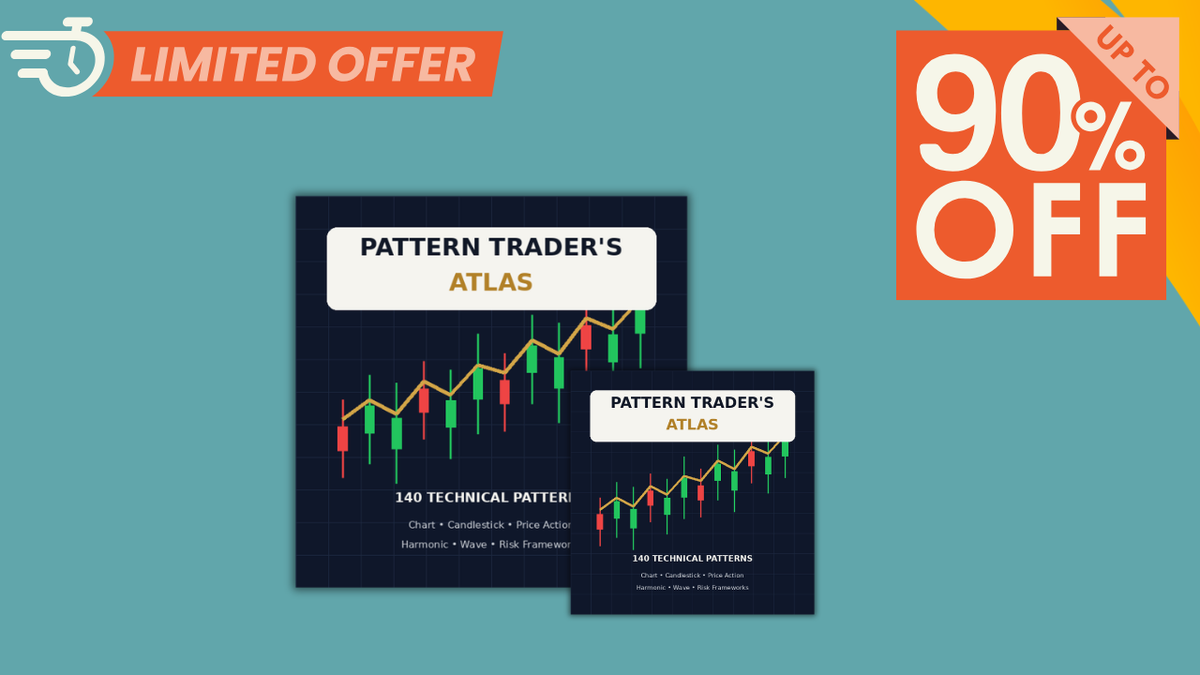
⭐ Ratings: 4.8/5 ⭐⭐⭐⭐⭐
📝 Reviews: Technical analysis guide covering 140 trading patterns
💵 Original Price: $149
💵 Usual Price: $67
💵 Current Deal: $67
⏰ Results Begin: Instant digital PDF access after purchase
📍 Made For: Traders learning technical analysis
🧘 Core Focus: Chart patterns, candlesticks, price action, and risk planning
✅ Who It’s For: Beginner and intermediate traders
🔐 Refund: 60 Days through ClickBank
🟢 Our Say? A structured chart study guide for traders who want a clearer learning process.
Most traders ask one question before buying a trading guide.
“Can this make me profitable?”
That question feels natural.
It also creates the wrong test.
A trading guide cannot control market movement.
It cannot control emotions.
It cannot control a trader’s decisions.
So judging Pattern Trader’s Atlas only by profits creates an impossible standard.
The better question is different.
Can Pattern Trader’s Atlas help traders study technical analysis with more structure?
That question changes the entire discussion.
Many complaints about trading education start with the wrong expectation.
People judge a learning tool like a prediction machine.
They expect certainty from something designed to improve understanding.
That is the main issue behind many Pattern Trader’s Atlas Reviews and Complaints 2026 USA searches.
The Most Skeptical Trader And The Beliefs They Hold
The hardest person to convince is not a beginner.
It is the experienced trader.
This trader has already tried many methods.
They have watched hundreds of videos.
They have downloaded free guides.
They have tested indicators.
They have purchased courses before.
They have seen big promises fail.
Their doubts sound reasonable.
They believe:
- Trading patterns are available online.
- Most trading products repeat basic ideas.
- Patterns can fail.
- A PDF cannot change results.
- Saving $67 feels safer.
These points deserve respect.
Many trading products do disappoint buyers.
Many beginners also expect unrealistic outcomes.
The problem starts when these ideas create the wrong conclusion.
The trader assumes:
“If information is free, paid structure has no value.”
That assumption needs closer examination.
Because information and organized learning are not the same thing.
A person can collect facts.
That does not mean they have a learning system.
What Does “Free Information Is Enough” Really Mean?
One common objection is simple.
“I can learn these patterns online for free.”
That statement is true.
The internet has thousands of trading resources.
You can find:
- Chart examples
- Pattern definitions
- Trading videos
- Technical analysis articles
- Strategy discussions
But ask another question.
Does access equal understanding?
A trader can read ten articles about triangles.
Each article may explain them differently.
One focuses on entries.
Another focuses on breakouts.
Another focuses on indicators.
Another ignores risk.
The trader gains information.
But the trader may still lack a process.
This difference matters.
Free information gives access.
Structure gives direction.
A collection of ideas is not always a complete learning method.
Featured Snippet: Is Pattern Trader’s Atlas Worth Buying?
Pattern Trader’s Atlas is a technical analysis learning guide. It teaches 140 trading patterns, including chart structures, candlestick setups, price action patterns, and advanced formations. It does not provide guaranteed profits or trading signals. Its main purpose is helping traders study patterns through structure, confirmation, and risk awareness.
What Evidence Would Change A Skeptic’s Mind?
A fair skeptic should define their standard.
What would prove a trading guide has value?
Would it require guaranteed profits?
If yes, almost every educational resource fails.
A business course cannot guarantee business success.
A coding course cannot guarantee a job.
A fitness program cannot guarantee results.
Education does not control outcomes.
Education improves preparation.
Would the skeptic require secret information?
If yes, basic learning would lose value.
Most skills come from understanding common principles better.
A better standard is practical value.
Does the guide provide:
- Clear explanations?
- Organized learning?
- Useful examples?
- Repeatable study methods?
- Realistic expectations?
These are measurable points.
They match what educational material can actually provide.
A guide should be judged by its purpose.
Not by promises it never made.
Is The Buyer Looking For A Prediction Machine?
This is the biggest question.
What does the buyer expect?
Do they expect Pattern Trader’s Atlas to predict tomorrow’s market?
If yes, disappointment is likely.
Markets do not work that way.
A chart pattern does not control price.
A candle does not control buyers.
A guide does not control emotions.
So why study patterns?
Because patterns help traders review situations.
They help traders ask better questions.
A trader can ask:
- Why did this pattern form?
- Where is confirmation?
- What is the risk?
- What invalidates the idea?
Those questions improve analysis.
They do not create certainty.
That difference changes everything.
Do Failed Patterns Mean Pattern Study Is Useless?
Another common belief is:
“Patterns fail, so they are useless.”
This idea sounds simple.
But it needs a closer look.
Does a tool become useless because it is not perfect?
A map can become outdated.
A forecast can be wrong.
A calculator can receive wrong inputs.
People still use these tools.
Why?
Because useful tools do not need perfection.
They need proper use.
Trading patterns work the same way.
A triangle is not a guarantee.
A hammer candle is not a guarantee.
A breakout is not automatic success.
The mistake is not studying patterns.
The mistake is expecting certainty from them.
Does The Skeptic Use The Same Rule Everywhere?
Consistency matters.
Ask one simple question.
Do you reject every tool that cannot guarantee results?
If yes, that standard affects many areas.
Books cannot guarantee knowledge.
Courses cannot guarantee careers.
Training cannot guarantee success.
Yet people still learn.
Why?
Because preparation improves decisions.
It does not control every result.
Trading education follows the same idea.
The question is not:
“Will this force success?”
The better question is:
“Will this improve the learning process?”
That is the fair test.
What Does Organization Actually Change?
Some skeptics accept education.
They still question the need for one organized guide.
They ask a fair question.
“Why should one PDF make any difference?”
The answer comes from consistency.
Imagine learning from five different sources.
One source teaches breakout entries.
Another teaches candlestick reversals.
Another focuses on harmonic patterns.
Another discusses indicators.
Another teaches risk control.
Each source may offer useful ideas.
But the trader must connect everything alone.
That creates another problem.
Different sources often use different rules.
One teacher wants immediate entries.
Another wants confirmation.
One uses tight invalidation levels.
Another gives vague exit advice.
The trader now owns plenty of information.
But they still need one process.
Pattern Trader’s Atlas tries to solve that gap.
It uses the same five questions across patterns.
Those questions cover:
- Recognition
- Confirmation
- Invalidation
- Target logic
- Common traps
That repeated framework is the real product.
The 140 patterns support that framework.
They do not replace it.
Does Knowing Pattern Names Mean Understanding Patterns?
Many traders say they already know chart patterns.
That statement needs a clearer definition.
What does “know” actually mean?
Does it mean recognizing the shape?
Or does it mean knowing how to evaluate the setup?
Those skills are very different.
A trader may recognize a wedge instantly.
But can they explain what confirms it?
Can they explain what invalidates it?
Can they define a realistic target?
Can they identify common traps?
If not, recognition alone does not finish the job.
Pattern recognition is only the first step.
That distinction matters when judging Pattern Trader’s Atlas.
The guide does not only name formations.
It adds a repeated decision process around those formations.
Pattern Trader’s Atlas 140 Trading Patterns Explained
Pattern Trader’s Atlas includes 140 technical analysis patterns.
The guide divides them into four main groups.
That structure makes the large collection easier to review.
40 Classical Chart Structures
The guide covers common chart formations.
Examples include:
- Head and shoulders
- Double tops
- Double bottoms
- Triangles
- Wedges
- Flags
- Pennants
- Rectangles
- Channels
- Broadening formations
These structures help traders study larger price movements.
They focus on how price forms over several candles.
50 Candlestick Patterns
The guide also covers 50 candlestick patterns.
Examples include:
- Doji families
- Hammer candles
- Engulfing patterns
- Harami patterns
- Morning stars
- Evening stars
- Three soldiers
- Three crows
These patterns focus on shorter price behavior.
But one candle should never decide everything.
Location still matters.
Trend still matters.
Confirmation still matters.
30 Price Action And Gap Structures
The guide includes 30 price action patterns.
Examples include:
- Inside bars
- Outside bars
- Pin bars
- False breaks
- Break and retest
- 1-2-3 reversals
- NR4 patterns
- NR7 patterns
- Gap structures
These setups focus on actual price reactions.
They help traders study market behavior without relying only on names.
20 Advanced Trading Structures
The advanced section covers 20 formations.
Examples include:
- AB=CD
- Gartley
- Butterfly
- Bat
- Crab
- Three Drives
- Wave structures
- Wyckoff Spring
- Wyckoff Upthrust
These setups look more complex.
But complexity does not remove risk.
Advanced patterns still need confirmation and invalidation.
Is More Pattern Knowledge Always Better?
Another assumption deserves attention.
Some traders think more patterns must create better trading.
That is not always true.
Knowing 140 patterns does not guarantee better decisions.
A trader could memorize every page.
They could still enter too early.
They could still ignore risk.
They could still chase price.
They could still trade emotionally.
So the pattern count needs context.
The guide becomes useful when traders apply the same questions repeatedly.
That is why the framework matters more than memorization.
The real goal is not spotting every possible pattern.
The goal is studying setups with a consistent process.
Why Confirmation Matters In Pattern Trading
Many trading mistakes begin with early entries.
A trader sees a familiar shape.
They act before the market confirms anything.
For example, a triangle may look complete.
Price may still remain inside the structure.
The trader enters anyway.
Then price moves the opposite way.
The trader blames the pattern.
But the pattern was never confirmed.
Confirmation creates a simple pause.
It asks the market to show more evidence.
That does not guarantee success.
It can reduce rushed decisions.
Pattern Trader’s Atlas places confirmation inside its core framework.
That makes it more than a pattern dictionary.
Why Invalidation Matters Even More
Many traders love discussing entries.
Far fewer discuss failure.
That creates a serious gap.
Every setup needs one simple question.
“What proves this idea wrong?”
That answer defines invalidation.
Without invalidation, traders often change their thinking mid-trade.
Price moves against them.
They wait.
Price moves further.
They hope.
Soon, the trade becomes emotional.
A planned idea turns into a personal argument.
Pattern Trader’s Atlas treats invalidation as a core step.
That is important.
A trader needs to know when the original idea fails.
Losses can still happen.
But the plan becomes clearer.
Why Target Logic Matters For Realistic Trading
Entries receive most attention.
Targets often receive less.
That can create unrealistic expectations.
A trader sees a breakout.
They assume price will keep running.
But nearby resistance may limit the move.
Previous highs may matter.
Volatility may matter.
Market structure may matter.
Target logic helps connect expectations with the chart.
Pattern Trader’s Atlas includes this step in its framework.
That makes the study process more complete.
Why Common Trading Traps Deserve Attention
Textbook charts often look perfect.
Real charts rarely look that clean.
That difference creates mistakes.
A trader may force lines onto weak setups.
They may enter before confirmation.
They may ignore low liquidity.
They may trade during major events.
They may become overconfident after several wins.
Pattern Trader’s Atlas highlights these common traps.
That adds useful context.
The guide does not pretend markets behave like clean diagrams.
What Do Pattern Trader’s Atlas Complaints Really Mean?
Complaints should always be taken seriously.
But they also need context.
Ask what the buyer expected before complaining.
Did they expect guaranteed profits?
Did they expect personal signals?
Did they expect automatic trading?
Did they expect instant success?
Those expectations do not match the product.
Pattern Trader’s Atlas is educational material.
It does not promise guaranteed returns.
It does not provide personalized trade calls.
It does not replace experience.
A fair Pattern Trader’s Atlas review should judge the actual offer.
The correct question is simple.
Does the guide deliver organized pattern education?
That standard matches what buyers receive.
Pattern Trader’s Atlas Price: What Does $67 Buy?
The current listed price is $67.
The original listed price is $149.
The usual listed price is also $67.
The payment is one-time.
The product comes as a digital PDF.
The manual contains 159 pages.
It covers 140 technical analysis patterns.
The guide also includes extra study tools.
These include:
- Pattern quality scorecard
- Trade-plan worksheet
- Three-page pattern journal
- Risk framework
- Confirmation framework
That is what the $67 purchase represents.
The price should be judged against those features.
Is Pattern Trader’s Atlas Worth It?
The answer depends on the trader.
A beginner may value the organized reference.
An intermediate trader may value the repeated framework.
A visual learner may value illustrated pattern pages.
A trader with scattered notes may value one resource.
But another trader may not need it.
Someone with a strong study system may gain little.
Someone with clear rules may already have enough structure.
That is why “worth it” cannot mean one thing for everyone.
The better question is about fit.
Does the guide solve a real learning problem?
Who Should Consider Pattern Trader’s Atlas?
Pattern Trader’s Atlas may suit traders who want:
- One organized technical analysis reference
- A repeatable pattern study process
- Clearer confirmation questions
- Better invalidation awareness
- A structured pattern journal
- Visual pattern examples
It may also suit beginners building basic knowledge.
Intermediate traders may use it as a reference.
The guide works best for active study.
It should not sit unread in a folder.
Who May Not Need Pattern Trader’s Atlas?
Some traders may already have enough resources.
They may already use:
- Clear entry rules
- Defined invalidation levels
- Consistent risk management
- A trading journal
- A strong chart review process
Those traders may not need another guide.
Buying unnecessary education can create more clutter.
A useful product must solve a real problem.
That applies here too.
Is Pattern Trader’s Atlas A Trading Signal Service?
No.
Pattern Trader’s Atlas does not provide personal trading signals.
It does not tell buyers exactly what to trade.
It does not provide guaranteed trade recommendations.
It does not offer personalized investment advice.
The product focuses on technical analysis education.
That distinction should stay clear before buying.
Anyone seeking signals is looking for a different product.
Can Pattern Trader’s Atlas Guarantee Profits?
No.
Pattern Trader’s Atlas cannot guarantee profits.
No honest technical analysis guide can make that promise.
Markets always involve uncertainty.
Patterns can fail.
Strong setups can fail.
Experienced traders can lose money.
The guide can only support study.
The trader remains responsible for every decision.
That trust point matters.
A credible review should never turn education into a profit promise.
Is Pattern Trader’s Atlas Good For Beginners?
Beginners can use the guide for structured pattern study.
The broad pattern library may help them build familiarity.
However, beginners should not rush into real-money trading.
Pattern recognition is only one skill.
Risk control still matters.
Practice still matters.
Experience still matters.
The guide can support those early learning steps.
It cannot replace them.
Pattern Trader’s Atlas Review 2026: The Strongest Feature
The strongest feature is not the number 140.
It is the repeated five-part framework.
Recognition explains what traders should identify.
Confirmation explains what should happen next.
Invalidation explains when the setup fails.
Target logic helps organize expectations.
Common traps show where mistakes often happen.
That structure gives the guide consistency.
It also makes different patterns easier to compare.
Pattern Trader’s Atlas Review 2026: The Main Limitation
The biggest limitation is simple.
The guide still depends on the reader.
Buying a PDF does not create skill.
Reading one page does not create discipline.
Memorizing patterns does not create experience.
The trader must still practice.
They must still review charts.
They must still learn from mistakes.
They must still control risk.
That limitation should shape expectations before buying.
Pattern Trader’s Atlas Reviews and Complaints 2026 USA: Final Verdict
The wrong question keeps this debate stuck.
“Will Pattern Trader’s Atlas make me profitable?”
That question asks an educational guide to control the market.
It cannot.
The better question is much simpler.
Does the guide organize technical analysis in a useful way?
Pattern Trader’s Atlas offers 159 pages and 140 patterns.
It uses recognition, confirmation, invalidation, targets, and common traps.
It does not promise signals.
It does not guarantee returns.
It does not replace practice.
For traders with a strong system, another guide may add little.
For scattered learners, the structure may solve a real problem.
That is the decision that actually matters.
Compare the Pattern Trader’s Atlas framework with your current study process.
Then decide whether the $67 guide fills a gap you truly have.
Frequently Asked Questions
1. What is Pattern Trader’s Atlas?
Pattern Trader’s Atlas is a technical analysis learning guide.
It covers 140 trading patterns across four main categories.
The guide also focuses on confirmation, invalidation, targets, and risk.
2. How much does Pattern Trader’s Atlas cost?
The current listed price is $67.
The original listed price is $149.
The purchase uses a one-time payment with digital PDF delivery.
3. Does Pattern Trader’s Atlas provide trading signals?
No.
Pattern Trader’s Atlas is an educational guide.
It does not provide personal signals or guaranteed trade recommendations.
4. Is Pattern Trader’s Atlas suitable for beginners?
Yes, beginners can use it for structured pattern study.
However, they still need practice and proper risk control.
5. Can Pattern Trader’s Atlas guarantee trading profits?
No.
No trading guide can guarantee profits.
Markets always involve risk, uncertainty, and possible financial loss.
Related Hastags
#PatternTradersAtlas #PatternTradersAtlasReview #PatternTradersAtlasReviews2026 #PatternTradersAtlasAppReview2026 #PatternTradersAtlasBonus #PatternTradersAtlasProduct #PatternTradersAtlasPrice #PatternTradersAtlasOffers #PatternTradersAtlasBonuses #PatternTradersAtlasBuy #PatternTradersAtlasWebsite #PatternTradersAtlasSite #PatternTradersAtlasApp #PatternTradersAtlasHonestReviews #PatternTradersAtlasLatestReviews #PatternTradersAtlasUsersExperience #PatternTradersAtlasUsersReview #PatternTradersAtlasDemo #PatternTradersAtlasTutorial #PatternTradersAtlasPurchaseOnline #PatternTradersAtlasBuyit