“I Work Nights and Struggled With Swelling… Lymph Flow Changed Everything?” 7 Brutal Truths Behind the 2026 USA Reviews Nobody Warns You About
⭐ Editorial Rating: 4.1/5 ⭐⭐⭐⭐☆
📝 Reviews: Positive testimonials appear on the sales page, but no independently verified total was confirmed
💵 Displayed Regular Price: $158 per bottle
💵 Displayed Current Deal: From $49 per bottle—usually tied to the largest package
📦 Formula: 13 herbal extracts in a 600 mg proprietary blend
⏰ Results Begin: No scientifically guaranteed timeline; individual experiences can differ wildly
📍 Made In: USA, according to the product website
🧘♀️ Core Focus: Supporting normal lymphatic function, circulation and everyday fluid balance
✅ Who It’s For: Adults who prefer alcohol-free herbal drops and have realistic expectations
🔐 Refund: Advertised 60-day money-back guarantee, subject to the complete policy
🟢 Our Say? Potentially useful for the right buyer. Not magic, not automatically a scam—and certainly not an excuse to ignore unexplained swelling.
Let’s begin with the nonsense.
Not ordinary nonsense, either. Wellness nonsense arrives polished now. It has soft background music, smiling women in spotless kitchens, animated green arrows traveling through cartoon bodies—and usually a countdown clock screaming that only seven bottles remain on planet Earth.
Very scientific.
You know the type of headline:
“I worked nights, struggled with swelling, then one tiny habit changed everything.”
Click.
Of course you click. The sentence leaves a hole in the story and the human brain wants to fill it immediately. What changed? How quickly? Was it difficult? Can I order it before my break ends?
That is not accidental.
Bad advice spreads because it is emotionally tidy. It gives one villain, one solution and one glorious ending. Real life is not nearly so cooperative. Real life involves night-shift schedules, vending-machine dinners, compression socks, forgotten water bottles, hormonal changes, medications, long periods of standing—and a swollen ankle that may have nothing whatsoever to do with a trendy “detox.”
Messy.
Less clickable.
Much more important.
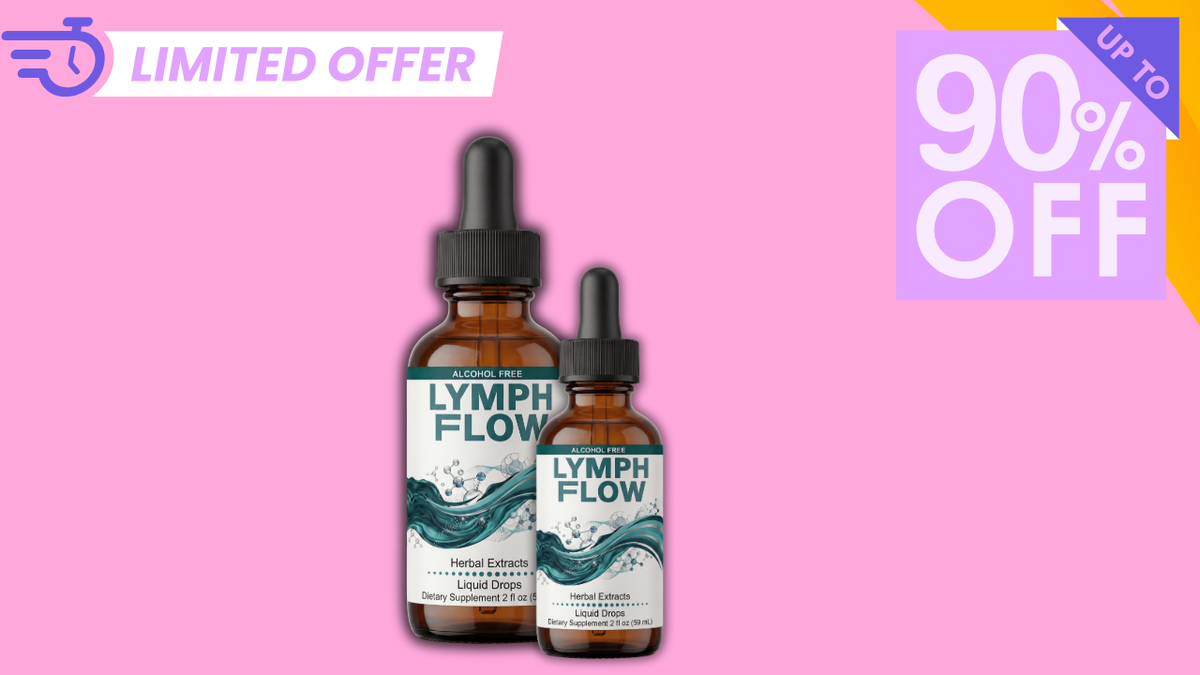
Lymph Flow is promoted as an alcohol-free liquid dietary supplement made in the USA. According to the product website, each two-dropper serving provides a 600 mg proprietary blend containing 13 botanical extracts and bio-active compounds. Highlighted ingredients include Boswellia serrata, curcumin, horse chestnut, gotu kola, ginger extract and quercetin phytosome. The brand positions it as nutritional support for normal lymphatic function, healthy circulation and fluid balance, not as treatment for a medical condition.
That is the sensible product description.
Then the marketing fireworks begin.
Testimonials talk about heavy legs, swollen ankles, puffiness and bloating. Urgency language warns of limited stock. A large discount appears. The sales page even contains an “FDA Approved” heading—yet farther down it also includes the standard statement that its claims lymph-flows have not been evaluated by the FDA.
Tiny contradiction. Rather important.
The FDA’s own May 4, 2026 consumer guidance is unambiguous: dietary supplements are not approved by the FDA for safety and effectiveness before sale, and facility registration does not equal product approval.
So, yes, Lymph Flow could be a real supplement.
And yes, some of the advice wrapped around products like this is still absolute rubbish.
Both things can be true.
Here are the worst pieces of advice night workers hear—and the blunt truth that works better.
Terrible Advice #1: “Night-Shift Swelling Is Just Your Lymph Getting Clogged—Take a Detox Supplement”
Ah, the word clogged.
Marketers love it because everybody understands a clogged pipe. Something is stuck, pressure builds, then a special liquid arrives and—whoosh—everything flows beautifully again.
Unfortunately, you are not a bathroom sink.
The lymphatic system is real, obviously. Lymph is fluid that collects from body tissues and eventually returns to the bloodstream. The lymphatic system also has immune-related functions and helps manage excess tissue fluid. Blockages and lymphatic disorders can cause swelling, but that does not mean every puffy face, tight sock mark or heavy leg is evidence of a “blocked lymph system.”
Swelling can have many causes.
Long periods of standing may contribute. So can prolonged sitting, heat, salty meals, certain medications, hormonal changes, injuries and various medical conditions. A person who works overnight may encounter several of those factors during one shift without possessing a mysterious warehouse of trapped toxins.
Picture the 3:17 a.m. hospital break room.
Fluorescent lights humming. Cold fries in a paper carton. A giant coffee. You have spent six hours mostly standing, then two hours charting while seated. Your shoes feel tighter than they did at 7 p.m.
That experience is real.
But jumping directly from “my shoes feel tight” to “my lymph is clogged and needs herbal drainage” is not medical reasoning. It is an advertisement completing the diagnosis before a professional has asked a single question.
Why this advice is flawed
It compresses dozens of possible explanations into one marketable story.
It also turns the vague term “toxins” into a cartoon villain. Ask exactly which toxin is involved, how it was measured and what evidence shows the supplement removes it—the conversation usually becomes foggy very quickly.
“Toxins” may mean environmental lymph-flows contaminants in one context, metabolic waste in another, and absolutely nothing measurable in the sales copy sitting in front of you.
The body already has systems for processing and eliminating waste. The liver, kidneys, digestive system, lungs, skin and lymphatic system all have distinct roles. None of this means lifestyle does not matter, or that no supplement could ever provide nutritional support.
It means “detox” is not a diagnosis.
What happens when people believe it
They may ignore the actual cause of swelling.
A worker might keep standing through painful, one-sided swelling because a testimonial said her own heavy leg became lighter after several weeks. Another person might dismiss redness or warmth as “toxins leaving.” Somebody with breathing difficulty may waste time reading affiliate articles instead of getting urgent help.
That is where silly marketing stops being merely silly.
Persistent, sudden, painful, worsening or one-sided swelling should be medically evaluated, especially when accompanied by chest discomfort, shortness of breath, redness, warmth or fever.
A herbal dropper cannot rule out a blood clot, infection, heart problem, kidney issue, medication reaction or another medical cause.
The truth that actually works
Begin with the symptom—not the supplement.
Ask:
- Is the swelling new?
- Is it in one limb or both?
- Is it painful?
- Is the skin warm or red?
- Does it improve after rest?
- Does it repeatedly occur after long shifts?
- Did it begin after a new medication?
- Are there breathing symptoms or chest discomfort?
For mild, temporary puffiness related to everyday habits, sensible changes may include movement breaks, appropriate hydration, balanced meals and following professional advice. Cleveland Clinic’s medically reviewed January 2026 lymph overview recommends regular exercise, hydration, nutritious food and limiting excessive salt as general ways to support lymphatic health and fluid balance.
Lymph Flow might fit into a broader wellness routine for a suitable adult.
It should not become your self-diagnosis.
That is the difference between using a supplement and letting a supplement advertisement use you.
Terrible Advice #2: “Just Catch Up on Sleep During the Weekend—Your Night-Shift Body Will Be Fine”
Fantastic advice.
Why didn’t millions of nurses, security guards, drivers, warehouse workers, hotel employees and emergency staff think of simply sleeping more on Sunday?
Problem solved. Nobel Prize incoming.
Night work is not merely daytime work performed under darker skies. It collides with the body’s circadian rhythm—the roughly 24-hour internal timing system that helps regulate sleep and wakefulness.
People working at night can have difficulty obtaining uninterrupted, high-quality sleep during the daytime. The National Heart, Lung, and Blood Institute describes shift work disorder as a condition that can involve insomnia, extreme tiredness and sleepiness during night work. Its guidance for shift workers includes keeping overlapping sleep schedules on working and nonworking days where possible, avoiding repeated switches between day and night schedules, and considering a short nap before a shift.
So, “sleep more later” is not entirely useless.
It is just insultingly incomplete.
Why it fails in real life
Daytime sleep has enemies.
Sunlight sneaks around curtains. Delivery drivers ring the bell. Neighbors discover power tools. Family members start behaving as though 11 a.m. is somehow an acceptable time to be awake.
Then there is caffeine.
A cup at 1 a.m. feels necessary. Another at 4 a.m. feels like emergency equipment. By 9 a.m., the body is exhausted but still receiving mixed chemical instructions.
Night workers may also change meal timing, physical activity and social schedules. Someone arrives home tired enough to hear their own pulse, eats quickly, scrolls for twenty minutes—which becomes ninety—and finally lies down while the rest of the neighborhood begins its day.
It is not laziness.
It is an environment fighting the schedule.
What this has to do with swelling
Poor or irregular sleep does not mean every swollen ankle is caused by the night shift. That would be another overly neat conclusion.
But inadequate recovery can change behavior around the clock.
You may rely more heavily on salty convenience meals. Move less outside work. Forget water during the shift, then drink a huge amount just before sleeping. Spend twelve hours standing, followed by six hours almost motionless in bed.
The entire routine matters.
A supplement cannot single-handedly repair it. Not Lymph Flow. Not a gummy shaped like a moon. Not a powdered drink called something dramatic like “Midnight Cellular Reset.”
The truth that works better
Build a night-shift system rather than lymph-flows collecting isolated hacks.
Try to keep the sleep window as consistent as practical. Make the room cool, quiet and genuinely dark—not “the curtains are beige, so probably dark enough.”
Use an eye mask when needed.
Silence notifications.
Consider the timing of caffeine rather than treating coffee like intravenous morale. Establish a wind-down routine, even when that routine occurs at 8:30 in the morning and feels socially backwards.
The NHLBI also recommends regular meal timing for shift workers and a cool, quiet sleep environment.
Movement during the shift matters too.
A five-minute walk is not a mystical lymph ceremony. It is simply movement. Calf muscles contract, joints move, posture changes and you stop remaining frozen in one position like a tired department-store mannequin.
Lymph Flow may support a routine.
It cannot become the routine.
If somebody tells you one dropper replaces sleep structure, movement and nutrition, that person is not providing wellness guidance. They are auditioning for an infomercial.
Terrible Advice #3: “More Drops Means Faster Drainage—Double the Serving on Bad Days”
No.
Just… no.
This is the supplement equivalent of deciding that, because one cup of coffee improves alertness, eight cups will turn you into a laser-guided productivity machine.
At some point, the plan changes category.
The product website directs adults to shake the bottle and mix two droppers—one serving—into water or juice once daily, or use it as directed by a healthcare professional. Each serving reportedly contains 600 mg of the proprietary botanical blend.
That number is the recommended product serving.
It is not the opening bid in a negotiation.
Why people do this anyway
Impatience.
They paid money, the shift was awful, their socks left marks and the internet said something noticeable might happen. When nothing dramatic occurs after several days, the brain begins bargaining:
Maybe I need more.
Maybe my body is especially “toxic.”
Maybe two droppers are for regular people and I am a four-dropper emergency.
This logic feels active. Decisive. Heroic, even.
It is still bad logic.
The proprietary-blend issue
Lymph Flow lists a 600 mg proprietary blend rather than clearly displaying the individual dose of each highlighted botanical in the main sales copy.
That means a shopper can see the total amount but may not know precisely how many milligrams of Boswellia, horse chestnut, curcumin or gotu kola are present in each serving.
This does not prove the formula is weak.
It does mean that doubling the serving increases exposure to multiple ingredients without the buyer necessarily understanding the amount of each one.
Imagine a punch bowl containing thirteen ingredients.
You know the entire bowl holds one gallon. You do not know how much rum is in it.
“Have twice as much and see what happens” is not sophisticated analysis.
Natural does not cancel dosage
Herbal ingredients contain biologically active compounds. That is part of why people take them.
It is also why dose, medical history lymph-flows and medication use matter.
The NIH’s National Center for Complementary and Integrative Health notes that supplements can increase medication effects, reduce them or interact in harmful ways. It recommends discussing all supplements and medications with healthcare professionals.
An alcohol-free product can still interact with medication.
A USA-made product can still be inappropriate for a particular person.
A pretty amber bottle can still contain ingredients that deserve respect.
The truth that actually works
Follow the labeled serving.
Use a consistent routine rather than taking random amounts according to how swollen or frustrated you feel that afternoon.
Do not “catch up” by doubling tomorrow’s amount because you forgot today. Unless the label or a qualified professional specifically tells you otherwise, a missed serving is not a debt collector.
And monitor your response.
If you notice a new symptom after beginning the product, stop treating the bottle like an innocent bystander. Consider whether it could be related and obtain professional advice when appropriate.
The product page itself advises people who are pregnant, nursing, taking medication or managing a medical condition to consult a physician before use. It also says the formula contains soy.
Read that part.
Not only the gold discount badge.
Terrible Advice #4: “The Reviews Are Amazing, So Lymph Flow Must Work for Everyone”
Stars.
Glowing testimonials.
A woman from Texas feels lighter. A man in Florida is already on his third bottle. Another customer says she plans to continue.
The official-looking page includes named testimonials describing improvements in heavy legs, swollen ankles, puffiness and bloating. What it does not clearly provide in the material reviewed is an independent platform, a total rating distribution or an auditable explanation of how those customer experiences were verified.
Maybe those experiences are genuine.
Maybe they reflect exactly what those customers felt.
That still would not prove the same outcome for everybody.
Why testimonials hit so hard
Facts enter through the front door.
Stories climb through the window and sit on the couch before you notice.
“I noticed a change” is emotionally easier to absorb than a discussion about dosage, extract standardization, confounding factors and placebo effects.
A night worker reading at 4:40 a.m. does not want a research methodology lecture. She wants another night worker to say:
“I was exactly like you. Then this worked.”
Understandable.
But likeness is often manufactured.
The advertisement knows your age range, work problem, symptom and emotional frustration. The testimonial may feel like a mirror because it was selected to function as one.
Reviews are not useless
They can be extremely helpful for practical questions:
- Does the product taste bitter?
- Does the bottle leak?
- Is the dropper clearly marked?
- How long did shipping take?
- Did customer service answer?
- Was a refund processed?
- Did the buyer find the routine convenient?
- Were the results subtle, dramatic or nonexistent?
That is valuable information.
But a testimonial is not a clinical trial, and a five-star average is not proof of a medical effect.
The 2026 review reality
The FTC’s Consumer Reviews and Testimonials Rule has been in effect since October 21, 2024. It targets deceptive practices involving fake or false reviews and allows civil penalties for knowing violations. FTC guidance also makes clear that a testimonial is an advertising message consumers are likely to understand as reflecting someone’s real experience with a product.
In December 2025, the FTC warned businesses about potential violations involving fake reviews, misrepresented product use and incentives tied to positive sentiment.
That matters here.
An affiliate cannot truthfully publish:
“I work nights and Lymph Flow changed everything”
unless the writer actually works nights, genuinely used the product and accurately describes the experience.
Adding “Reviews and Complaints 2026 USA” to the title does not magically convert fiction into a review.
The consequences of believing perfect reviews
You borrow somebody else’s expectations.
A testimonial mentions feeling different after a certain period, so you create a deadline. Your result feels disappointing even when it may simply be different.
You may also ignore neutral feedback.
Three-star reviews are often more useful than five-star fireworks because they contain texture:
“The product was easy to take, but I disliked the taste.”
“I felt a small difference, although not enough to reorder.”
“Shipping was fine. Results were unclear.”
That is how real purchasing decisions sound.
No choir.
No transformation montage.
The truth that works
Use reviews as one input.
Check whether they exist on independent platforms. Look for mixed ratings, detailed timelines and disclosures of incentives or affiliate relationships.
Read complaints about shipping, billing and refunds separately from complaints about effectiveness. A customer angry about a late package is reviewing fulfillment, not the botanical blend.
And never confuse popularity with suitability.
Ten thousand strangers cannot tell you whether a specific herb interacts with your medication.
Five glowing stars cannot diagnose swelling.
Terrible Advice #5: “It’s Made in an FDA-Registered USA Facility, So It Is FDA-Approved and Proven Safe”
This one needs a spotlight.
The product page says Lymph Flow is manufactured in the United States in an FDA-registered facility and refers to GMP guidelines. It also displays a section labeled “FDA Approved.” Farther down, however, the same page says the product’s statements have not been evaluated by the FDA and that it is not intended to diagnose, treat, cure or prevent disease.
Those statements lymph-flows cannot be casually blended together.
The FDA explained again on May 4, 2026 that it does not approve dietary supplements for safety and effectiveness before marketing. The agency also says that facility registration or product listing does not mean the facility or product has received FDA approval.
So no, “FDA-registered facility” does not equal “FDA-approved supplement.”
The words wear similar clothes.
They have different jobs.
Why this claim works psychologically
Government language creates comfort.
A shopper sees “FDA” and imagines scientists in white coats individually testing the exact bottle in a federal laboratory. It feels official, almost pharmaceutical.
Registration sounds like approval.
GMP sounds like clinical proof.
Made in the USA sounds like guaranteed superiority.
But manufacturing location, facility registration, quality practices and evidence of effectiveness are separate questions.
A supplement can be manufactured under quality standards without being clinically proven to deliver every advertised benefit.
The consequences
Buyers stop asking questions.
They may ignore allergens because the product feels government endorsed. They may skip checking medication interactions. They may interpret the “FDA” graphic as evidence that the swelling claims have been clinically validated.
Worse, affiliates may repeat the claim:
“FDA-approved Lymph Flow guarantees safe drainage.”
That sentence would combine several unsupported leaps into one compact disaster.
The truth that works
Evaluate the specific evidence.
Ask whether the company provides:
- The full Supplement Facts panel
- Exact ingredient quantities
- Allergen disclosure
- Batch or lot information
- Independent testing
- Certificates of analysis
- Contaminant screening
- A traceable manufacturer
- Clear adverse-event contact information
The 600 mg proprietary blend and six highlighted botanicals provide some useful information. Individual ingredient amounts would provide more.
A USA manufacturing claim may matter to certain buyers. It is not a substitute for transparency.
And no supplement is automatically safe for everyone.
NCCIH warns that commercial supplements can differ from products used in research and may pose risks for people taking medication, managing certain health conditions or preparing for surgery.
Boring details again.
Saving the day.
Terrible Advice #6: “Buy the Six-Bottle Deal Immediately—The Guarantee Makes It Risk-Free”
“Risk-free” is marketing language.
Real life still has a credit-card statement.
The current product page displays a regular price of $158 per bottle and a promotional price of $49 per bottle. The lowest price appears connected to a larger package rather than a one-bottle trial, so shoppers should check the exact quantity, shipping cost and total amount at checkout.
The page also advertises a 60-day money-back guarantee, stating that dissatisfied buyers can request a refund within the policy period. It says the guarantee is measured from receipt and directs customers to contact an address provided with the product.
Helpful?
Yes.
The same as zero risk?
No.
Why the biggest package feels irresistible
The sales page uses urgency language about limited stock and expiring discounts. Bigger bundles lower the displayed cost per bottle, and the seller recommends consistent use for at least 60 days.
Now the buyer thinks:
One bottle might not be enough.
Two bottles might barely be enough.
Six bottles proves I am committed to wellness.
And there goes $294—or whatever the live checkout total becomes—before the customer has tasted one drop.
Maybe the taste is fine.
Maybe it resembles ginger-flavored tree bark left in a warm car.
Personal preference is mysterious.
The guarantee has limits in practice
Even a genuine refund policy involves effort.
You must remember the deadline. Locate the contact details. Keep order records. Follow any return instructions. Possibly pay return shipping, depending on the full policy.
There is also time risk.
You may spend weeks evaluating a product that does not suit you.
There is tolerance risk.
One ingredient may disagree with your body.
There is expectation risk.
The product may be perfectly real, correctly delivered and still not produce a noticeable benefit.
The truth that works
Before paying:
- Confirm how many bottles are included.
- Check whether the order is lymph-flows one-time or recurring.
- Read the shipping charges.
- Save a screenshot of the offer.
- Read the written refund policy.
- Note whether the 60 days begins at purchase, shipment or receipt.
- Save the support contact information.
- Set a reminder before the deadline.
- Check the full ingredient and allergen label.
- Decide whether you can comfortably lose the upfront amount if the refund becomes inconvenient.
The lowest unit price is not always the lowest-risk choice.
A six-bottle package costs less per bottle but requires more cash and more confidence.
Math tells you the discount.
It does not tell you whether you will enjoy liquid herbs every morning for six months.
What Actually Helps Night Workers Evaluate Lymph Flow
Now that we have thrown the bad advice into a dumpster—gently, because recycling matters—what is left?
A practical system.
1. Clarify the problem
Temporary puffiness after a long shift is not the same as persistent swelling.
“Feeling heavy” is not a diagnosis.
Write down what is happening, how often and under what conditions.
2. Stabilize the obvious variables
During your evaluation period, aim for reasonably consistent:
- Product use
- Water intake
- Meal patterns
- Sodium consumption
- Movement
- Sleep timing
Perfection is unnecessary.
Consistency is useful.
3. Track meaningful outcomes
Do not stare at your ankles every hour like they owe you money.
Check once or twice weekly.
Record comfort, puffiness, sock marks, energy, side effects and whether the product is easy to use.
4. Separate product effects from routine effects
Maybe adding the drops reminds you to drink a glass of water every morning. That habit itself may affect how you feel.
That does not make the improvement fake.
It means the cause may be shared.
5. Decide whether the value is personal
A product does not need to produce a cinematic transformation to be useful.
But it should provide enough benefit to justify its price and inconvenience.
Would you repurchase it without an expiring timer?
That question is brutally efficient.
Lymph Flow Reviews and Complaints 2026 USA: Balanced Verdict
Lymph Flow has several appealing features.
It is liquid rather than a capsule. It is alcohol-free. The brand identifies multiple botanical ingredients. The routine is simple: shake, measure two droppers and mix into water or juice. A 60-day guarantee is advertised.
Those are real selling points.
There are also unanswered questions.
The blend is proprietary, limiting analysis of individual ingredient doses. The customer testimonials shown on the product website do not by themselves establish independent verification. Promotional urgency should not substitute for research. The “FDA Approved” wording conflicts with current FDA guidance and even with the disclaimer appearing later on the same sales page.
So, is Lymph Flow a scam?
There is not enough evidence in the reviewed information to responsibly call it one.
Is it “100% legit, guaranteed and proven”?
That is too absolute.
A product can be real, purchasable and potentially useful while still being promoted with exaggerated or confusing language.
Our candid verdict:
Lymph Flow may be worth considering for suitable adults who want an alcohol-free botanical liquid and understand its limitations. It should not be treated as a cure, a universal solution for swelling or a replacement for medical assessment.
Not sexy.
Reliable.
Final Message: Stop Letting Loud Advice Make Quiet Decisions for You
Night workers already deal with enough.
Your sleep happens while the world drills holes in walls. Your dinner may occur when other people are eating breakfast. Your “morning” coffee is technically an evening coffee, and your body clock occasionally feels like it was assembled by three different contractors.
You do not need dishonest wellness promises added to the chaos.
Filter the nonsense.
Reject anybody who diagnoses “blocked lymph” through a social-media caption.
Reject the idea that more lymph-flows drops automatically equal more benefit.
Reject perfect testimonials without verifiable context.
Reject “FDA-registered” being casually translated into “FDA-approved.”
And reject the pressure to buy six bottles before you have finished reading the label.
Lymph Flow might support your routine.
Fine.
Use it intelligently.
Combine it with realistic movement, appropriate hydration, balanced nutrition, better sleep structure and professional guidance when symptoms demand it.
The proven approach is rarely dramatic.
It is observation. Consistency. Appropriate care. Clear expectations.
No magic soundtrack.
No cartoon toxins fleeing your ankles.
Just better decisions—repeated when you are tired, even at 4:12 a.m., when the vending machine is humming and every advertisement suddenly sounds wiser than it really is.
That is how you stop being easy to sell to.
And start becoming genuinely difficult to mislead.
Frequently Asked Questions
1. Can night-shift workers take Lymph Flow every day?
The product is marketed for once-daily adult use, with two droppers mixed into water or juice. Night-shift work itself does not automatically determine whether the formula is suitable. Medication use, allergies, medical conditions and the complete ingredient label matter far more. Take it according to the actual bottle instructions—not according to whatever your exhausted brain invents at sunrise.
2. Does Lymph Flow actually treat swelling?
Lymph Flow is sold as a dietary supplement supporting normal lymphatic function, circulation and fluid balance. It is not marketed as a medical treatment, and dietary supplements cannot be assumed to diagnose or treat the cause of swelling. Persistent, painful, sudden or one-sided swelling deserves medical evaluation, not another glowing testimonial.
3. Is Lymph Flow FDA-approved?
No dietary supplement is FDA-approved for safety and effectiveness before sale. An FDA-registered facility is not the same as an FDA-approved finished product. The product page’s “FDA Approved” heading conflicts with current FDA guidance, so buyers should rely on the agency’s official explanation rather than a promotional badge.
4. How quickly should Lymph Flow start working?
There is no scientifically confirmed universal timeline for the finished formula. The seller recommends consistent daily use for at least 60 days, but that is a manufacturer recommendation—not a guarantee that every customer will notice a result by a certain date. Biology has never cared much for marketing deadlines.
5. Is Lymph Flow worth buying in the USA in 2026?
It may be worth considering for adults who prefer alcohol-free liquid supplements, have checked the ingredients and maintain realistic expectations. Verify the live package price, quantity, shipping, allergens and lymph-flows refund terms before ordering. The advertised $49 price appears to be a per-bottle bundle price, not necessarily the cost of a single-bottle trial. Read first. Click second.
Related Hastags
#LymphFlow #LymphFlowReview #LymphFlowReviews2026 #LymphFlowAppReview2026 #LymphFlowBonus #LymphFlowProduct #LymphFlowPrice #LymphFlowOffers #LymphFlowBonuses #LymphFlowBuy #LymphFlowWebsite #LymphFlowSite #LymphFlowApp #LymphFlowHonestReviews #LymphFlowLatestReviews #LymphFlowUsersExperience #LymphFlowUsersReview #LymphFlowDemo #LymphFlowTutorial #LymphFlowPurchaseOnline #LymphFlowBuyit