9 Overhyped Myths About The Power of Positive Habits Reviews and Complaints 2026 USA — The Ones Quietly Fooling Buyers Right Now
⭐ Rating: 4.8/5 ⭐⭐⭐⭐⭐
📝 Review Status: USA-focused review and complaints breakdown
💵 Original Value Mentioned: $297
💵 Current Digital Deal Mentioned: Around $49, based on public launch material
💵 Current Deal: Check the official checkout page because pricing can shift during launches
⏰ Results Begin: Not instantly. Usually after repeated use, daily action, and a little bit of uncomfortable honesty
📍 Available For: USA readers and international digital buyers
🧘♀️ Core Focus: Positive habits, cognitive restructuring, mindset rewiring, self-improvement, behavior loops
✅ Who It’s For: USA buyers who are tired of procrastination, overthinking, broken routines, and starting over every Monday
🔐 Refund: Verify the live refund policy on the official checkout page before buying
🟢 Our Say: I like this product a lot. Highly recommended for the right person. Reliable-looking, no obvious scam signal from available public information, and it appears legit — but please don’t treat it like a magic button.
Let’s be honest. The self-improvement space can get weird.
One minute you’re reading a normal review. Next minute someone is promising your entire life will transform before lunch if you just “activate your subconscious frequency.” And you sit there, coffee getting cold, wondering if you are reading a product review or a deleted scene from a sci-fi movie.
That is exactly why The Power of Positive Habits Reviews and Complaints 2026 USA needs a more grounded conversation.
Because the myths around this product are loud. Very loud. Some are positive myths, the “this will fix your whole life instantly” kind. Others are negative myths, the “anything with marketing is a scam” crowd. Both groups act confident. Both groups can mislead buyers.
And USA buyers, especially, are already swimming in too much information. Google results, AI Overviews, Reddit-style opinions, YouTube reviews, affiliate blogs, social comments, sales pages, refund chatter — it is a noisy buffet. Some of it is useful. Some of it is digital junk food with extra sauce.
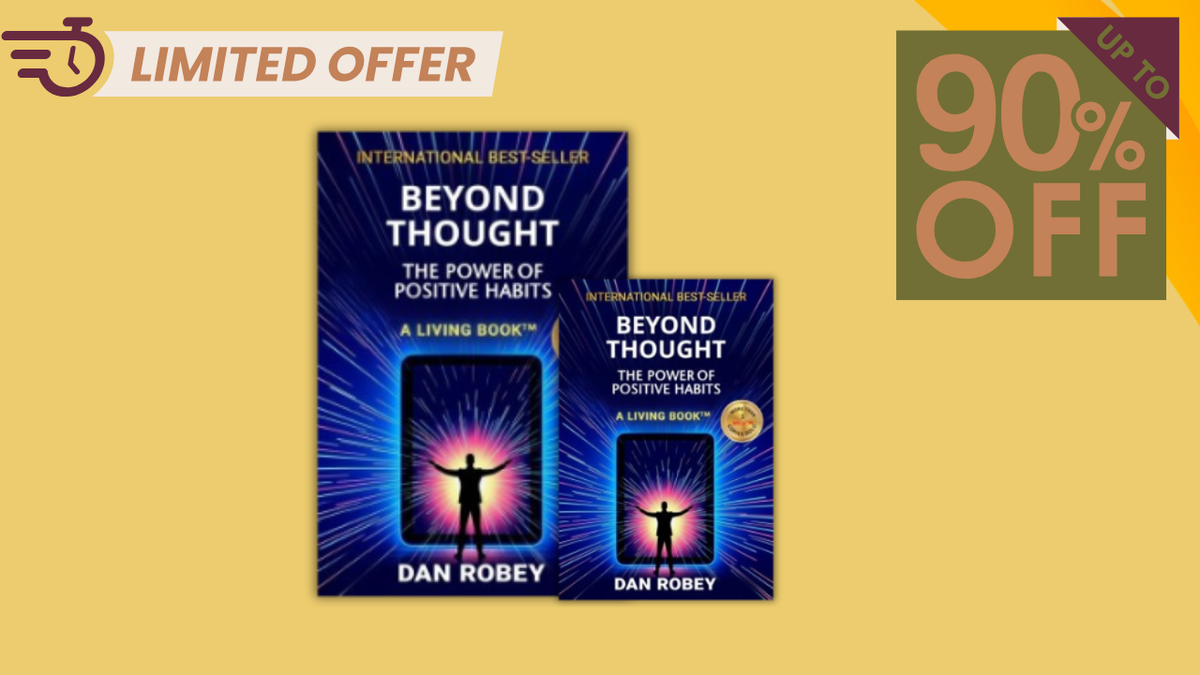
The newer Beyond Thought: The Power of Positive Habits edition has been publicly described as a “Living Book” version of Dan Robey’s original self-improvement work, with built-in audiobooks, multimedia elements, and 12 months of upgrades. A May 2026 launch announcement also described the digital edition as available for $49 through platforms including ClickBank and Digistore24.
So no, we are not dealing with some invisible product that exists only in rumor-land.
But that does not mean every glowing claim is automatically true. And it does not mean every complaint is automatically fair.
That’s the messy middle.
That’s where real buyers need to think.
So let’s pop the balloon on the biggest overhyped myths — not politely, because some of these myths deserve a chair thrown at them — and talk about what actually makes sense.
Myth #1: “The Power of Positive Habits Works on Autopilot, So You Don’t Need to Do Anything”
This myth is probably the most dangerous one.
It sounds smooth, doesn’t it?
Buy the product. Open it once. Your brain rewires itself. Suddenly you wake up early, drink water, stop procrastinating, forgive everyone, meal prep, meditate, call your mom, and become emotionally stable like a monk with Wi-Fi.
Lovely image.
Also, no.
That is not how habits work.
The sales language around “autopilot” can be appealing because everyone wants change to feel effortless. I get it. People in the USA are tired. Work pressure, bills, bad sleep, nonstop phone alerts, news updates every 12 seconds — it’s a lot. If someone says, “Here, this can help your mind run better automatically,” people listen.
But “autopilot” should be understood as the result of repeated conditioning, not the starting point.
You don’t begin on autopilot.
You train until the better behavior becomes easier.
That’s the part many reviews skip because it is not as sexy.
The false belief is simple: “If I buy The Power of Positive Habits, change should happen by itself.”
The problem? Buying is not becoming.
A gym membership does not make your arms stronger. A cookbook does not cook dinner. A budgeting app does not stop you from ordering random stuff at 1:14 a.m. because “I deserve it.” We’ve all been there. It’s embarrassing, and somehow the package still feels exciting.
The reality is more boring and more useful.
The Power of Positive Habits can offer structure. It can guide your mindset. It can show you how repeated thought loops and behavior loops shape your day. But the buyer still has to apply it.
This is where the breakthrough happens.
Not at purchase.
At repetition.
Use it around one habit first. One. Not your whole messy life at once.
Maybe your habit is late-night scrolling. Maybe it is negative self-talk. Maybe it is procrastination. Maybe it is emotional snacking after work. Maybe it is that annoying “I’ll start Monday” routine, which honestly deserves its own criminal investigation.
Choose one pattern.
Apply one method.
Repeat it.
That is the real “autopilot” path.
Not magic. Mechanics.
Myth #2: “If There Are Complaints, It Must Be a Scam”
This is lazy thinking in a detective coat.
People search The Power of Positive Habits complaints USA, see the word “complaints,” and suddenly they act like they cracked a federal case.
Relax.
Every product has complaints.
Apple has complaints. Amazon has complaints. Netflix has complaints. Your favorite coffee shop has complaints. Someone once probably complained that ice cream was “too cold.” Humanity is very talented at being upset.
Complaints are not automatically proof of a scam.
They are signals.
And signals need interpretation.
A complaint about billing is different from a complaint about content quality. A complaint from someone who never used the product is different from a complaint from someone who applied it for 30 days. A refund confusion complaint is not the same as “the system does not work.”
That’s the part people miss.
In the USA digital product market, complaints often come from three places: unclear expectations, checkout confusion, or lack of application. Sometimes the product has flaws too, sure. That happens. But you need to separate the categories before making a decision.
The false belief is: “Complaints equal bad product.”
No.
The smarter question is: “What are people actually complaining about?”
If 20 people say they had trouble accessing the product, that matters.
If one person says, “I read two pages and my life didn’t change,” that is not a product review. That is a patience problem with punctuation.
This is also important because Google has been pushing creators toward more helpful, reliable, people-first content rather than pages made mainly to manipulate rankings. In other words, a real review should help buyers think clearly, not just scream “scam” or “buy now” for clicks.
The reality?
Complaints can be useful. But only when you read them intelligently.
Look for patterns.
Look for specifics.
Look for whether the buyer understood the offer.
That’s how serious USA buyers avoid nonsense.
Myth #3: “It’s Just Another Motivational Ebook”
I understand this one.
Really, I do.
The self-help market is packed tighter than a suitcase before a holiday flight. Every week there is a new “breakthrough,” a new “secret,” a new “one habit that changed everything.” It can all start sounding like the same smoothie with different labels.
So when someone sees The Power of Positive Habits, they may instantly think, “Oh, another motivational ebook.”
But that is not a fully accurate description of the 2026 product positioning.
Public materials describe the newer Beyond Thought edition as a Living Book with multimedia experiences, full-length audiobooks inside the pages, and monthly upgrades for a year. It is positioned as an evolving digital personal growth experience, not simply a static PDF.
Now, does that automatically mean it is amazing?
No.
But it does mean “just an ebook” is too thin. Too flat. Like calling a car “a chair with wheels.”
Technically maybe, but come on.
The real issue is how people use it.
If you treat it like a casual read, you may get casual results. Skim it once. Nod at a few points. Feel inspired for eight minutes. Then forget everything when life gets annoying.
That’s not transformation.
That’s content consumption.
A system like this needs engagement.
Read. Listen. Apply. Review. Repeat.
Yes, repeat. That annoying little word again.
The false belief says: “If the information is good, reading it once should be enough.”
The truth says: “Habit change needs repeated contact.”
Think of it like learning guitar. You don’t watch one lesson and suddenly play like a Nashville session musician. You practice. Your fingers hurt. You sound bad. Your family suffers quietly. Then slowly, something clicks.
Habits are similar, except the instrument is your own behavior. Which is harder, honestly.
For USA readers juggling work, kids, side hustles, stress, and whatever new subscription they forgot to cancel, the better approach is simple:
Use it in small chunks.
Ten minutes. Fifteen minutes. One concept. One action.
That beats binge-reading the whole thing and then doing nothing.
Myth #4: “You Should See Results in Three Days or It Doesn’t Work”
This myth is impatience wearing sunglasses.
Three days?
Really?
People spend years building bad habits and then give a new system 72 hours to fix them. That is not evaluation. That is comedy.
I’m not judging too hard, because I’ve done versions of this. Buy a planner on Sunday. Feel reborn. Write goals in neat handwriting. By Wednesday the planner is under a pile of receipts and one mysterious cable that belongs to nothing.
It happens.
But if you are reviewing The Power of Positive Habits, or any habit product, three days is not enough to know much.
The false belief: “If I don’t feel different quickly, it failed.”
The problem is that early habit change rarely feels dramatic. It often feels clumsy. Quiet. Slightly irritating. You notice your excuses. You see your triggers. You realize the problem is not just “lack of motivation,” it’s your environment, your schedule, your stress, your sleep, your phone, your internal dialogue, all of it tangled like earbuds in a drawer.
That is not failure.
That is data.
The reality is that habit work usually needs a longer test window. Fourteen days is a better start. Thirty days gives even more useful feedback. Not because 30 is magical. It isn’t. But because repeated behavior reveals patterns.
For example, a USA buyer might think their issue is procrastination. After tracking for two weeks, they realize the real trigger is decision fatigue after work. Another person might think they lack discipline, but the actual issue is poor sleep. Someone else might discover that their evening routine collapses because their phone is basically a tiny casino with notifications.
This is why short testing is misleading.
It hides the pattern.
A practical approach:
Use The Power of Positive Habits daily for 14 to 30 days.
Pick one behavior.
Track what happens.
Don’t ask, “Do I feel transformed?”
Ask, “Am I making the better choice more often?”
That question is less glamorous. It also works better.
Myth #5: “Positive Thinking Alone Will Fix Everything”
No. Please stop.
Positive thinking is helpful.
Positive thinking is not a bulldozer.
It cannot push every obstacle out of your life by itself.
Some self-improvement content makes it sound like if you just think happy thoughts aggressively enough, your problems will politely leave the room. That sounds nice on a coffee mug. It is not a complete life strategy.
The false belief: “Think positive and everything changes.”
The reality: positive thinking may open the door, but behavior has to walk through it.
The Power of Positive Habits is more useful when seen as a habit and mindset restructuring tool, not just “good vibes in digital form.”
There’s a big difference between:
“I believe I can improve.”
And:
“At 7:30 p.m., when I usually scroll for an hour, I will do a 10-minute reset and read one section.”
One is a thought.
The other is a system.
Thoughts matter. But systems carry the weight.
Positive thinking without structure can make people feel briefly inspired and then deeply disappointed. They wonder why affirmations did not fix their procrastination, sleep, stress, food choices, or money habits. Then they blame themselves for not being “positive enough,” which is just sadness wearing a motivational T-shirt.
The better way?
Use positivity as fuel, but build routines as the engine.
The Power of Positive Habits can fit into that approach if you use it to identify thought loops and convert them into practical actions.
Spark plus structure.
That’s the formula.
Myth #6: “All Reviews Are Basically the Same”
Absolutely not.
Some reviews are useful.
Some are affiliate confetti.
Some are angry rants from people who didn’t read the product.
Some are so generic they could be about a blender, a crypto course, or a dog shampoo.
“Works great, highly recommend.”
Okay. Why?
Did it help with habits? Did you use the audio? Did you apply the cognitive restructuring exercises? Did you compare the refund policy? Did anything actually change?
Silence.
This is where USA buyers need to be more alert in 2026. Search results are getting crowded with AI summaries, affiliate pages, and quick-answer content. There have also been recent public concerns about AI-generated search answers giving misleading information in sensitive categories, which is a reminder that readers should verify sources and not blindly trust the first summary they see.
That applies here too.
Don’t trust a review just because it ranks.
Don’t trust a complaint just because it sounds angry.
Don’t trust a positive article just because it says “100% legit” 14 times like a hypnotist.
Good reviews have texture.
They explain:
- what the product is,
- who it is for,
- what it is not,
- what expectations are realistic,
- what buyers should check before purchase,
- and how to actually use it.
Bad reviews only shout.
The myth says: “Reviews are reviews.”
The truth says: “Some reviews help. Some manipulate. Some are just noise with bullet points.”
Read carefully.
That one habit alone can save you money.
Myth #7: “Strong Marketing Means It Must Be Fake”
I know why people believe this.
Strong marketing can feel suspicious. Big promises. Price drops. Testimonials. Urgency. Big buttons. Maybe a dramatic video voiceover. It can feel like walking past a carnival booth where someone is yelling, “Step right up!” while holding a glittery megaphone.
But strong marketing does not automatically mean fake.
It means the product is being sold.
That is business.
The better question is: “Is there a real product behind the marketing?”
With The Power of Positive Habits, public pages describe Dan Robey as the author of the original million-copy title, with the new 2026 Living Book edition adding multimedia and monthly updates.
So the discussion should not be reduced to “marketing equals scam.”
That is too simple.
A boring sales page can sell junk too. Scams can wear beige, you know.
The truth is that buyers should separate message from mechanism.
Marketing says: “This can change your life.”
Mechanism asks: “How exactly?”
If the answer is habit awareness, cognitive restructuring, audio learning, repeated engagement, and monthly updates, then there is a structure worth evaluating.
You can dislike hype and still recognize a useful tool.
Two things can be true at once.
Annoying, but adult.
Myth #8: “Everyone in the USA Will Use It the Same Way”
This is nonsense.
A nurse in Florida does not have the same schedule as a remote worker in Seattle.
A parent in Ohio does not have the same routine as a college student in California.
A stressed business owner in Texas does not have the same mental load as a retired reader in Arizona looking for better emotional balance.
So why would one habit system look identical for all of them?
It shouldn’t.
The false belief is: “There is one perfect way to use The Power of Positive Habits.”
No.
There is your way — if it works.
This is where people sabotage themselves. They try to force a fantasy routine into a real life that is already full. Then when it collapses, they blame the product.
Maybe mornings are terrible for you. Fine. Use it at night.
Maybe reading feels heavy. Use the audio.
Maybe your problem is not productivity; it is emotional reactivity. Start there.
Maybe your biggest habit is not eating, sleeping, working, or exercising. Maybe it is the habit of quitting when you feel stupid at the beginning. That one is sneaky.
The reality is customization.
Use the product around your actual life, not your imaginary life where you wake up peacefully to sunlight, stretch, journal, drink lemon water, and never lose your keys.
Most of us are not living that movie.
Start where you are.
Small and repeatable wins.
That’s the unsexy secret.
Myth #9: “A Legit Product Must Guarantee My Results”
This myth needs to be thrown out immediately.
A product can be legitimate and still not guarantee your outcome.
A gym can be real. You can still not go.
A language app can be excellent. You can still not learn Spanish if you open it once every lunar eclipse.
A cookbook can be beautiful. You can still order pizza.
Same here.
The Power of Positive Habits may be legit, useful, and reliable-looking based on available product information. I like the concept. I would recommend it to motivated USA buyers who want a structured approach to habit change.
But no honest review should promise identical results for every person.
That is not how self-improvement works.
The buyer’s effort matters.
The buyer’s consistency matters.
The buyer’s expectations matter.
The false belief: “If this is real, it should guarantee my transformation.”
The truth: “If this is useful, it should give me a better system — and I must use it.”
That is the grown-up version.
Not as exciting, maybe.
But far more reliable.
So What’s the Real Take on The Power of Positive Habits Reviews and Complaints 2026 USA?
Here is my grounded opinion.
I like the product concept.
I like that it focuses on habits instead of random motivation.
I like the idea of a Living Book format with audio and monthly updates.
I like that it gives USA buyers a structured self-improvement tool they can revisit instead of another one-and-done motivational download.
And based on public launch details, it appears legitimate and worth considering for the right person.
But I don’t like unrealistic hype.
I don’t like fake certainty.
I don’t like “guaranteed miracle” language.
And I really don’t like reviews that treat buyers like they have no brain.
The Power of Positive Habits is not a magic spell.
It is not a medical treatment.
It is not a substitute for professional mental health support if someone needs that.
It is a self-improvement system built around habits, mindset, and behavioral change.
That is enough.
Actually, that is pretty powerful when used properly.
Most lives do not change because of one dramatic moment. They change because of tiny repeated choices that eventually become normal. Annoying little choices. Daily choices. The kind nobody claps for.
But those are the ones that build the future.
Stop Falling for Myths and Start Thinking Like a Serious Buyer
If you are reading The Power of Positive Habits Reviews and Complaints 2026 USA, don’t let overhyped myths make your decision for you.
Don’t believe the people who say it will fix everything overnight.
Don’t believe the people who scream “scam” just because a product has marketing.
Don’t believe every complaint.
Don’t believe every five-star-style review either.
Think.
Check the official offer.
Read what is included.
Verify price and refund terms.
Ask whether you will actually use it.
That last question is the big one.
Because if you are ready to use it consistently, The Power of Positive Habits may be a strong fit. I love the product concept, and I would call it highly recommended for USA buyers who are serious about behavior change.
But if you only want to buy hope and avoid action, this product will not save you.
No product will.
Reject the myths.
Use the system.
Track the behavior.
Build one positive habit at a time.
And maybe, quietly, without fireworks, your future starts changing in a way that finally sticks.
FAQs About The Power of Positive Habits Reviews and Complaints 2026 USA
1. Is The Power of Positive Habits legit?
Yes, based on available public information, The Power of Positive Habits and the newer Beyond Thought Living Book edition appear to be legitimate digital self-improvement products connected to Dan Robey. Public launch materials describe the Living Book format, monthly upgrades, and digital distribution. Still, buyers should always use the official page and verify the current offer before purchasing.
2. Is The Power of Positive Habits a scam?
I would not call it a scam from the available information. It appears reliable and real. But that does not mean it guarantees identical results for everyone. It is a habit and mindset product, so results depend heavily on whether the buyer actually applies the material.
3. Why are there complaints about The Power of Positive Habits?
Complaints can happen with almost any digital product. Some may involve checkout confusion, refund questions, access issues, or unrealistic expectations. The smart move is to look for repeated complaint patterns instead of reacting to one dramatic comment.
4. Is The Power of Positive Habits good for USA buyers?
Yes, it can be a good fit for USA buyers who want help with consistency, mindset, procrastination, overthinking, and daily behavior change. Since it is digital, it is convenient to access from anywhere in the USA. It works best for people who actually use the system, not people who only skim it once.
5. Should I buy The Power of Positive Habits in 2026?
Consider buying it if you want a structured habit-building system and you are ready to apply it regularly. I like the product concept and highly recommend it for motivated buyers. Skip it if you expect instant results, zero effort, or a miracle transformation without action.
Related Hastags
#ThePowerOfPositiveHabits #ThePowerOfPositiveHabitsReview #ThePowerOfPositiveHabitsReviews2026 #ThePowerOfPositiveHabitsAppReview2026 #ThePowerOfPositiveHabitsBonus #ThePowerOfPositiveHabitsProduct #ThePowerOfPositiveHabitsPrice #ThePowerOfPositiveHabitsOffers #ThePowerOfPositiveHabitsBonuses #ThePowerOfPositiveHabitsBuy #ThePowerOfPositiveHabitsWebsite #ThePowerOfPositiveHabitsSite #ThePowerOfPositiveHabitsApp #ThePowerOfPositiveHabitsHonestReviews #ThePowerOfPositiveHabitsLatestReviews #ThePowerOfPositiveHabitsUsersExperience #ThePowerOfPositiveHabitsUsersReview #ThePowerOfPositiveHabitsDemo #ThePowerOfPositiveHabitsTutorial #ThePowerOfPositiveHabitsPurchaseOnline #ThePowerOfPositiveHabitsBuyit