5 Wild Roar Lion’s Mane Reviews & Complaints Myths USA Buyers Still Believe in 2026—No. 3 Goes Too Far
⭐ Editorial Rating: 4.2/5 ⭐⭐⭐⭐ — promising idea, real storefront, but the advertising occasionally grows wings and flies away
📝 Review Claims: The promotional page displays “100K+ happy customers” and “1M+ bottles sold.” These are seller-published numbers, not independently audited review totals
💵 Advertised Original Value: $239
💵 Regular Store Price: $59 for one bottle
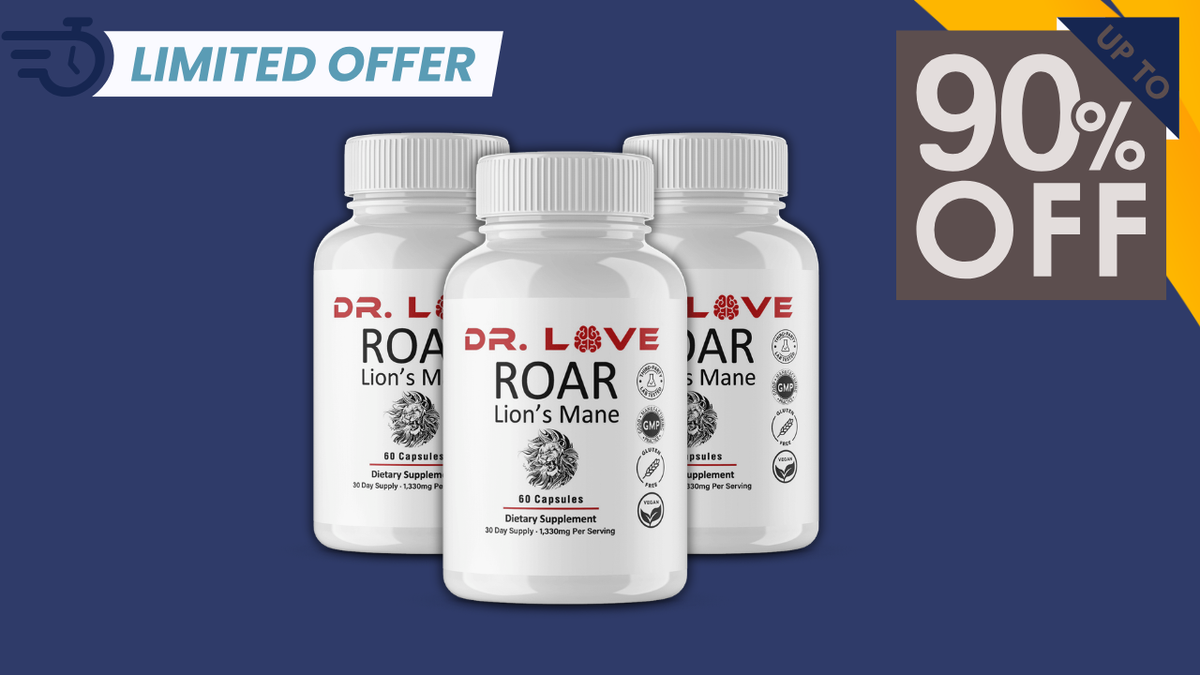
💵 Current Deal: Buy 1 bottle and receive 3 additional bottles free for $59, with shipping depending on the promotional checkout
⏰ Results Begin: No scientifically guaranteed timeline. “Instantly” is advertising language, not a biological appointment
📍 Made In: The regular store says Made in the USA with domestic and imported ingredients; another official page says Formulated in the USA
🧘♀️ Core Focus: Memory, concentration, mental clarity, sleep, energy and general cognitive wellness
✅ Who It’s For: USA adults interested in non-stimulant mushroom supplements—and capable of surviving a review without demanding a miracle
🔐 Refund: A 180-day “Better Brain” money-back guarantee is advertised
🟢 Our Say: Recommended for the right customer. Roar Lion’s Mane appears to be a genuine commercial supplement, not an obvious fake-product scam. But no trustworthy reviewer can promise identical results for every person.
Bad information rarely enters the room quietly.
It kicks the door open.
It points at a bottle of mushroom capsules and announces:
“This will rebuild your brain before next weekend!”
Or, from the opposite corner:
“One customer complained, therefore the whole company is a criminal mushroom empire!”
Apparently those are our only choices now.
Miracle or scam.
Perfect or worthless.
Five stars or digital execution.
And this is precisely why people searching Roar Lion’s Mane Reviews and Complaints 2026 USA can end up more confused after reading ten articles than they were before opening Google.
Bad advice spreads because it is simple. Fast. Emotional.
“Research the ingredients, read the checkout terms and keep realistic expectations” sounds sensible—but sensible advice wears plain shoes. It doesn’t dance across social media.
“Grow new brain cells instantly” has sparkle.
“Total scam exposed!” has anger.
Both get clicks.
A more grounded opinion has to work harder because it asks the reader to hold two thoughts at once:
Roar Lion’s Mane may be a legitimate, interesting supplement.
And some of the marketing surrounding it may still be exaggerated.
Those ideas do not fight each other. They can sit at the same table.
While comparing the official pages, I kept noticing the same pattern. A reasonable statement would appear, then the next sentence would leap across a canyon.
Lion’s Mane is scientifically interesting.
Fair enough.
It may support certain aspects of cognitive wellness.
Possible.
This exact bottle will prevent cognitive decline, clear plaque and create a permanently sharper mind?
Slow down there, mushroom cowboy.
The official promotional page currently advertises a Buy 1 Get 3 Free deal for $59, claims more than 100,000 happy customers and one million bottles sold, and uses language involving memory, energy and Alzheimer’s prevention. The regular store also says the product may improve memory, sleep and brain-cell growth, while displaying the standard disclaimer that supplements are not intended to diagnose, treat, cure or prevent disease.
That contrast matters.
The bold claim enters through the front door playing drums.
The disclaimer slips in through the kitchen.
USA customers deserve to see both.
So, no blind praise here. Also no lazy scam accusation.
Below are the five most overhyped Roar Lion’s Mane myths—the advice that sounds persuasive until somebody turns on the lights.
Myth #1: “The Huge Number of Positive Reviews Proves Roar Lion’s Mane Works for Everybody”
This myth feels mathematical.
One hundred thousand happy customers.
One million bottles sold.
Therefore, guaranteed success for you.
Done.
Except biology did not sign that equation.
The seller’s promotional page currently displays both of those large customer and sales figures. They may reflect genuine commercial activity, but they are claims published by the company selling the product. They are not the same as a complete, independently audited database containing every verified positive, neutral and negative customer experience.
That difference is not a tiny legal technicality.
It changes what the numbers can prove.
Why the Belief Is Misleading
A positive review tells you what one person reported.
It cannot forecast exactly what your body will do.
Consider two customers in the USA.
The first sleeps eight hours most nights, exercises, eats fairly well and uses the supplement consistently.
The second sleeps four hours, works under constant stress, drinks enough coffee to make the kitchen vibrate and remembers the capsules whenever the moon is in the correct position.
Same product.
Different environment.
Different expectations too.
One person may notice better concentration. Another may notice improved sleep. Someone else may notice nothing beyond the slightly earthy scent when opening the bottle.
None of those experiences automatically proves deception.
Human responses vary. Annoyingly.
It would be easier if every body behaved like the same model of toaster, but here we are.
Why Buyers Fall for It
People use social proof when they feel uncertain.
A packed restaurant looks more trustworthy than an empty one. A product with thousands of enthusiastic customers feels safer than something nobody discusses.
That instinct is normal.
But a promotional review section resembles a movie trailer. It shows selected scenes—the exciting ones, usually—not every minute of the finished film.
A testimonial saying:
“My focus improved.”
Can quietly transform inside the reader’s mind into:
“My focus will improve.”
Then:
“My focus will improve dramatically.”
And, after a few more glowing comments:
“I will finish six months of paperwork, learn Italian and remember where I put every charging cable.”
This escalation happens without anybody noticing.
Until the package arrives.
How Positive Hype Creates Negative Complaints
Overhyped expectations can make a reasonable product look disappointing.
Suppose someone uses Roar Lion’s Mane for ten days and feels no cinematic transformation.
They expected brain fog to explode like a villain’s headquarters.
Instead—Tuesday still feels like Tuesday.
The customer concludes the product is fake.
But perhaps the real problem began before the purchase. The expectation was impossible.
A supplement marketed for ongoing wellness should not be judged against the fantasy of an overnight neurological renovation.
This doesn’t mean buyers must tolerate zero results forever. Of course not.
It means define success before taking the product.
Is the goal slightly steadier focus?
Better perceived sleep?
Less mental fatigue?
Or is the goal to become Bradley Cooper in Limitless without the dramatic consequences?
One of those is more realistic.
The Reality That Actually Helps
Read reviews for patterns and details, not emotional volume.
Useful reviews should answer questions such as:
- How long did the customer use it?
- What serving did they take?
- Was the purchase verified?
- What changed specifically?
- What did not change?
- Did they change sleep, diet or exercise at the same time?
- Did they experience unwanted effects?
- Would they purchase it again?
“I took it consistently for eight weeks and noticed less afternoon mental tiredness, although my memory did not dramatically change” provides information.
“BEST THING EVER!!!”
That provides punctuation.
Positive reviews matter. They can show satisfaction exists.
They just cannot lend you someone else’s biology.
Myth #2: “One Roar Lion’s Mane Complaint Means the Entire Product Is a Scam”
The word scam is being worked to death.
A package arrives late?
Scam.
The capsules do not produce genius-level concentration by Thursday?
Scam.
The bottle looked slightly larger on the laptop screen?
International mushroom conspiracy.
This is not serious consumer analysis.
A complaint can reveal an important problem. It can also describe ordinary disappointment, unrealistic expectations, shipping friction or an individual reaction.
Those categories are not interchangeable.
Why the Belief Is Misleading
Fraud usually involves meaningful deception: collecting money without delivering the promised product, hiding the seller, making unauthorized charges or refusing to honor clearly stated obligations.
“I did not notice better focus” is not automatic evidence of fraud.
It is one person’s outcome.
Roar Lion’s Mane is listed on an active official storefront that provides customer-support contact information, worldwide-shipping language, secure-payment information and claims of third-party testing and U.S. manufacturing. Another official campaign identifies Brain Fit For Life, LLC at an address in Boynton Beach, Florida. These are reasonable signs of an identifiable commercial seller.
That does not prove the product works.
It does make “obvious nonexistent-product scam” a weak conclusion based on the available evidence.
Not Every Complaint Says the Same Thing
Compare these statements:
“I used the product consistently for three months and noticed no meaningful change.”
“My package arrived five days late.”
“I experienced an allergic reaction.”
“The checkout charged me more than I expected.”
“I thought I would have photographic memory after one week.”
All are complaints.
But they concern effectiveness, shipping, safety, billing and unrealistic expectations—five different subjects.
Dumping them into one pile labeled SCAM makes the analysis useless.
The “didn’t work” complaint is especially difficult.
What did the person expect?
How long did they use it?
Were they consistent?
Were they sleeping?
Did another health issue contribute to their symptoms?
There is a massive difference between “this had no noticeable effect after responsible use” and “I took four capsules during a chaotic week and remained tired.”
Both voices deserve to be heard. They do not carry identical evidentiary weight.
Complaints USA Buyers Should Take Seriously
Some patterns would be meaningful warning signs:
- Repeated unauthorized billing reports
- Many undelivered orders
- Products arriving unsealed
- Refund requests being consistently ignored
- Labels differing materially from what was advertised
- Customer support becoming unreachable
- Repeated reports of significant adverse reactions
One report may be an isolated problem.
Twenty detailed reports describing the same issue could suggest a pattern.
Frequency matters.
Specificity matters.
Documentation matters.
Anger alone mostly increases the temperature.
A Checkout Detail Worth Noticing
The regular product page contains language stating that the item may be a deferred, subscription or recurring purchase, along with authorization for charges at the listed frequency until completion or cancellation. This may reflect a specific subscription option or standard storefront configuration, but buyers should verify the selected purchase type before paying.
That is not an accusation.
It is a reason to read.
Before ordering:
- Confirm the number of bottles.
- Check the final cost, tax and shipping.
- Verify one-time versus recurring billing.
- Save the promotional page.
- Keep the confirmation email.
- Read the refund terms before opening every bottle.
Boring behavior saves money.
This is unfair, because panic buying feels much more exciting.
Do the boring thing.
Myth #3: “Lion’s Mane Research Proves Roar Rebuilds Brain Cells and Prevents Alzheimer’s Disease”
This is the myth that crosses from silly into potentially dangerous.
Lion’s Mane is not invented nonsense.
Hericium erinaceus is a real mushroom containing compounds that have attracted scientific interest. Researchers have studied possible relationships involving cognition, mood, nerve growth factor and neurological processes.
That is legitimate.
What is not legitimate is turning early or mixed evidence into a universal medical promise.
What Recent Research Found
A 2025 double-blind, randomized, placebo-controlled crossover study examined an acute dose of a standardized Lion’s Mane fruiting-body extract in 18 healthy adults aged 18 to 35.
Researchers found no significant overall improvement in composite measures of global cognition or mood compared with placebo. Performance improved on one individual psychomotor test, and the authors called for additional research on chronic supplementation, optimal dosage and timing.
Notice the language.
No broad miracle.
One specific signal.
More research needed.
Science tends to speak carefully because reality has corners.
Marketing prefers a straight highway with fireworks.
The Leap Nobody Talks About
Here is how ingredient hype often develops:
- A mushroom contains biologically interesting compounds.
- Laboratory or animal studies suggest possible effects.
- Small human studies produce mixed or encouraging findings.
- A commercial product contains the mushroom.
- The commercial product is therefore described as guaranteed to rebuild the brain.
Step five did not earn its place.
A study may use a different:
- Extract
- Dose
- Mushroom part
- Standardization
- Participant group
- Treatment duration
- Finished formulation
Research involving a 3-gram standardized 10:1 fruiting-body extract does not automatically establish what a different retail formula will accomplish at its recommended serving.
To strongly prove claims for Roar Lion’s Mane itself, researchers would ideally test the finished formula, at its marketed dose, in a sufficiently large controlled human study.
Research on Lion’s Mane generally is not a transferable certificate stamped onto every bottle.
Blueberries have scientific research behind them.
Blueberry muffins remain muffins.
A sad realization, perhaps, but useful.
The Alzheimer’s Claim Problem
The promotional Roar page includes language about ultimately preventing dementia and Alzheimer’s disease naturally. It also describes amyloid plaque, brain-cleaning mechanisms and the product as a uniquely capable brain-health solution.
These are exceptionally strong implications for a dietary supplement.
FDA guidance explains that dietary supplements generally may not bear explicit or implied disease claims unless those claims have undergone the appropriate premarket review and authorization. The context of the complete labeling matters, not just isolated words.
The official product ecosystem also displays a disclaimer saying its statements have not been evaluated by the FDA and the supplements are not intended to diagnose, treat, cure or prevent disease.
So we have a tension.
The headline language can suggest disease prevention.
The disclaimer says the product is not intended to prevent disease.
USA buyers should not ignore that tension merely because the pictures look scientific.
Why the Myth Can Cause Harm
Imagine someone begins forgetting appointments, struggling with bills or becoming confused during familiar tasks.
They see a sales page saying a supplement clears plaque or prevents decline.
They order bottles.
Then they wait.
Persistent memory changes can have many possible contributors, including medication effects, sleep problems, nutritional issues, mental-health conditions, metabolic disease or neurological disorders.
A mushroom capsule cannot diagnose the cause.
It cannot review test results.
It cannot ask whether the symptoms are worsening.
Treating Roar Lion’s Mane as a proven Alzheimer’s treatment could delay appropriate medical assessment.
That is not harmless hype.
The Reality-Based Truth
A balanced conclusion is less dramatic:
Lion’s Mane is a promising and active field of research, but current human evidence remains limited and mixed. Roar Lion’s Mane may be considered a general wellness supplement—not a clinically proven method of preventing, treating or reversing Alzheimer’s disease.
I still find the ingredient interesting.
Very interesting.
But interest is not proof wearing a lab coat.
Myth #4: “Made in the USA, GMP and Third-Party Tested Means FDA-Approved and Guaranteed Effective”
These phrases sound sturdy.
Made in the USA.
Third-party tested.
GMP-certified.
Put them beside a white bottle and a scientific-looking diagram and the product begins to feel like it was personally inspected by twelve Nobel laureates.
Quality signals are useful.
They simply do not answer every question.
The regular store states that its products are third-party tested and made in the USA using domestic and imported ingredients. A promotional page describes a GMP-certified facility, while another identifies the product as formulated in the USA.
Those details are positive.
They do not equal FDA approval for effectiveness.
“Third-Party Tested” Is the Beginning of a Question
Tested for what?
Heavy metals?
Microbial contamination?
Mushroom identity?
Pesticides?
Active compounds?
Undeclared substances?
Was the raw material tested—or the finished capsules?
Was each production batch examined?
Can customers request a lot-specific certificate of analysis?
Maybe the company has excellent answers.
Good.
Ask for them.
But the phrase “third-party tested” is a claim about a process. It is not the test report itself.
A restaurant can hang a CLEAN KITCHEN sign.
You may still prefer an inspection certificate over the chef’s confidence.
GMP Does Not Prove Memory Benefits
Good Manufacturing Practices relate to production controls, consistency and quality systems.
They do not establish that a supplement improves concentration, memory or sleep.
A product can be accurately manufactured and still produce no noticeable benefit for one buyer.
Quality asks:
“Does the bottle contain what the label says?”
Effectiveness asks:
“Does taking it reliably produce the advertised result?”
Different questions.
A guitar can be perfectly built.
That doesn’t mean the person holding it can play.
“Made in the USA” Also Needs Context
The official store says the products are made in the USA from domestic and imported ingredients. The summit page uses “Formulated in the USA.”
These descriptions may refer to different parts of manufacturing.
They do not necessarily establish that every mushroom was grown, extracted, processed and encapsulated entirely within the United States.
That is not automatically a problem.
It is simply more precise than assuming an American flag answers every sourcing question.
The Reality-Based Truth
Quality badges should increase your curiosity, not replace it.
Before buying, ask for:
- The current Supplement Facts panel
- Exact amounts of each mushroom
- Fruiting-body versus mycelium information
- Extraction ratios
- Beta-glucan or active-compound standardization
- Heavy-metal results
- Microbial testing
- A recent certificate of analysis
- Allergen information
Clear answers strengthen trust.
A response containing the word “premium” sixteen times but no documentation?
That strengthens the eyebrow muscles.
Myth #5: “The Buy 1 Get 3 Free Deal and 180-Day Guarantee Make the Purchase Completely Risk-Free”
The promotion is strong.
No point pretending otherwise.
The official campaign advertises four bottles for $59 instead of a stated regular value of $239. A related page describes the package as a four-month supply and says shipping is added to the smaller offer, while a larger package receives free shipping. The campaign also advertises a 180-day guarantee.
Financially attractive?
Yes.
Risk-free in every possible sense?
No.
What a Guarantee Actually Covers
A money-back policy may reduce purchase risk.
It cannot erase:
- Shipping charges
- Return postage
- Time spent contacting support
- Lost receipts
- Misunderstood eligibility conditions
- Recurring-payment confusion
- Ingredient reactions
- Disappointment after months of use
The official promotion says customers can contact support for a refund if they do not love the product and describes the guarantee as “no questions asked.” Buyers should still save the exact terms visible when ordering because campaign language and policies can change.
A guarantee is a procedure.
Not fairy dust.
Scarcity Alters the Decision
The pages repeatedly use “limited-time” and “while supplies last” messaging. The promotion says there is a risk of stock running out and encourages buyers to act immediately.
Maybe stock is genuinely limited.
An outside reviewer cannot see the warehouse.
What we can see is the psychological effect.
Before scarcity:
“Would this supplement fit my needs?”
After scarcity:
“What if another person gets my bottles?”
Suddenly the capsules are the final lifeboat leaving America.
Scarcity creates urgency by activating loss aversion—the discomfort of missing an opportunity.
This does not prove the deal is fake.
It proves buyers should slow down when the page tells them to speed up.
The Reality-Based Truth
Ask one question:
Would I still want Roar Lion’s Mane if the countdown, stock warning and crossed-out price disappeared?
If yes, continue evaluating.
If no, you probably want the bargain more than the supplement.
Before payment:
- Verify the final total.
- Confirm the bottle quantity.
- Check shipping and tax.
- Confirm one-time or recurring billing.
- Save the guarantee.
- Keep the order confirmation.
- Avoid opening every bottle immediately.
- Mark the refund deadline.
A good offer survives two minutes of reading.
A weak offer depends on panic.
What Roar Lion’s Mane Actually Is
Underneath all the dramatic language, Roar Lion’s Mane is a dietary supplement marketed for memory, focus, sleep, stress and general cognitive support.
The official store lists claims involving improved memory, reduced stress, new brain-cell growth and improved sleep. The promotional campaign combines these claims with a multi-bottle offer and a long guarantee.
It is not a prescription medicine.
It is not an FDA-approved Alzheimer’s treatment.
It is not a software patch for human memory.
It may still be useful to some customers.
That middle position makes people uncomfortable because it lacks fireworks—but it is the most honest one.
Who May Want to Consider It?
Roar Lion’s Mane may appeal to:
- USA adults curious about functional mushrooms
- People seeking non-caffeinated cognitive-wellness support
- Customers who dislike stimulant-heavy focus formulas
- Adults experiencing occasional mental tiredness
- Buyers comfortable with emerging rather than conclusive science
- People willing to track subtle changes
- Customers attracted by the 180-day advertised guarantee
The ideal buyer is not saying:
“Make my brain twenty years younger.”
They are saying:
“I understand the limitations and want to see whether this fits my broader wellness routine.”
Not sexy.
Sensible.
Sensible products and sensible customers generally have fewer dramatic breakups.
Who Should Be More Cautious?
Consult a qualified healthcare professional before use if you:
- Take prescription medication
- Use several supplements
- Have a mushroom allergy
- Have a chronic medical condition
- Are pregnant or breastfeeding
- Have surgery planned
- Have experienced unexplained allergic reactions
- Are experiencing worsening memory or confusion
- Are considering replacing medical care with a supplement
The official pages themselves advise people who are pregnant, nursing, taking medication or living with a medical condition to consult a physician, and they state that results may vary.
Natural does not mean universally harmless.
A cactus is natural.
Nobody uses one as a sleep mask.
Roar Lion’s Mane Pros and Cons
What I Like
- It appears to be a real product from an identifiable seller.
- Official product and campaign pages are active.
- Customer-support information is publicly listed.
- Lion’s Mane is a legitimate subject of scientific research.
- The non-stimulant positioning may suit caffeine-sensitive customers.
- The seller claims third-party testing and U.S. manufacturing.
- A GMP-certified facility is advertised.
- The four-bottle promotional offer is attractive.
- The advertised 180-day guarantee is longer than many ordinary return periods.
What Makes Me Pause
- Some Alzheimer’s and cognitive-decline language goes beyond what current product-specific evidence proves.
- Seller-published customer totals are not independently audited review counts.
- Research on Lion’s Mane is sometimes treated as proof for the finished Roar formula.
- The 2025 controlled study involved only 18 healthy younger adults and found no significant overall acute cognitive or mood improvement.
- Strong scarcity messaging may pressure hesitant buyers.
- The recurring-purchase wording on the regular store deserves careful review.
- Publicly accessible batch-specific testing reports would strengthen transparency.
- Individual results cannot be promised.
Is Roar Lion’s Mane Legit, Reliable and Worth Considering in the USA?
Here is the blunt conclusion.
Roar Lion’s Mane appears to be a genuine commercial supplement sold by an identifiable business through functioning official pages.
The regular store provides product listings, customer-service details, payment information and manufacturing claims. The promotional campaign identifies Brain Fit For Life, LLC, gives a Florida address and publishes a guarantee.
Those are meaningful legitimacy signals.
So, calling it an obvious fake-product scam would not be supported by the evidence reviewed.
But “100% legit” can mean two things.
Is it a real purchasable product?
Apparently, yes.
Is every advertised brain-health outcome clinically proven for this exact formula?
No.
I like Roar Lion’s Mane as a concept.
Lion’s Mane deserves continued research. A non-stimulant mushroom formula could appeal to USA buyers who want something other than another fluorescent energy drink and a trembling 3 p.m. meeting.
I would consider recommending it to an informed adult who:
- Understands the research is developing
- Reviews the complete formula
- Has realistic expectations
- Checks medication and health concerns
- Reads the checkout terms
- Does not treat it as Alzheimer’s medicine
That is a long list.
Good.
Anything involving health deserves more thought than buying a novelty coffee mug.
The two loudest internet opinions are both weak:
“Roar transforms every brain.”
And:
“One complaint proves Roar is fake.”
The evidence-based position is less dramatic:
- The product appears commercially legitimate.
- The offer is real on the current official pages.
- Lion’s Mane research is interesting but incomplete.
- Some customers may report benefits.
- Others may notice little or nothing.
- Marketing language deserves scrutiny.
- Concerning cognitive symptoms deserve medical attention.
Reject the extremes.
Don’t buy because a countdown frightened you.
Don’t reject the product because one stranger typed SCAM in capital letters.
Examine the ingredients.
Study complaint patterns.
Save the offer.
Track your own experience carefully if you decide to try it.
The most results-driven approach is not blind optimism or fashionable cynicism.
It is evidence, context and realistic expectations.
Your brain deserves that.
And, strangely enough, the smartest action you can take before ordering a brain supplement remains painfully obvious:
Use the brain you already have.
Frequently Asked Questions About Roar Lion’s Mane Reviews and Complaints 2026 USA
1. Is Roar Lion’s Mane a scam or a legitimate product?
Roar Lion’s Mane appears to be a genuine commercial supplement. It is listed on an active official store, and the seller provides customer-service information, payment details, manufacturing statements and a Florida business address through related promotional pages.
That supports commercial legitimacy.
It does not prove guaranteed memory improvement.
Real bottle? Apparently yes.
Guaranteed mental superpowers? Cape not included.
2. Are the “100K+ happy customers” and “1M+ bottles sold” claims verified?
Those figures appear on an official Roar Lion’s Mane promotional page. This review did not find an independent audit confirming them, so they should be understood as seller-published marketing figures rather than neutral verified-review data.
They may be accurate.
They may also represent customers or sales counted across multiple campaigns.
The public page does not provide enough documentation to independently confirm the totals.
3. How quickly should Roar Lion’s Mane work?
There is no scientifically guaranteed timeline applying to every customer.
The official campaign uses “instantly” in its promotional wording, but a 2025 randomized study of an acute Lion’s Mane dose found no significant overall improvement in global cognition or mood, although one individual psychomotor measure improved.
Some customers may report gradual changes.
Others may notice nothing.
The human body remains stubbornly unwilling to read landing-page deadlines.
4. Can Roar Lion’s Mane prevent Alzheimer’s disease?
Roar Lion’s Mane should not be treated as a proven Alzheimer’s prevention or treatment.
The promotional page uses Alzheimer’s-related language, but FDA guidance says dietary supplements generally cannot carry explicit or implied disease claims without the appropriate authorization. The official Roar pages also state that the products are not intended to diagnose, treat, cure or prevent disease.
Anyone experiencing worsening memory, confusion or difficulty managing everyday tasks should seek professional medical assessment rather than depending solely on a supplement.
5. Is Roar Lion’s Mane worth buying for USA customers?
It may be worth considering for adults interested in non-stimulant, mushroom-based cognitive-wellness support.
Before ordering:
- Review the exact Supplement Facts.
- Confirm the final price and shipping.
- Check whether billing is one-time or recurring.
- Save the guarantee.
- Discuss possible medication or health concerns with a qualified professional.
Buy because it fits your goals.
Not because a stock warning is behaving like the final helicopter leaving town.
Related Hastags
#RoarLionsMane #RoarLionsManeReview #RoarLionsManeReviews2026 #RoarLionsManeAppReview2026 #RoarLionsManeBonus #RoarLionsManeProduct #RoarLionsManePrice #RoarLionsManeOffers #RoarLionsManeBonuses #RoarLionsManeBuy #RoarLionsManeWebsite #RoarLionsManeSite #RoarLionsManeApp #RoarLionsManeHonestReviews #RoarLionsManeLatestReviews #RoarLionsManeUsersExperience #RoarLionsManeUsersReview #RoarLionsManeDemo #RoarLionsManeTutorial #RoarLionsManePurchaseOnline #RoarLionsManeBuyit