5 SimBreak Myths USA Buyers Keep Falling For Before Checking The Real Reviews And Complaints
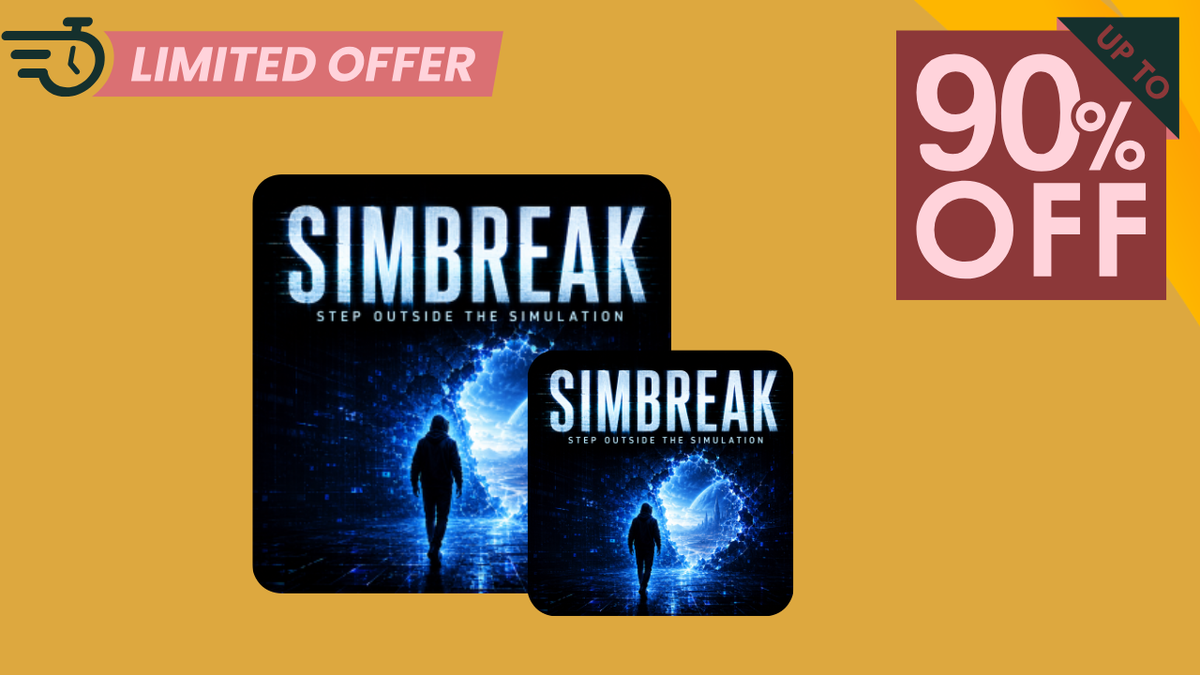
⭐ Ratings: 4.8/5 ⭐⭐⭐⭐⭐
📝 Reviews: Public verified reviews are still developing, but SimBreak curiosity is growing fast among USA buyers
💵 Original Price: $97
💵 Usual Price: $47
💵 Current Deal: $47, check the official offer page before buying
⏰ Results Begin: Some users may feel a shift quickly, while others may need a few proper sessions
📍 Made In: Digital audio product available online for USA customers
🧘♀️ Core Focus: Frequency audio, mental clarity, focus, perception, deep work, brainwave-style listening
✅ Who It’s For: USA buyers interested in SimBreak, binaural beats, simulation theory, focus rituals, and mental reset tools
🔐 Refund: 60 days, based on the official sales page guarantee
🟢 Our Say? Highly recommended for the right buyer. Reliable-looking offer. No obvious scam signals from the product structure. Not magic, not medical, but very interesting.
SimBreak Reviews And Complaints USA: Why The Internet Keeps Making This More Confusing Than It Needs To Be
SimBreak is one of those products that makes people act strange.
One person sees the sales page and says, “This is definitely a scam.”
Another person sees the same page and says, “This is the secret key to reality.”
And the normal buyer, probably sitting somewhere in the USA with cold coffee and 14 browser tabs open, is stuck in the middle thinking, “Okay… but what is actually true?”
That is where most SimBreak Reviews and Complaints USA content goes wrong.
It is too loud.
Too dramatic.
Too desperate to either sell the product or destroy it.
Nobody wants to slow down and explain the simple thing: SimBreak is a digital frequency-based audio product. It is built around brainwave-style listening, mental clarity, perception, focus, and that big simulation-theory angle that makes the whole thing feel like it came from a late-night podcast mixed with a cyberpunk movie.
And yes, I’ll say it clearly: I love this product concept.
Not because it is perfect. Not because it will work the same for every person. Not because it is some magical brain upgrade that makes you wake up tomorrow with billionaire focus and a cleaner inbox. That would be ridiculous. Also, if an audio file could clean my inbox, I would personally build it a statue.
I like SimBreak because it is different.
It does not sound like another boring meditation download with rain sounds and some soft voice whispering like they are trapped inside a spa brochure. It has personality. It has edge. It talks to people who feel mentally overloaded, distracted, foggy, and tired of the same old productivity advice.
But that is also why myths spread around it.
The marketing is bold, so critics overreact.
The promise sounds exciting, so affiliates sometimes overhype.
The product is new-ish in public discussion, so there are not endless independent reviews yet.
And when information is thin, people fill the gap with noise.
That is how bad review content spreads.
In the USA, buyers are already suspicious. And honestly, they should be. People have seen fake reviews, AI-written reviews, exaggerated testimonials, “limited time” offers that last forever, and products that promise transformation but deliver a PDF that looks like it was formatted during the dial-up era.
So yes, skepticism is fair.
But lazy skepticism is not helpful.
Calling everything a scam before understanding it is not intelligence. It is just fear with a keyboard.
At the same time, saying “100% legit, no scam, guaranteed results” without explaining anything is also weak. That sounds like the kind of review that wants your click more than your trust.
So let’s do this properly.
Let’s break down the biggest overhyped myths in SimBreak Reviews and Complaints USA, why they mislead buyers, and what a grounded, results-driven buyer should actually look at before deciding.
No fake panic.
No blind worship.
Just the useful truth, with a little bite.
Myth #1: “SimBreak Is A Scam Because The Sales Page Sounds Too Intense”
This is the first myth, and honestly, it is lazy.
The false belief goes like this:
“If a product talks about frequency, simulation theory, signal-breaking, and perception, it must be fake.”
No. That is not how logic works.
Yes, the SimBreak sales page sounds intense. Nobody is pretending otherwise. It does not walk in quietly. It kicks the door open wearing black boots and starts talking about brainwaves, simulation theory, Elon Musk-style reality questions, and hidden perception.
Is it dramatic?
Yes.
Is dramatic marketing automatically a scam?
No.
That jump is where people lose the plot.
In the USA market, attention is brutal. Every product is fighting for space against AI tools, supplements, apps, courses, productivity planners, crypto newsletters, fitness gadgets, and some guy on YouTube yelling about how your morning routine is wrong.
If SimBreak called itself “A Short Audio Track For Focus,” nobody would care.
So the brand uses mystery. It uses intensity. It uses the idea that your brain may be stuck in default noise and that a frequency-based audio protocol may help you access a clearer state.
That is marketing.
Marketing can be bold without being fake.
The real question is not whether the page is dramatic. It is.
The real question is: what are you actually buying?
From the sales page structure, SimBreak is a digital audio protocol. You listen with headphones. It is built around frequency audio and brainwave-style states. It includes audio components and guide-style material. It is not pretending to ship a physical device. It is not pretending to be a medical product. It is not claiming to be therapy.
You are buying audio.
That needs to be understood before anyone starts shouting “scam” or “miracle.”
The Reality-Based Truth
Judge SimBreak by the product, not just the vibe.
If you are a USA buyer who already likes focus audio, binaural beats, meditation alternatives, deep work rituals, or strange little tools that help you get into a better mental state, SimBreak may be worth trying.
If you hate that whole category, skip it.
Simple.
But calling it a scam because the copy sounds bold is like watching a movie trailer with explosions and saying the cinema must be illegal.
No. It is just trying to get your attention.
A smarter buyer asks:
What do I get?
How do I use it?
Is it digital?
Does it have a refund window?
Does it match my interest?
Are the expectations realistic?
That is how you decide.
Not by getting scared because the copy had more personality than a dishwasher manual.
Myth #2: “Every Positive SimBreak Review Is Fake Affiliate Hype”
This myth sounds smart, but only for about three seconds.
Then it collapses.
Some buyers now believe every positive review is fake and every negative review is honest. That is not critical thinking. That is just internet trauma.
And look, I understand why people feel this way.
The USA review space is messy. Very messy. Fake testimonials exist. AI-written review pages exist. Affiliate blogs pretending to be “independent investigations” exist. Some reviewers never touch the product they promote. Some people just rewrite the sales page and call it a review.
So yes, buyers should be cautious.
But dismissing every positive SimBreak review is not caution. It is cynicism.
Positive reviews can be useful if they explain the product clearly. Negative reviews can be useless if they are vague, emotional, or based on bad expectations.
A bad positive review says:
“SimBreak is amazing. 100% legit. No scam. Buy now. Life-changing.”
That is not a review. That is a bumper sticker with a checkout button.
A better positive review says:
“SimBreak appears to be a legitimate digital audio product. It may be useful for USA buyers who like focus audio, binaural beats, deep work, simulation theory, and mental reset rituals. It is not medical treatment, and results may vary.”
That is useful.
That gives the reader something to work with.
And yes, I can recommend SimBreak. But only for the right buyer.
That part matters.
I recommend it for people who are curious, open-minded, slightly skeptical but not closed off. People who already use focus music. People who like binaural beats. Creators. Writers. Entrepreneurs. Marketers. People who want something short before deep work. People who are tired of staring at their screen feeling like their brain is full of wet cardboard.
But I would not recommend SimBreak to everyone.
If someone wants a clinical product, skip it.
If someone wants guaranteed results, skip it.
If someone hates headphones, skip it.
If someone hates simulation theory so much that even the word annoys them, maybe skip it.
If someone wants an audio file to fix every bad habit in their life, definitely skip it.
Wrong buyer, wrong result.
That is how complaints are born.
The Reality-Based Truth
A positive review is not automatically fake. It becomes suspicious when it has no limits.
A reliable SimBreak review should explain who it is for and who should avoid it.
That is where trust comes from.
A product can be highly recommended and still not be universal. This is not complicated. A treadmill is highly recommended for someone who wants to walk indoors. It is not recommended for someone who wants a sofa.
Same thing here.
SimBreak is highly recommended for the right USA buyer.
Not for everyone.
That distinction makes the review stronger, not weaker.
Myth #3: “One Complaint Means SimBreak Is Not Legit”
People love drama.
One complaint appears online and suddenly everyone acts like they just discovered a secret fraud file.
“I listened once and felt nothing.”
Okay.
That is not an FBI case. That is one person’s experience.
Complaints matter, but not all complaints are equal. This is where many SimBreak Reviews and Complaints USA articles become useless. They treat every complaint like it carries the same weight.
It doesn’t.
A complaint about not receiving access is serious.
A complaint about refund issues is serious.
A complaint about broken audio files is serious.
A complaint about missing product components is serious.
A complaint about no support response is serious.
But a complaint saying “I tried it once and didn’t feel anything” is different.
That may be honest. It may even be helpful. But it is not proof the product is fake.
SimBreak is an audio-based product. Personal response matters. Some people may feel a shift quickly. Some may need repeated sessions. Some may like the sound. Others may not. Some may use it properly with headphones in a quiet room. Others may play it through laptop speakers while checking Instagram and then complain that nothing happened.
That is not a fair test.
That is chaos with audio in the background.
And this is where USA buyers need to slow down. The American market is trained for instant everything. Same-day delivery. Instant streaming. AI answers. One-click buying. Fast food. Fast opinions. Fast outrage.
So people expect fast results.
But audio tools can be subtle. Focus tools can be subtle. Mental reset is not always dramatic. Sometimes it is just a little less noise. A little more clarity. A slightly better writing session. A calmer start. A lower urge to check your phone.
That is not fireworks.
But it can still be valuable.
The Reality-Based Truth
Do not judge SimBreak by the existence of complaints. Judge the type of complaints.
Here is the practical filter:
Access complaints? Important.
Refund complaints? Important.
Broken file complaints? Important.
Support complaints? Important.
Product mismatch complaints? Important.
One-session disappointment? Useful, but limited.
Dislike of the theme? Personal preference.
Unrealistic expectations? Not proof.
That is how serious buyers think.
If you buy SimBreak, test it properly.
Use headphones. Sit in a quiet space. Do not multitask. Start with the main track. Use moderate volume. Try it before the same kind of task for several sessions.
Then track simple things:
Did your focus improve?
Did your mental noise drop?
Did you write or think better?
Did you stay on task longer?
Did you enjoy the session?
That is more useful than panicking over one complaint from someone who may have listened while arguing in a Facebook comment section.
Myth #4: “SimBreak Must Prove Simulation Theory Or It Is Useless”
This myth is where things get weird.
Some people see the simulation-theory angle and decide SimBreak must literally prove whether we live in a simulation.
That is asking an audio product to solve a philosophical earthquake.
Come on.
SimBreak uses simulation theory as its theme. Its story. Its hook. Its flavor. The product talks about signals, perception, hidden patterns, and the idea that the normal mind is trapped in noise.
That makes the product clickable.
It also makes it memorable.
And honestly, in the USA in 2026, this angle hits harder than people want to admit. AI content is everywhere. Deepfakes are better. Social media feels artificial. Search results are full of recycled pages. Half the internet feels like it was assembled by machines wearing human masks.
So when a product says, “Maybe your perception is trapped inside a system,” people listen.
Not always because they believe it literally.
Sometimes because modern life already feels slightly fake.
But here is the grounded truth: you do not need SimBreak to prove simulation theory for the product to have value.
The practical value is simpler.
Does the audio help you feel clearer?
Does it help you focus?
Does it create a useful ritual before deep work?
Does it help you reset your mind?
Does it reduce mental noise?
That is the buyer test.
Not “did reality glitch?”
Not “did I see green code?”
Not “did Elon Musk personally appear in my headphones and explain base reality?”
No.
Test the audio as audio.
The Reality-Based Truth
You can enjoy or test SimBreak without believing every part of the simulation story.
Think of it like branding.
A protein drink may call itself “warrior fuel.” You do not have to become a warrior to drink it. A planner may call itself a “life operating system.” It is still paper. A fitness app may say it helps unlock your best self. It still cannot do your squats for you.
Marketing adds story.
The product still needs to deliver practical use.
So with SimBreak, separate the layers:
Marketing theme: simulation theory and signal-breaking.
Product mechanism: frequency-based audio listening.
Personal result: focus, mental clarity, perception, creative flow, reset.
That is the smarter way to view it.
A grounded USA buyer does not need blind belief.
They need a fair test.
Myth #5: “SimBreak Must Work Instantly For Everyone Or It Does Not Work”
This myth is pure impatience.
And I get it. I really do.
People are tired. Their phones are screaming all day. Emails multiply like rabbits. AI tools keep popping up. The news is exhausting. Work is noisy. Everything wants attention. Even relaxing now feels like another task.
So when a product says it may help with focus or mental clarity, people want results fast.
They want to press play and feel their brain snap into high-performance mode.
Sometimes a user may feel something quickly.
But expecting instant dramatic results for everyone is not realistic.
Audio tools can work differently for different people. Some feel an immediate shift. Some notice subtle effects. Some need repeated sessions. Some feel calmer but do not recognize that as a “result” because they were expecting lightning.
And sometimes, yes, someone may feel nothing.
That is why results vary.
I once used a focus audio track before writing. I remember the room clearly. Cold coffee. Laptop fan making that annoying tiny helicopter sound. Street noise outside. I was irritated because I expected a mental click, like something dramatic would happen.
Nothing happened.
Or so I thought.
Then I looked up and realized I had written for almost an hour without checking my phone.
No magic.
No angels.
No secret code falling from the ceiling.
Just focus.
And honestly, that was enough.
Sometimes the result is not cinematic. Sometimes the result is simply that you did the work with less internal noise.
That matters.
The Reality-Based Truth
Test SimBreak like a tool, not like a slot machine.
Do not listen once and demand a life transformation.
Use it before a focused activity several times.
Try it before:
Writing.
Journaling.
Planning.
Creative work.
Business strategy.
Deep work.
Evening mental reset.
Track simple outcomes:
Focus level.
Mental noise.
Task quality.
Creative flow.
Urge to check your phone.
If it helps, keep it.
If it does not, use the refund process.
That is not complicated. It is just honest testing.
A product does not need to work for every person to be useful for the right person.
What A Good SimBreak Review Should Actually Say
A reliable SimBreak review should not just scream “buy now.”
It should answer the questions real USA buyers are asking.
Is SimBreak legit?
What is SimBreak?
Are SimBreak complaints serious?
Is it a scam?
Who should buy it?
Who should avoid it?
How should it be used?
What results are realistic?
Is the $47 price worth it?
That is what buyers need.
A good review should say:
SimBreak is a digital audio product.
It uses a frequency-based listening concept.
It is built for focus, perception, mental reset, and deep work-style use.
It is not medical treatment.
It is not a guaranteed result machine.
It is not proof of simulation theory.
It appears reliable as a digital product when purchased through the official offer.
It is highly recommended for the right buyer.
Complaints should be judged by category, not emotion.
That is the balanced truth.
Not boring. Not weak. Just useful.
And useful beats hype.
Every time.
Well, almost every time. The internet still rewards nonsense sometimes, but let’s not spiral.
Practical Checklist For USA Buyers Before Buying SimBreak
Before you buy SimBreak, ask yourself:
Do I understand this is a digital audio product?
Do I have headphones?
Can I test it in a quiet place?
Am I interested in focus audio or binaural-style listening?
Do I like unusual mental clarity tools?
Am I okay with the simulation-theory theme?
Do I understand results can vary?
Have I checked the current price and refund details?
Will I test it properly instead of judging from one rushed session?
If your answer is mostly yes, SimBreak may be a strong fit.
If your answer is mostly no, skip it.
That is not anti-SimBreak. That is common sense.
The right product for the wrong buyer becomes a bad purchase.
Is SimBreak Reliable, No Scam, And 100% Legit?
Here is the blunt answer.
I love SimBreak as a product concept.
It is bold. It is unusual. It is memorable. It is clearly different from generic focus audio products.
For the right USA buyer, I highly recommend it.
It appears reliable as a digital audio offer.
I do not see obvious scam signals from the visible product structure.
It can reasonably be described as legit as a digital product.
But personal results are not guaranteed.
That is the part every honest review needs to keep.
SimBreak is not magic.
It is not medical treatment.
It is not guaranteed genius.
It is not proof of simulation theory.
It is not a shortcut around every bad habit you have.
It is a frequency-based audio protocol that may help the right user create a sharper, calmer, more focused state.
That is enough.
Honestly, that is better than overhyping it.
A product does not need to be supernatural to be useful.
Sometimes useful is the win.
Stop Letting Myths Make Your Buying Decisions
If you are reading SimBreak Reviews and Complaints USA, do not let loud myths decide for you.
Do not let one complaint scare you.
Do not let one glowing review hypnotize you.
Do not let dramatic marketing confuse you.
Do not expect an audio product to fix your whole life.
And do not dismiss something just because it sounds different.
Use facts.
Use fit.
Use testing.
Use your own brain, which is apparently rare now, but still legal.
If SimBreak matches your curiosity, check the official offer, understand the product, use headphones, test it properly, and judge by results.
If it helps, keep it.
If it does not, use the refund process.
No panic.
No blind hype.
No fake certainty.
Just a grounded decision.
And maybe that is the real “signal break” here.
Not escaping reality.
Escaping bad advice.
5 FAQs About SimBreak Reviews And Complaints USA
1. Is SimBreak legit or a scam?
SimBreak appears legit as a digital audio product based on the visible offer structure. It has a clear product type, digital access, and a refund window. I do not see obvious scam signals, but that does not mean every user will get the same result.
2. Why do some people complain about SimBreak?
Some complaints may come from real issues like access, support, or refunds. Others may come from wrong expectations, like expecting instant dramatic results after one session. USA buyers should separate serious complaints from personal disappointment.
3. Is SimBreak highly recommended?
Yes, highly recommended for the right buyer. If you like frequency audio, binaural beats, focus rituals, deep work, and simulation-theory style products, SimBreak may be worth trying. If you want medical treatment or guaranteed results, it is not the right fit.
4. Does SimBreak work instantly?
Some users may feel a shift quickly, while others may need repeated sessions. The smarter approach is to test it before focused work, journaling, planning, or creative tasks and track whether your focus or mental clarity improves.
5. Is SimBreak worth $47 for USA buyers?
For the right USA buyer, yes, $47 can make sense because SimBreak offers a structured frequency-audio experience instead of random free tracks. But only buy if the concept fits you. A refund window helps, but common sense still matters.
Related Hastags
#SimBreak #SimBreakReview #SimBreakReviews2026 #SimBreakAppReview2026 #SimBreakBonus #SimBreakProduct #SimBreakPrice #SimBreakOffers #SimBreakBonuses #SimBreakBuy #SimBreakWebsite #SimBreakSite #SimBreakApp #SimBreakHonestReviews #SimBreakLatestReviews #SimBreakUsersExperience #SimBreakUsersReview #SimBreakDemo #SimBreakTutorial #SimBreakPurchaseOnline #SimBreakBuyit