5 Costly Lies Hidden in Roar Lion’s Mane Reviews and Complaints 2026 USA — The Truth Most Buyers Miss
⭐ Editorial Rating: 4.4/5 ⭐⭐⭐⭐
📝 Verified Independent Review Count: No dependable, independently audited total was located
💵 Regular Listed Price: $59 for one bottle on the official product store
💵 Current Promotional Deal: Buy 1 Get 3 Free for $59 on one official campaign page; final checkout terms may differ
⏰ Results Begin: No guaranteed timeline—some people may notice gradual changes, while others may notice very little
📍 Made In: USA using domestic and imported ingredients, according to the official store
🧠 Core Focus: Memory, concentration, mental clarity, stress, sleep and general cognitive wellness
🍄 Formula Style: Lion’s Mane-centered functional mushroom supplement
✅ Who It’s For: USA adults wanting non-stimulant cognitive support without expecting neurological wizardry
🔐 Refund: 180-day money-back guarantee, according to the current promotional page
🟢 Our Say: Highly recommended for the right, informed buyer. Roar Lion’s Mane appears to be a real commercial supplement—not an obvious fake-product scam—but “100% guaranteed results” is something no honest reviewer can promise.
Let’s Call Out the Nonsense Before It Costs Someone Money
There is an awkward little circus happening around Roar Lion’s Mane Reviews and Complaints 2026 USA.
Actually, little is the wrong word.
It is loud.
One reviewer says Roar Lion’s Mane is a revolutionary brain breakthrough that practically irons the wrinkles out of your memory. Another warns that it is the scam of the century, usually with red capital letters and enough exclamation marks to frighten a household pet.
And the ordinary USA buyer?
They are caught in the middle.
Phone in one hand. Credit card nearby. Maybe a cup of coffee that started hot and is now an unpleasant brown puddle because comparing supplement reviews took forty-five minutes longer than expected.
The buyer wants one clean answer:
Is Roar Lion’s Mane genuinely worth trying, or is this another overhyped supplement wearing a scientific costume?
That is a fair question.
Unfortunately, most online answers are not designed to provide clarity. They are designed to produce a reaction.
Excitement sells.
Fear sells too.
Nuance, however, has the commercial magnetism of an instruction manual.
So reviewers choose extremes.
“Life-changing.”
“Completely fake.”
“Scientifically proven.”
“Zero evidence.”
“Works instantly.”
“Does nothing.”
Those phrases are emotionally tidy. Human biology is not.
The honest alternative sits somewhere between blind praise and automatic suspicion. Roar Lion’s Mane appears to be a real supplement from an identifiable seller with active product pages, public customer-support information and a stated refund policy. The standard official store currently lists one bottle for $59, while a promotional page advertises a four-bottle arrangement for the same headline price.
That is useful information.
It is not proof that every buyer will remember names faster, sleep more deeply or float through tax season with the mental serenity of a mountain monk.
A product can be legitimate and still disappoint somebody.
A formula can contain interesting ingredients without being clinically proven as a finished product.
A testimonial can be genuine while offering almost no predictive value for your personal outcome.
And a complaint can be completely sincere—even when the conclusion attached to it makes no logical sense.
This article exposes five misleading narratives that repeatedly appear around Roar Lion’s Mane.
Not because I dislike the product.
I actually like the concept quite a lot.
Lion’s Mane is a fascinating mushroom. A stimulant-free cognitive-support product is appealing in a USA market where half the nootropic aisle seems designed to make your heartbeat compose electronic music. The promotional value also looks attractive when compared with the single-bottle price.
Still, liking a product does not require kneeling before its sales page.
The goal is to examine it.
Carefully.
Sometimes bluntly.
And with enough common sense to notice when a sentence jumps from “promising research” to “guaranteed brain transformation” without building a bridge between them.
Let’s begin.
Misleading Belief #1: “Roar Lion’s Mane Is Either a Miracle or a Total Scam”
This is the internet’s favorite lie.
Not only with supplements. With almost everything.
A restaurant cannot simply be decent. It is either “the best meal in the USA” or a culinary war crime.
A movie cannot be entertaining but imperfect. It must be a masterpiece or evidence that civilization has ended.
And a mushroom supplement?
Apparently, it must either rebuild the brain overnight or be an elaborate criminal operation.
That is childish thinking dressed in adult vocabulary.
Why This Advice Is Flawed
Legitimacy and effectiveness are different questions.
A legitimate product generally has an identifiable seller, actual inventory, functioning purchase channels, published contact information, recognizable order terms and a product that arrives substantially as advertised.
Roar Lion’s Mane has an active official store, published customer-service contact details, worldwide shipping language and a listed price of $59 for one bottle. A separate official promotional page markets a buy-one-get-three-free package and a 180-day guarantee. Those factors support describing Roar as an actual commercial product rather than an obvious disappearing-checkout scam.
But legitimacy does not answer this:
Will it produce noticeable benefits for you?
Maybe.
Maybe not.
The supplement could be manufactured and delivered exactly as promised while producing little noticeable improvement in one customer. Another customer could feel calmer, more focused or better rested.
Neither experience automatically proves fraud or universal effectiveness.
This distinction seems simple. Yet review pages blur it constantly.
A customer writes:
“I used it for ten days and didn’t feel different.”
Someone responds:
“Scam confirmed.”
No.
At most, that comment suggests one person did not notice a meaningful benefit during ten days of use.
To establish a scam, you need evidence of deception—not ordinary dissatisfaction.
Did the company take payment and send nothing?
Did it secretly enroll buyers in an undisclosed recurring order?
Did the bottle contain ingredients different from the label?
Were fake endorsements knowingly published?
Were legitimate refunds systematically denied despite the advertised terms?
Those are meaningful questions.
“I didn’t become sharper by Friday” is a different category.
What Happens When Buyers Believe the Miracle-or-Scam Story?
They lose the ability to evaluate evidence.
The enthusiastic buyer dismisses every concern:
“The product is legitimate, therefore all complaints are unfair.”
The furious buyer dismisses every positive experience:
“It did not work for me, therefore everyone who likes it must be lying.”
Both positions are intellectually lazy.
One protects the product from reasonable scrutiny. The other turns personal disappointment into a universal conclusion.
It also creates a psychological trap.
When buyers expect a miracle, ordinary results feel like failure.
Suppose somebody expects Roar Lion’s Mane to eliminate brain fog within seven days.
They notice a mild improvement in afternoon focus after three weeks—but because they were waiting for a dramatic transformation, they dismiss the small change.
The product may have helped.
The expectation made the help invisible.
The reverse happens as well.
A customer desperately wants the product to work. One energetic morning arrives after a full night of sleep and they immediately credit the capsules.
Maybe Roar contributed.
Maybe the nine hours of sleep contributed.
Maybe both.
Maybe it was Tuesday and the office was unusually quiet. Life is messy like that.
The Reality That Produces Better Decisions
Evaluate Roar across separate categories:
Is the seller identifiable?
Yes, based on the current official pages.
Does an actual product appear to be sold?
Yes.
Are prices and customer-support details published?
Yes.
Does that guarantee cognitive results?
No.
Could some users experience benefits?
Certainly possible.
Could others experience no meaningful change?
Also possible.
This is not fence-sitting.
It is accurate classification.
The most useful verdict is:
Roar Lion’s Mane appears legitimate enough to consider, but its effectiveness must be judged separately and personally.
That sentence may not shake the internet.
It can save buyers from making a foolish decision, though.
And that matters more.
Misleading Belief #2: “Lion’s Mane Has Studies, So the Finished Roar Formula Is Clinically Proven”
Here comes the lab coat.
A review mentions nerve growth pathways, neurogenesis or cognitive research. The language sounds technical. Maybe there is a picture of a brain glowing orange—always orange for some reason.
Then the conclusion arrives:
“Science proves Roar Lion’s Mane works.”
Not exactly.
This claim contains a piece of truth and a great deal of enthusiastic stretching.
What the Research Actually Shows
Lion’s Mane, scientifically known as Hericium erinaceus, has been investigated in human research.
One double-blind, placebo-controlled trial studied Japanese men and women between 50 and 80 years old who had mild cognitive impairment. Participants taking a particular Lion’s Mane preparation showed improved scores on a cognitive scale at weeks eight, twelve and sixteen compared with placebo. Their scores declined after supplementation ended.
That is genuinely interesting.
It is also a small study involving a specific population, preparation and schedule.
It did not test every Lion’s Mane supplement.
It did not test every adult in the USA.
And it did not test the complete commercial Roar formula currently being sold.
A separate randomized, double-blind pilot study examined 41 healthy adults aged 18 to 45. Participants received 1.8 grams of Lion’s Mane or placebo. Researchers investigated effects after one dose and after 28 days. The study reported faster performance on one cognitive task after the acute dose, while the broader results were limited and mixed. The researchers themselves described the human research base as limited.
Promising?
Yes.
Finished scientific verdict?
No.
Science rarely says, “Case closed, everybody buy four bottles.”
Science usually says something irritatingly careful:
“The preliminary findings warrant further investigation.”
Marketing hears that and translates it into:
“Scientists discovered the ultimate brain mushroom.”
That translation needs subtitles and supervision.
Why Ingredient Evidence Is Not Finished-Product Proof
Imagine researchers study a carefully prepared, standardized amount of green tea.
A company then sells a gummy containing a small quantity of green tea extract mixed with nine other ingredients.
Can that company say green tea has been researched?
Yes.
Can it claim the gummy was proven in the green-tea trial?
No.
The finished product differs.
The amount may differ.
The form may differ.
The supporting ingredients may alter tolerability or absorption.
The target customer may differ too.
Roar Lion’s Mane is marketed as a broader mushroom-based cognitive-support formula. The official page discusses memory, stress, sleep and the growth of new brain cells. Those are substantial claims. The official product listing also makes strong claims about memory improvement and stress reduction.
The missing question is:
Has the exact current finished Roar formula been tested in a large, independent, randomized human trial demonstrating all those outcomes?
I did not find such a published trial.
That does not mean the product is ineffective.
It means the evidence supporting Lion’s Mane as an ingredient should not be quietly upgraded into definitive proof for every claim attached to the finished supplement.
The Consequences of Following the “Clinically Proven” Narrative
Expectation balloons.
The customer no longer believes they are trying a potentially supportive supplement.
They believe they are buying a scientifically guaranteed neurological outcome.
When the experience feels modest, they become angry.
Or worse, a person with serious memory changes may treat the supplement as a substitute for medical evaluation.
That is where exaggerated marketing moves from annoying to potentially harmful.
Forgetfulness and cognitive difficulty can be influenced by sleep deprivation, stress, depression, hearing problems, vitamin deficiencies, medication effects, thyroid conditions and neurological disease.
A supplement cannot diagnose which factor is present.
It should never become an excuse to postpone medical attention when confusion or memory loss affects driving, medication use, finances, employment or ordinary daily functioning.
There is also a regulatory reality.
The FDA does not approve dietary supplements for safety and effectiveness before they reach the USA market in the same manner as prescription drugs. The agency can take action against adulterated or misbranded products after marketing, and supplement labels must meet specific requirements, but market availability is not equivalent to FDA-confirmed effectiveness.
The Reality That Leads to Success
Use a three-layer evidence model.
Layer One: Ingredient Research
Lion’s Mane has preliminary human evidence and substantial scientific interest.
That supports curiosity.
Layer Two: Finished-Formula Evidence
The exact Roar formulation should be evaluated based on its disclosed quantities, preparation, testing and any product-specific trials.
Ingredient research alone cannot complete this layer.
Layer Three: Personal Outcome
Even when a formula is plausible, your individual response remains uncertain.
Track it.
Do not assume it.
This framework allows you to recommend Roar without exaggerating.
You can honestly say:
“Lion’s Mane is promising.”
“The product concept is credible.”
“The official seller appears active.”
“The complete formula is not proven to deliver identical results for every user.”
Those sentences coexist peacefully.
They do not need to throw chairs at one another.
Misleading Belief #3: “A Large Number of Ingredients Automatically Means a More Powerful Product”
The number ten has excellent marketing energy.
Ten mushrooms.
It sounds complete. Serious. Almost military.
Three mushrooms sounds like a small gathering.
Ten sounds like the entire forest held a strategy meeting.
But the size of an ingredient list does not reveal the quality of a formula.
Why This Advice Is Flawed
A product can contain many ingredients in small amounts.
Another product can contain fewer ingredients at clearly disclosed, well-researched quantities.
Which is better?
You cannot answer by counting names.
You need to know:
- The amount per serving.
- Whether each mushroom is disclosed separately.
- Whether ingredients are extracts or powders.
- Which parts of the mushroom are used.
- Whether active compounds are standardized.
- Whether the blend is proprietary.
- What testing was performed.
- What other ingredients appear in the capsule.
A label featuring ten fashionable ingredients may be excellent.
It may also be decoration.
This happens across the supplement industry.
“Twenty-four superfoods!”
“Thirty-one botanical compounds!”
“Seventeen ancient nutrients!”
At some point the label begins sounding like a guest list.
More people at the party does not guarantee better conversation.
The Label Matters More Than the Story
The FDA requires dietary-supplement labels to include key information such as a product identity statement, the manufacturer or distributor’s business details, net quantity, a Supplement Facts panel and a list of other ingredients. The Supplement Facts panel generally must show serving size, servings per container and dietary ingredients, although proprietary blends can be listed differently.
That panel is where the sales narrative meets physical reality.
A headline might say:
“Potent brain-support mushroom matrix.”
The label might reveal whether that matrix contains a clearly described amount or one broad proprietary number covering multiple ingredients.
The words on the label are less glamorous.
Good.
Labels should not flirt.
A Real-World Buying Scenario
Imagine two USA supplements.
Product A contains ten mushrooms in a 1,000-milligram proprietary blend. Individual amounts are not disclosed.
Product B contains two mushroom extracts, with 1,000 milligrams of each and clearly disclosed beta-glucan standardization.
Which is superior?
Still impossible to answer completely, but Product B gives the buyer more information.
Transparency itself does not guarantee effectiveness.
It does allow meaningful comparison.
That is a breakthrough many shoppers miss. They chase ingredient quantity when the real advantage is information quality.
I have seen people stare at the front of a supplement bottle for several minutes as if the illustration might confess something.
It won’t.
Turn it around.
The useful information is usually on the back, printed in a font apparently designed for highly motivated ants.
The Consequences of Believing the “More Ingredients Is Better” Claim
Buyers overpay for complexity.
They select the formula with the longest ingredient list even when the dosing is unclear.
Then they stack several other supplements on top of it.
Lion’s Mane.
Reishi.
Chaga.
A separate mushroom blend.
A sleep formula.
An energy formula.
Soon the kitchen counter resembles a tiny pharmacy operated by someone who enjoys forests.
If a side effect appears, the cause becomes difficult to identify.
If a benefit appears, the cause is equally unclear.
This approach creates noise, not insight.
It can also increase the likelihood of ingredient overlap and interactions.
The Reality That Produces Better Outcomes
Use a label-first checklist.
Before purchasing Roar Lion’s Mane:
- Review the current Supplement Facts panel.
- Confirm how many capsules form one serving.
- Identify the total mushroom amount.
- Check whether individual ingredient amounts are disclosed.
- Look for extract information.
- Examine “other ingredients.”
- Check allergen guidance.
- Ask whether batch-specific testing documentation is available.
- Compare the physical bottle with the page after delivery.
- Keep the packaging during the refund period.
The official store states that products are third-party tested. That is encouraging, but “third-party tested” remains incomplete without context about what was tested, by whom, on which batches and for which contaminants or specifications.
Testing for heavy metals is not the same as testing potency.
Testing raw materials is not necessarily the same as testing the finished capsules.
A review should not treat two words as the end of the investigation.
Ask one more question.
Then another.
Not forever—we are buying capsules, not negotiating an international treaty.
But enough to understand what you are getting.
Misleading Belief #4: “All Roar Lion’s Mane Complaints Prove the Product Is Bad”
Negative reviews have gravity.
A customer can read twenty positive comments, nod politely, then become completely consumed by one furious complaint.
That is human nature.
Threats receive more attention than reassurance. One angry sentence can cling to the mind like gum under a shoe.
But complaints must be classified before they can be understood.
Not Every Complaint Is About the Product
Consider these statements:
“I felt no improvement after one week.”
“My order arrived later than expected.”
“I misunderstood the number of bottles.”
“I experienced stomach discomfort.”
“I was charged more than I expected.”
“The company would not honor the stated refund.”
Those are six different issues.
Throwing them into one category labeled bad product destroys useful information.
A delayed parcel does not prove the formula lacks biological activity.
A headache does not prove the company is fraudulent.
A lack of noticeable benefit does not prove the capsules contain nothing.
A misleading checkout, however, would be relevant to the seller’s reliability even if the formula itself were excellent.
Separate the pieces.
Four Complaint Categories That Actually Help
1. Effectiveness Complaints
Examples:
- “My focus did not improve.”
- “I noticed no memory difference.”
- “It did not help my sleep.”
These reports describe personal outcomes.
They matter, but they do not automatically generalize.
2. Tolerance Complaints
Examples:
- Digestive discomfort.
- Headaches.
- Skin reactions.
- Dizziness.
- Sleep changes.
These deserve attention, especially when similar reports repeat.
Natural ingredients can still produce biological reactions.
Nature also created poison ivy and mosquitoes. It has range.
3. Service Complaints
Examples:
- Slow delivery.
- Damaged bottles.
- Unanswered messages.
- Refund delays.
These indicate operational performance rather than ingredient effectiveness.
4. Billing and Offer Complaints
Examples:
- Unexpected charges.
- Confusion about bottle quantity.
- Recurring orders.
- Shipping costs.
- Different prices across pages.
These deserve careful investigation because they concern informed consent at purchase.
Why Online Complaint Advice Is Often Misleading
People rarely document the entire experience.
A complaint might say:
“They charged me again!”
It may describe an undisclosed recurring order—or a clearly disclosed subscription that the customer forgot to cancel.
Those scenarios are not ethically equivalent.
Another review might say:
“No results after three days.”
That could be perfectly honest.
It also tells us almost nothing about longer-term use.
Context matters.
Dates matter.
The exact product page matters.
The exact formula matters.
And repeated patterns matter much more than isolated emotional statements.
The FTC’s Recent Review Rules Changed the Environment
The FTC’s Consumer Reviews and Testimonials Rule took effect on October 21, 2024. It prohibits several deceptive practices involving fake reviews, false testimonials and incentives conditioned on specific positive or negative sentiment. Courts may impose civil penalties for knowing violations.
This matters to USA affiliate publishers as much as brands.
A person should not write:
“I personally used Roar Lion’s Mane and saw incredible results,”
unless they genuinely did.
A fake first-person review may sound convincing for five minutes. Then it becomes evidence that the publisher cannot be trusted.
No clever tone fixes a fabricated experience.
A made-up testimonial is not human writing.
It is deception with adjectives.
The Consequences of Treating Every Complaint as Proof
Good products become unfairly dismissed.
Real problems become harder to identify because meaningful complaints are mixed with unreasonable expectations.
The buyer becomes reactive instead of analytical.
They bounce from five-star enthusiasm to one-star panic without developing any independent judgment.
That is exhausting.
Also expensive.
The Reality That Leads to Better Decisions
Look for patterns with specifics.
A useful complaint contains:
- Purchase date.
- Package ordered.
- What arrived.
- Length of use.
- Usage consistency.
- Specific outcome or problem.
- Contact attempts.
- Company response.
- Final resolution.
The more detail provided, the more weight the report deserves.
One complaint is a signal.
Several similar, recent and independently posted complaints form a pattern.
A pattern deserves action.
This approach does not ignore negative feedback. It respects it enough to analyze it properly.
That is far more useful than screaming “scam” whenever disappointment enters the room.
Misleading Belief #5: “The Price Is Simply $59, and Every Official Offer Is Basically the Same”
Here is where things become practical.
And slightly annoying.
The official product store currently lists Roar Lion’s Mane at $59 for one bottle. It also offers larger quantities. Meanwhile, a separate official promotional page advertises a $59 buy-one-get-three-free arrangement and a 180-day guarantee.
Same brand.
Same product name.
Very different per-bottle value.
This is not automatically evidence of wrongdoing. Online sellers regularly use different funnels, seasonal promotions, bundles and campaign pages.
Still, it creates confusion.
And confusion creates complaints.
Why “The Price Is $59” Is Incomplete
Customers do not pay headline prices.
They pay final totals.
The meaningful calculation includes:
- Number of bottles.
- Shipping.
- Taxes, if applicable.
- One-time or recurring purchase status.
- Refund conditions.
- Possible return costs.
- Whether the package shown matches the package selected.
Four bottles at $59 is not equivalent to one bottle at $59.
Obvious on paper.
Surprisingly easy to miss when the page is full of countdown timers, bold type and cheerful purchase notifications from strangers in Maryland.
Scarcity reduces careful thinking.
That is why advertisers use it.
A USA Buyer Example
Imagine two shoppers.
Megan enters through the promotional campaign and sees a four-bottle deal.
David finds the standard official store and sees one bottle for $59.
Megan later writes:
“Excellent value. Highly recommended.”
David writes:
“Way too expensive for one bottle.”
A third person sees both reviews and assumes someone must be dishonest.
They may both be accurate.
They purchased through different routes.
This simple example explains a surprising amount of conflict in affiliate reviews.
The product did not change.
The offer did.
The Consequences of Ignoring the Checkout Details
Buyers may misunderstand:
- How many bottles they are receiving.
- Whether delivery costs extra.
- Whether the purchase repeats.
- Which refund terms apply.
- Whether the advertised package was selected automatically.
- Whether another official page offered a stronger bundle.
The irritation comes later.
First there is excitement.
Then the confirmation email arrives.
Then the forehead tightens slightly.
Then—well, customer support.
Avoid that sequence.
The Reality That Creates Better Results
Before submitting an order, confirm nine things:
- Exact bottle count.
- Price before shipping.
- Shipping charge.
- Final card total.
- One-time or recurring status.
- Renewal amount and timing, when applicable.
- Guarantee duration.
- Return requirements.
- Customer-support contact details.
Take screenshots.
Keep the confirmation email.
Save the physical packaging.
This advice is boring enough to be excellent.
The official pages publish customer-support details, including a phone number and email address, while the promotional operation identifies a Florida business address. Those are positive signs because customers have identifiable channels for purchase questions or refund requests.
Use those channels before purchasing when anything is unclear.
Do not let a timer make a financial decision for you.
A countdown is not a physician.
It is not an accountant either.
So What Is Roar Lion’s Mane, Without the Marketing Fireworks?
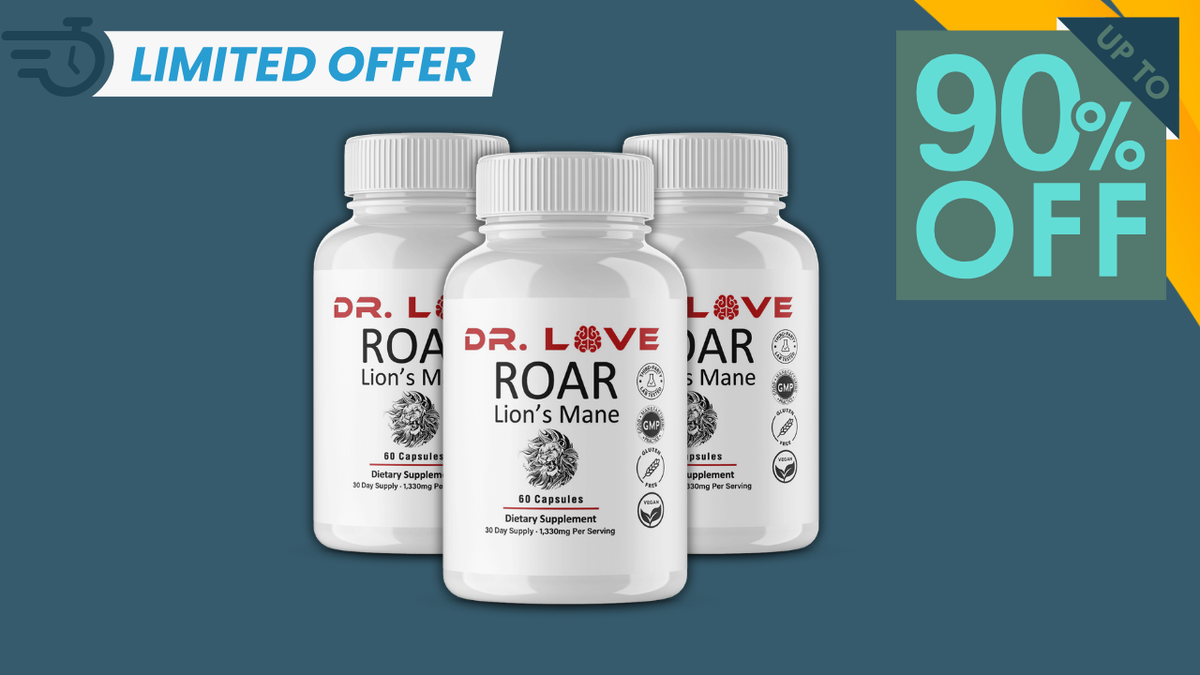
Roar Lion’s Mane is a commercial dietary supplement marketed by Dr. Robert Love’s supplement business.
The official product store promotes it for memory, stress, mood, brain-cell growth and sleep. One bottle is currently listed at $59. The seller also states that worldwide shipping is available and provides public customer-service contact information.
The separate promotional page markets a reduced-price package, discusses mental functioning and cognitive decline, and offers a 180-day guarantee.
The concept is attractive:
A recognizable functional mushroom.
No stimulant-centered pitch.
A long refund window.
A substantial promotional bundle.
A seller that can be identified and contacted.
Those are meaningful positives.
The limitations are equally real:
No guarantee of personal effectiveness.
No large published trial of the complete finished product proving every advertised benefit.
No independently audited public review total located during this assessment.
Several promotional claims that extend beyond what early Lion’s Mane research can firmly establish.
A need to verify the exact checkout page and package.
This does not create a negative verdict.
It creates a usable one.
Is Roar Lion’s Mane 100% Legit or a Scam?
“100% legit” sounds reassuring.
It is also an absolute statement about a complicated commercial situation.
No reviewer can guarantee every future shipment, batch, billing interaction or customer-service case.
Based on the current public evidence, however, Roar Lion’s Mane appears to be a legitimate product sold through functioning official channels.
It does not resemble a simple phantom-store operation.
There is an active product listing.
There is public business and customer-support information.
There is a stated refund guarantee.
There are defined purchase options.
Those facts support a positive legitimacy assessment.
What they do not support is guaranteed effectiveness.
So the accurate answer is:
Real product? Apparently yes.
Identifiable seller? Yes.
No evidence of an obvious fake-store scam? Correct.
Guaranteed cognitive improvement? No.
FDA-approved treatment for memory loss or Alzheimer’s disease? No.
Potentially worthwhile for informed adults? Yes.
Highly recommended? Yes, with conditions.
Those conditions matter.
Read the label.
Verify the package.
Check health risks.
Measure results.
Use the refund process when necessary.
That is responsible enthusiasm—not blind promotion.
Roar Lion’s Mane Pros and Cons for USA Buyers
What I Like
The product appears commercially established.
The official store is active and publishes support information.
The promotional bundle can offer strong value.
A four-bottle arrangement at the $59 headline price is dramatically more attractive than one bottle at the same price, assuming the checkout matches the promotion.
Lion’s Mane has preliminary human research.
The evidence is limited, but the ingredient is not merely a marketing invention.
The formula is presented as non-stimulant cognitive support.
This may appeal to people who dislike caffeine-heavy nootropics.
The guarantee is lengthy.
A stated 180-day period gives customers more evaluation time than many short refund policies.
Public customer-service information is available.
That improves accountability.
What I Don’t Like
Some benefit claims are too aggressive.
Promising scientific rationale should not be turned into certainty about disease prevention or brain-cell growth for every user.
The pricing varies significantly between official pages.
Customers need to verify their package carefully.
Independent review verification is limited.
Official testimonials should not be represented as an audited universal outcome.
The finished formula lacks definitive product-specific clinical proof.
Research on Lion’s Mane supports interest, not every claim made for every supplement.
Batch-specific testing details are not immediately obvious on the product pages reviewed.
Greater public documentation would improve transparency.
Results may be modest or absent.
Painfully unexciting. Completely necessary to say.
Who Should Consider Roar Lion’s Mane?
Roar may suit USA adults who:
- Want to experiment with a Lion’s Mane-centered supplement.
- Prefer cognitive support without stimulant-heavy formulas.
- Understand that ingredient research is preliminary.
- Are willing to use the product consistently.
- Will evaluate specific results rather than chasing a sensation.
- Have checked for allergies and medication concerns.
- Value a long stated refund period.
- Can access and verify the stronger promotional package.
- Already support brain health with sleep, movement and nutrition.
The ideal customer is curious, careful and patient.
Not desperate.
Desperation hears marketing promises differently. Everything sounds like rescue.
A supplement should be considered a tool.
Not rescue.
Who Should Speak With a Healthcare Professional First?
Use extra caution when you:
- Have mushroom allergies.
- Take prescription medication.
- Use medication affecting blood clotting, blood sugar or immune function.
- Are pregnant or breastfeeding.
- Are preparing for surgery.
- Have an autoimmune condition.
- Are treating a neurological or psychiatric condition.
- Have new, unexplained or worsening memory difficulties.
Dietary supplements can produce biological effects and may interact with medication or health conditions. The FDA advises consumers to discuss supplement use with physicians, pharmacists or other qualified professionals, particularly where medical treatment or adverse reactions are involved.
Stop taking a supplement and seek appropriate help when a serious reaction occurs.
Do not attempt to “push through” an allergic response because a website said results vary.
Some variation is acceptable.
Difficulty breathing is not a productivity milestone.
A Smarter Way to Test Roar Lion’s Mane
Do not begin with:
“I hope I become sharper.”
Too vague.
Choose three measurable outcomes.
For example:
- Minutes of uninterrupted focused work.
- Frequency of forgotten planned tasks.
- Afternoon mental-energy score.
- Time required to fall asleep.
- Number of nighttime awakenings.
- Ability to recall names or recent details.
- Frequency of careless errors.
Track those outcomes for several days before starting.
Then keep major lifestyle factors reasonably stable.
Record sleep.
Record caffeine.
Record unusual stress.
Record new medications or supplements.
Evaluate weekly.
Not every hour.
A watched mushroom capsule does not become more effective out of nervousness.
After four weeks, ask:
Did anything improve repeatedly?
Was the improvement large enough to matter?
Were there side effects?
Did another lifestyle change probably explain the result?
Would I buy the product again at the same price?
That final question strips away novelty.
Novelty is powerful. The first week of any wellness purchase feels productive simply because a decision was made.
Real value survives after the excitement becomes ordinary.
Reject the Lies, Keep the Useful Product
Roar Lion’s Mane does not need exaggerated claims to remain appealing.
Remove the miracle language and there is still plenty to like:
A real product.
An identifiable seller.
A popular mushroom ingredient with early human research.
A stimulant-free positioning.
A competitive promotional offer.
A lengthy stated refund guarantee.
That is enough.
It does not need to be called a guaranteed Alzheimer’s shield.
It does not need fake 14-day personal stories.
It does not need invented review totals.
And it definitely does not need “100% results, no gimmicks” pasted across the top like a carnival banner.
There are gimmicks.
Countdown timers are gimmicks.
Scarcity notifications are gimmicks.
Emotionally oversized health promises are gimmicks.
A product can use gimmicks and still be real.
Two things can be true at once. This concept should not feel revolutionary, yet here we are.
My final assessment is positive:
Roar Lion’s Mane is highly recommended for informed USA adults who understand its limitations, verify the exact offer, evaluate safety and measure their own experience.
It appears reliable enough to try.
It does not appear to be an obvious scam.
But no responsible review can guarantee that every person will notice improved memory, focus, mood or sleep.
Reject the misinformation from both sides.
Reject reviewers who claim every positive comment proves a miracle.
Reject reviewers who claim every disappointed customer proves fraud.
Reject the idea that an ingredient study automatically proves the finished product.
Reject the belief that “third-party tested” answers every quality question.
Reject the timer whispering that careful thought is your enemy.
Then replace all that noise with a better system.
Check the seller.
Read the label.
Verify the checkout.
Separate complaints into categories.
Define success.
Track outcomes.
Protect the refund deadline.
Speak with a medical professional when health questions exceed the boundaries of an affiliate article.
That is how USA consumers win.
Not by becoming cynical.
Cynicism is often just gullibility after a bad day.
Win by becoming selective.
Roar Lion’s Mane may support your routine. It may help you feel more focused or better rested. It may produce little noticeable change.
Your power is not in knowing the outcome before trying.
Your power is in creating an approach that reveals the outcome honestly.
That is bigger than one supplement.
It is a method for navigating an internet filled with polished promises, artificial certainty and reviews written like movie trailers.
You do not need louder advice.
You need better filters.
Use them.
Frequently Asked Questions
1. Is Roar Lion’s Mane a scam in the USA?
Roar Lion’s Mane appears to be a real commercial supplement sold through active official channels. The seller publishes a product listing, pricing and customer-support details, while a promotional page states that purchases are protected by a 180-day guarantee. That evidence does not support calling it an obvious fake-store scam. It also does not guarantee that every customer will experience cognitive benefits.
2. Is Roar Lion’s Mane 100% legit and reliable?
The available public evidence supports describing it as an apparently legitimate product from an identifiable seller. “100%” remains too absolute because no reviewer can guarantee every shipment, future offer, customer interaction or personal outcome. Roar appears reliable enough to consider, provided customers confirm their package, payment terms and refund conditions before ordering.
3. How much does Roar Lion’s Mane cost in the USA?
The standard official store currently lists one bottle for $59. A separate promotional page advertises Buy 1 Get 3 Free for the same $59 headline price. Because official campaigns can present different quantities and conditions, customers should verify the bottle count, shipping and final charge at checkout rather than relying on one review’s price statement.
4. How quickly does Roar Lion’s Mane work?
No universal timeline has been established for the complete Roar formula. Small Lion’s Mane studies have examined immediate effects, 28-day use and supplementation lasting 16 weeks, using different preparations and populations. Some users may notice subjective changes within weeks, while others may notice very little or nothing. Track defined outcomes instead of waiting for one dramatic mental “switch.”
5. Can Roar Lion’s Mane prevent Alzheimer’s disease or dementia?
Roar Lion’s Mane should not be treated as a proven method of preventing Alzheimer’s disease or dementia. Lion’s Mane has promising preliminary research, but small ingredient studies do not prove that the finished commercial formula prevents disease. The FDA does not approve dietary supplements for effectiveness before marketing in the same manner as drugs. Seek qualified medical evaluation for significant or worsening memory concerns.
Related Hastags
#RoarLionsMane #RoarLionsManeReview #RoarLionsManeReviews2026 #RoarLionsManeAppReview2026 #RoarLionsManeBonus #RoarLionsManeProduct #RoarLionsManePrice #RoarLionsManeOffers #RoarLionsManeBonuses #RoarLionsManeBuy #RoarLionsManeWebsite #RoarLionsManeSite #RoarLionsManeApp #RoarLionsManeHonestReviews #RoarLionsManeLatestReviews #RoarLionsManeUsersExperience #RoarLionsManeUsersReview #RoarLionsManeDemo #RoarLionsManeTutorial #RoarLionsManePurchaseOnline #RoarLionsManeBuyit