5 Brutal Truths Hidden in Lymph Flow Reviews and Complaints USA: The 4.91/5 Detail Most Buyers Miss
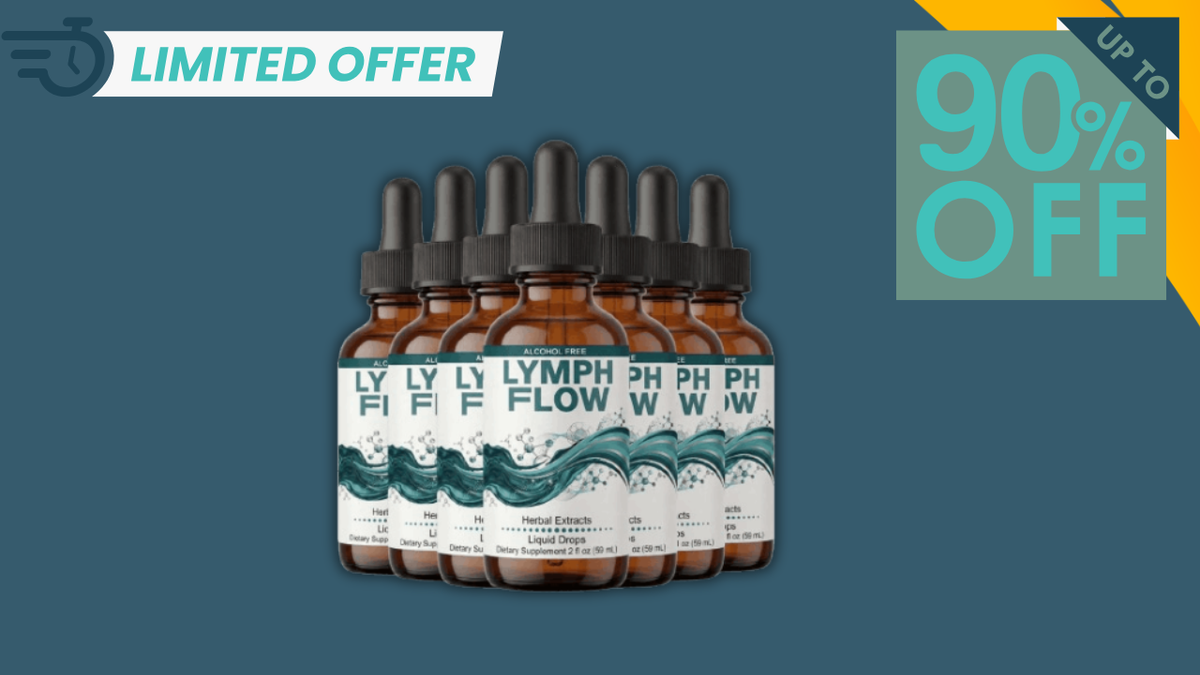
⭐ Seller-Displayed Rating: 4.91/5 ⭐⭐⭐⭐⭐
📝 Review Volume: The brand says “thousands of customers,” but no independently audited total is clearly displayed
💵 2-Bottle Package: $158 total — $79 per bottle
💵 3-Bottle Package: $207 total — $69 per bottle
💵 6-Bottle Package: $294 total — $49 per bottle
⏰ Results Begin: No fixed or guaranteed timeline; individual experiences vary
📍 Made In: USA, according to the brand
🌿 Formula: 13 botanical extracts and bio-active ingredients
💧 Serving: Two droppers daily; 30 servings per bottle
🧘♀️ Core Focus: Supporting natural lymphatic drainage, circulation and fluid balance
✅ Who It’s For: Adults seeking convenient botanical wellness support
🔐 Refund: 60 days through ClickBank, with published conditions
🟢 Our Say: A legitimate-looking commercial offer and an appealing formula for the right person. Highly interesting, yes. A guaranteed miracle for everyone? No—and any review telling you otherwise is selling a fantasy
Health note: Lymph Flow is sold as a dietary supplement. It is not intended to diagnose, treat, cure or prevent any disease, and this review is not medical advice.
Stop. Most Lymph Flow Reviews Are Asking the Wrong Question
Search “Lymph Flow Reviews and Complaints USA” and the internet immediately splits into two noisy tribes.
The first tribe practically throws rose petals at the bottle.
“Life-changing!”
“Five stars!”
“No scam, absolutely legit, everyone needs this!”
The other tribe kicks the door open and yells:
“All supplements are useless.”
“Another online scam.”
“Do not trust anything sold with a discount timer.”
Both sides sound confident. Almost aggressively confident—and confidence is seductive, even when it is carrying no evidence in its pockets.
The real question is not simply whether Lymph Flow is wonderful or terrible.
It is this:
What crucial information is missing from the reviews influencing USA buyers?
That question matters because missing information creates bad decisions. A customer may order six bottles because a near-perfect score feels irresistible, overlook a soy disclosure, confuse “made in the USA” with FDA approval or expect a liquid supplement to resolve symptoms that deserve medical attention.
Then comes disappointment.
Sometimes anger.
Sometimes a one-star complaint written at 1:13 a.m. with fourteen exclamation marks. Human nature, basically.
I began comparing the current product pages with the refund terms and federal supplement guidance while a cup of coffee slowly went cold beside my laptop. The coffee smelled burnt by then, slightly bitter. I remember thinking that the Lymph Flow offer looked polished—very polished—but the most useful details were not always the loudest ones.
The official website currently describes Lymph Flow as an alcohol-free liquid supplement made with 13 botanical extracts and bio-actives. Each two-dropper serving reportedly provides a 600 mg proprietary blend, and the bottle contains 30 servings. The seller highlights Boswellia, Curcumin, Horse Chestnut, Gotu Kola, Quercetin Phytosome and Ginger.
That is a meaningful starting point.
It is not the finish line.
Below are five misleading narratives hiding inside many Lymph Flow reviews—and the practical reality USA shoppers should use instead.
Lie #1: “A 4.91/5 Rating Proves Lymph Flow Works for Almost Everybody”
That 4.91 out of 5 score is powerful.
Not 4.2. Not “approximately four stars.”
Exactly 4.91.
Precision makes a number feel scientific. It creates the psychological impression that somebody somewhere counted every satisfied customer, placed the data into a serious spreadsheet and emerged with a verdict carved in granite.
Maybe the rating represents many genuinely happy buyers.
But context matters.
The current Lymph Flow page publishes a 4.91/5 average customer rating and says the product is used by thousands worldwide. What is not clearly shown alongside that headline figure is a complete independently audited dataset containing the total number of ratings, the entire one-to-five-star distribution, the number of rejected submissions and the process used to verify purchasers.
That does not make the score false.
It makes it seller-published.
Small distinction? No. Huge.
Why this advice is misleading
A customer rating describes reported satisfaction among a particular group of people. It does not predict what will happen inside another person’s body.
USA buyers differ by:
- Age
- Diet
- Activity level
- Hydration habits
- Medication use
- Existing health conditions
- Allergies
- Sleep quality
- Expectations
- Consistency
Two people can use the same dropper and tell completely different stories.
Consider Denise, a fictional but realistic office worker in Ohio. She already takes lunchtime walks, drinks plenty of water and wants a simple botanical addition to her routine.
Then consider Robert in Florida. His leg has become unexpectedly swollen and uncomfortable, but he decides that an online article has diagnosed him with “slow lymph.” He buys six bottles and postpones speaking with a healthcare professional.
Same product.
Different goal, different risk—and honestly, not even the same conversation.
A star rating cannot separate these situations. It just sits there looking shiny.
What happens when buyers believe the rating is a promise
Expectation becomes inflated before the package even leaves the warehouse.
A buyer imagines:
- Visible changes within days
- A dramatic reduction in puffiness
- Lighter legs every afternoon
- More energy
- No side effects
- A completely smooth purchasing experience
Then day four arrives.
Nothing cinematic happens.
By day ten the buyer begins checking the mirror too often. By week three they feel cheated—not necessarily because the product was fraudulent, but because the rating was silently converted into a personal guarantee.
This is how exaggerated praise manufactures future complaints.
One extreme feeds the other.
The recent USA review rule people should know
The Federal Trade Commission’s Consumer Reviews and Testimonials Rule took effect on October 21, 2024. It targets deceptive conduct involving fake or false reviews and allows civil penalties for knowing violations. The FTC has also emphasized that endorsements must be truthful and that marketers cannot misrepresent a fabricated experience as genuine customer feedback.
That is important in 2026 because Google is crowded with articles titled:
“My 90-Day Lymph Flow Journey.”
“Exactly What Happened to Me After Two Weeks.”
“My Wife Begged Me to Share These Results.”
Sometimes those stories may be real.
Other times there is no photograph of the product, no order receipt, no dated record and no credible evidence that the author used a single drop.
I have not personally used Lymph Flow.
Therefore, I will not describe how “my swelling vanished on day 14” or how I “woke up feeling twenty years younger.” That would be fiction wearing a testimonial costume.
The reality that leads to a better outcome
Use ratings as one signal, not the final verdict.
Look for reviews containing details such as:
- The package purchased
- Duration of use
- Daily serving followed
- Taste and convenience
- Lifestyle changes made at the same time
- Positive and negative observations
- Whether the reviewer bought the product
- Whether an affiliate commission may be earned
- Whether results were measured or merely felt
Real experiences tend to contain uncertainty.
“I think it helped, although I also started walking after dinner.”
That sentence is less thrilling than “THIS CHANGED EVERYTHING.”
It is also vastly more believable.
The breakthrough is simple: stop asking whether thousands of strangers liked a product and start asking whether its formula, cautions and routine fit you.
Lie #2: “Thirteen Natural Ingredients Automatically Create a Clinically Proven Formula”
Thirteen ingredients sounds impressive.
It feels substantial. Almost crowded.
Like opening a kitchen cabinet and discovering every herb jar arranged in formation, waiting for battle.
The official product page says a two-dropper serving provides a 600 mg proprietary blend containing 13 botanicals and bio-actives. Six ingredients receive prominent attention: Boswellia, Curcumin, Horse Chestnut, Gotu Kola, Quercetin Phytosome and Ginger.
Interesting ingredients?
Yes.
Automatic proof of the complete product?
No.
Where the logic goes wrong
Many affiliate reviews use a three-step trick:
- Find research concerning an individual botanical.
- Point out that Lymph Flow contains that botanical.
- Declare that Lymph Flow produces the same result.
The missing pieces are dosage, preparation, standardization, delivery method, formulation and the population studied.
Horse Chestnut, for example, has been examined for particular circulation-related uses, but research involving one standardized extract cannot simply be transferred to every supplement containing Horse Chestnut. NCCIH’s current fact sheet discusses both potential usefulness and safety considerations for the herb rather than endorsing every commercial formula that includes it.
Curcumin and Ginger also have substantial histories of use and scientific interest. That makes them worth discussing. It does not turn every blend containing them into a clinically established treatment.
The difference is not academic nitpicking.
It is the difference between saying, “This recipe contains nutritious foods,” and saying, “This exact meal has been clinically proven to produce a particular result.”
One is plausible.
The other requires direct evidence.
The proprietary blend creates another gap
The seller discloses 600 mg for the combined blend but does not present each highlighted ingredient’s individual quantity in the public marketing text.
USA labeling rules generally require dietary ingredients and amounts to appear in the Supplement Facts panel, but ingredients within a proprietary blend can be listed without a separate quantitative amount for every component.
So a buyer knows the total blend weight.
But how much is Horse Chestnut?
How much is Curcumin?
How much Quercetin?
Without individual amounts, a consumer cannot easily compare the formula with quantities used in published research.
This does not prove the doses are inadequate. It does not prove anything sinister.
It means the comparison cannot confidently be made from the public number alone.
A foggy window is not necessarily hiding a monster. You still cannot see through it, though.
Why the ingredient-count obsession causes disappointment
“Thirteen ingredients” may unconsciously become “thirteen times more effective.”
Biology does not work like bonus points in a mobile game.
A larger ingredient list can be thoughtfully designed. It can also make it harder to identify which components matter, whether the amounts are meaningful and which ingredient might cause an unwanted reaction.
Quality is not a headcount.
A restaurant with a 60-item menu is not automatically better than a small restaurant serving six dishes extremely well. Sometimes the giant menu means the kitchen is quietly panicking.
The reality that creates better confidence
Evaluate the formula using practical questions:
- Are all ingredients listed on the actual bottle?
- Are botanical extracts standardized?
- Is third-party testing available?
- Can the company provide a certificate of analysis?
- Are purity, microbial and heavy-metal tests conducted?
- Is the soy allergen clearly disclosed?
- Are the serving directions consistent across pages?
- Has the completed formula itself been studied?
The FDA requires supplement labels to identify dietary ingredients and include a Supplement Facts panel, while noting the proprietary-blend exception for individual quantities.
Contacting customer service for a current label or testing documentation is reasonable. A company asking customers to swallow a product should expect questions about what is inside.
That is not hostility.
It is adult purchasing behavior.
The useful conclusion is neither “Lymph Flow is clinically proven” nor “the ingredients mean nothing.”
The fair conclusion is this:
Lymph Flow contains botanicals with relevant histories and varying levels of ingredient-specific research, but that alone does not establish guaranteed results from the finished blend.
A little less fireworks.
A lot more truth.
Lie #3: “Natural, Made in the USA and GMP-Certified Means Completely Risk-Free”
This one gets repeated so often that it begins sounding like a law of physics.
Natural equals safe.
USA-made equals government-approved.
GMP-certified equals clinically proven.
Nope.
All three characteristics may be positive. None of them means Lymph Flow is automatically appropriate for every adult.
The current promotional page describes the product as natural, non-GMO, made in the USA and manufactured in an FDA-registered, GMP-certified facility. It also says the formula contains soy and warns that people taking blood thinners, pregnant or breastfeeding adults, and several other groups should seek professional guidance or avoid use without approval.
Those warnings deserve more attention than they usually receive.
“Made in the USA” is not FDA approval
The FDA regulates dietary supplements differently from prescription and over-the-counter drugs. Under current USA law, the FDA is generally not authorized to approve dietary supplements for safety and effectiveness before they are marketed.
An FDA-registered facility means the facility is registered.
It does not mean the agency tested Lymph Flow and confirmed that it reduces puffiness, improves lymphatic drainage or works for a particular condition.
GMP standards concern manufacturing practices and product handling.
They do not demonstrate clinical effectiveness.
A spotless kitchen may still produce a terrible pie. Clean oven, bad recipe. Different question.
“Natural” is also not a magic safety shield
The word natural evokes green leaves, clean water, sunlight, and perhaps a person wearing loose linen while smiling in a field.
It feels safe.
But botanical ingredients can be biologically active—and that is precisely why people use them.
NCCIH’s current herb-interaction guidance warns that herbal supplements may interact with prescription medicines, over-the-counter drugs and other supplements. Potential concerns include drug interactions, direct toxicity and contamination.
Nature is not automatically gentle.
Poison ivy is natural.
So is a thunderstorm. Beautiful from the porch, less charming when your roof leaves the building.
That does not mean herbal products are bad. It means the word natural cannot replace a safety check.
Who should pause before taking Lymph Flow?
Based on the seller’s own disclosures and general supplement guidance, extra caution is appropriate for people who:
- Use blood thinners or anticoagulants
- Take multiple prescription medications
- Are pregnant or breastfeeding
- Are under 18
- Have a soy allergy or sensitivity
- Have liver or kidney concerns
- Are preparing for surgery
- Have a medical condition
- Experience persistent, unexplained or severe swelling
The seller specifically says the product contains soy and cautions groups including pregnant or nursing adults and people taking anticoagulant medication.
NCCIH also notes that supplements may pose additional risks for people with certain medical conditions, those preparing for surgery, pregnant or nursing adults and children.
The dangerous consequence of the risk-free narrative
A customer may add Lymph Flow to a complicated medication routine without mentioning it to a pharmacist.
Or they may interpret sudden swelling as proof that they merely need “lymph support.”
That second situation matters enormously.
A supplement cannot diagnose why someone has swelling, heavy legs or discomfort. Those symptoms can arise from common lifestyle factors, but they may also deserve prompt medical attention—especially when sudden, severe, one-sided or accompanied by breathing difficulty or chest symptoms.
The product is a bottle, not a detective.
It cannot investigate you.
The reality that produces safer success
Before using Lymph Flow, write down:
- Every prescription drug
- Every over-the-counter medicine
- Every vitamin
- Every botanical supplement
- Every powder or gummy
- Known allergies
- Upcoming procedures
Then show the list and product label to a pharmacist or qualified healthcare professional.
Yes, even the tea you drink nightly.
Even the sleep gummy your cousin swears “is basically nothing.”
Nothing becomes something when combined with four other somethings.
This step is not anti-supplement. It is what responsible supplement use looks like.
Lymph Flow may suit many adults.
It does not need to suit everybody to be a worthwhile product.
Lie #4: “Lymph Flow Can Fix Every Reason You Feel Puffy, Heavy or Bloated”
This narrative is emotionally powerful because it gives scattered symptoms one clean explanation.
Puffy face?
Lymph.
Tight rings?
Lymph.
Heavy legs after work?
Lymph.
Afternoon fatigue?
Also lymph.
Finding one villain feels satisfying. The story becomes simple.
Unfortunately, the human body is rarely simple.
Lymph Flow is marketed for adults who notice issues such as morning puffiness, tight rings, swollen ankles, heavy legs and afternoon sluggishness. The brand says its formula supports natural drainage and circulation.
That positioning may resonate strongly with USA adults who sit for long periods, commute, fly regularly or spend most of the day staring at a screen.
I know the feeling of standing after hours at a laptop and discovering that my body has apparently turned into an old folding chair. One knee clicks. The shoulders protest. Suddenly walking to the kitchen feels like an expedition.
Still, feeling stiff or puffy does not identify the cause.
Why the “one cause, one solution” advice is flawed
Fluid retention, discomfort, bloating and heavy-feeling legs can be influenced by many factors, including:
- Long periods of sitting or standing
- Heat
- Travel
- Dietary sodium
- Hormonal changes
- Hydration patterns
- Medication effects
- Sleep and activity levels
- Underlying health concerns
A wellness supplement cannot determine which factor applies.
Some affiliate articles use phrases such as “your lymph is clogged” with absolute certainty, despite knowing nothing about the reader’s medical history.
That is not insight.
That is a diagnosis-shaped marketing sentence.
What happens when buyers accept the narrative
The first consequence is financial.
A person orders a large package for a concern the product may not meaningfully address.
The second consequence is emotional.
They watch themselves constantly for results and become increasingly frustrated.
The third consequence may be more serious.
They delay professional evaluation because the article has convinced them that every symptom is simply a sluggish drainage system.
This is why responsible marketing must maintain a boundary between general wellness support and disease claims.
The FDA states that dietary supplements are not FDA-approved to treat or prevent diseases, and quick-fix promises should be approached cautiously.
The reality that creates genuine progress
Lymph Flow should be approached as one possible component of a broader wellness routine—not a universal repair kit.
That routine may include:
- Regular walking or movement breaks
- Appropriate hydration
- Balanced nutrition
- Attention to sodium intake
- Adequate sleep
- Following the labeled serving
- Professional evaluation of persistent symptoms
The boring fundamentals return again.
They always do.
Nobody wants an article titled “Walk Regularly and Pay Attention to Your Body.” It would sit quietly on page nine of Google while “FORBIDDEN LYMPH SECRET” collects every click.
But effectiveness does not become less real because it lacks dramatic music.
A useful breakthrough occurs when the buyer defines success realistically.
Perhaps success means finding a liquid format that is easy to use consistently.
Perhaps it means adding relevant botanicals to an established routine.
Perhaps it means trying the product within the refund window while tracking how they feel—without assuming every daily fluctuation came from the drops.
Track sleep, movement, diet and serving consistency.
Otherwise, how would anyone know what changed?
The body is a crowded room. Many conversations happen at once.
Lie #5: “The Cheapest Bottle Price and 60-Day Guarantee Make the Six-Bottle Deal a No-Brainer”
The pricing section is designed well.
Very well.
The six-bottle package sits prominently with a best-value label, bonus guides and the lowest cost per bottle.
Current advertised USA pricing is:
- Two bottles: $79 each, $158 total, plus a shipping fee
- Three bottles: $69 each, $207 total, with free USA shipping
- Six bottles: $49 each, $294 total, with free USA shipping and digital bonuses
These were the prices displayed on the official promotional page during this July 2026 review and could change.
Mathematically, the six-bottle package has the lowest price per bottle.
Psychologically, it also does something clever.
It makes spending $294 feel like saving $480.
Marketing is remarkable that way. Your bank balance goes down, but the page congratulates you for winning.
Why “lowest unit price” is not always “best decision”
The larger package may genuinely make sense for someone who:
- Has reviewed the ingredients
- Has checked medication interactions
- Understands the proprietary blend
- Can afford the upfront payment
- Plans to use the product consistently
- Is comfortable with the refund terms
For an uncertain first-time buyer, $294 may be too large a commitment.
The two-bottle package costs more per unit, but it requires less total spending.
There is no universal winner.
A lower unit price is valuable only when the bottles are actually appropriate and used. Six discounted bottles collecting dust beside an abandoned protein tub are not savings.
They are shelf decoration.
The guarantee has details worth reading
Lymph Flow’s current refund policy says customers have 60 days after purchase to request a refund. Purchases are processed by ClickBank, and requests must be submitted through ClickBank’s customer-support system. The policy says customers do not need to mail bottles back and that approved credits generally appear within five to ten business days.
That is a meaningful customer-protection feature.
But it is not identical to “nothing can possibly go wrong.”
Buyers still need:
- Their order information
- The email address used at checkout
- The purchase date
- Access to ClickBank support
- Awareness of the deadline
The guarantee starts from the purchase date under the published wording, not from whichever day the customer finally opens the first bottle.
USA shipping also has conditions
The seller currently estimates domestic delivery at five to seven business days. Its shipping policy lists a $14.95 USA shipping charge for a single-unit order and free shipping for three- and six-month supplies. Tracking information is sent after the order is processed.
Carriers can be delayed.
Addresses can be entered incorrectly.
Emails disappear into spam folders where they live beside expired coupon codes and messages from mysterious princes.
A delivery delay does not automatically prove a scam. It may still be frustrating.
Both can be true.
The reality that leads to a smoother purchase
Immediately after checkout, save:
- The receipt
- ClickBank order number
- Purchase date
- Package selected
- Final amount charged
- Shipping confirmation
- Tracking email
- Refund-policy screenshot
- Support correspondence
Create a folder named Lymph Flow Order.
This takes less than one minute.
That minute may prevent a lot of shouting later.
A refund promise is most useful when the customer understands how to use it.
What Lymph Flow Appears to Do Well
After five sections of skepticism, let’s pull the wheel back toward the center.
There are several things I like about the offer.
The liquid format is convenient for people who dislike swallowing capsules. The formula is alcohol-free. The seller publishes a serving size, discloses soy, provides package pricing and identifies a refund route through an established retailer. The current site also gives USA shipping information and advises certain customers to consult a healthcare professional.
These are positive signals.
The product is not merely an anonymous bottle photographed against a suspicious white background with no support details.
Lymph Flow has:
- An active product website
- Defined serving information
- Listed botanical ingredients
- Current package pricing
- Published shipping terms
- Customer-support information
- ClickBank payment and refund handling
- A written 60-day guarantee
That supports describing it as a legitimate-looking commercial supplement offer.
Not a guaranteed treatment.
Not a magical reset button.
A real-looking product with strengths, limitations and questions worth asking.
Which is how most things in life actually are.
Who May Find Lymph Flow Appealing?
Lymph Flow may interest USA adults who:
- Prefer liquid drops over capsules
- Want an alcohol-free botanical blend
- Are looking for general wellness support
- Understand that results vary
- Can follow the serving consistently
- Have reviewed allergies and medication concerns
- Want a published refund period
- View supplements as additions rather than replacements
Someone who works long hours at a desk may appreciate its simplicity.
A frequent traveler might prefer a single liquid product instead of multiple pill bottles.
An adult already focusing on movement, hydration and sleep may see it as another tool.
Not the toolbox, truck and entire hardware store.
Who Should Slow Down Before Ordering?
Pause and seek professional advice when you:
- Take blood thinners
- Use several prescriptions
- Have a soy allergy
- Are pregnant or breastfeeding
- Are preparing for surgery
- Have liver or kidney concerns
- Are younger than 18
- Have persistent or unexplained swelling
- Expect the supplement to replace medical care
Sometimes the best purchasing action is a pause.
Not forever. Just long enough to ask the question that prevents a bigger problem.
Is Lymph Flow a Scam, Reliable or “100% Legit”?
Based on the currently available pages, Lymph Flow appears to be a real supplement offer with published product details, package pricing, USA shipping terms, customer support and a ClickBank-managed refund process.
Those are reassuring commercial signals.
But “100% legit” is vague.
Does the product appear to exist and be available for purchase?
Yes.
Is there a defined payment and refund route?
Yes.
Does that mean every claimed benefit is independently proven?
No.
Will every customer experience a noticeable outcome?
No responsible person can promise that.
Is it FDA-approved to treat swelling, lymphedema or circulatory disease?
No. Dietary supplements are regulated differently from drugs and are generally not FDA-approved for safety and effectiveness before reaching the market.
My assessment is positive but conditional:
Lymph Flow looks like a credible product worth considering for an appropriate adult who understands its purpose, checks the ingredients and keeps expectations grounded.
I would not label it an obvious scam based on the current commercial information.
I also would not call it a guaranteed solution.
That middle position annoys people who want a dramatic yes or no.
It remains the honest one.
Final Verdict: Reject the Noise and Fill the Gaps
The internet loves extremes.
Miracle.
Fraud.
Five stars.
Zero stars.
Buy six bottles immediately.
Never take another supplement as long as you live.
Real decisions are quieter.
They happen when someone stops, compares the facts and asks whether a product matches their own circumstances.
The five gaps uncovered here are not reasons to panic. They are tools:
- Understand that a seller-displayed rating is not a personal guarantee.
- Separate research on individual ingredients from proof of a finished formula.
- Stop treating natural and USA-made as synonyms for universally safe.
- Do not assume every instance of puffiness or discomfort has the same cause.
- Read package, shipping and refund details before paying.
Fill those gaps and the entire offer becomes easier to judge.
You may decide Lymph Flow is exactly the kind of botanical supplement you were looking for.
You may decide to ask a pharmacist first.
You may decide the proprietary blend is not transparent enough for your preference.
All three can be intelligent outcomes.
Success is not blindly purchasing the product.
Success is making a decision you understand.
Do not let a countdown clock think for you. Do not let a perfect-looking rating replace your own questions. And do not let an anonymous “SCAM!” comment carry more weight than verifiable information.
Look closer.
Read the terms.
Check the formula against your situation.
Then decide.
That is how USA buyers avoid misinformation—and how a potentially good product gets evaluated fairly instead of being buried beneath exaggerated praise or lazy suspicion.
Frequently Asked Questions
1. Is Lymph Flow a scam or a legitimate supplement?
Lymph Flow appears to be a genuine commercial supplement offer with an active website, listed product details, package pricing, USA shipping information and a ClickBank-managed refund process. Those are positive legitimacy signals. They do not guarantee that every customer will experience results or that every promotional statement has been independently proven.
2. Does Lymph Flow really have a 4.91/5 rating?
The official product website displays a 4.91/5 average rating and says the supplement is used by thousands of customers. That rating is published by the seller. A complete independently audited review total and full distribution of one-to-five-star feedback are not clearly provided beside the claim, so it should not be treated as an outside-verified score.
3. How quickly should someone expect Lymph Flow results?
There is no dependable result date that applies to every user. Be skeptical of articles promising dramatic changes on day seven, day fourteen or any other fixed deadline. A person’s experience can be affected by consistency, lifestyle, medication use, health status and the actual cause of their symptoms. Lymph Flow should be assessed as general wellness support rather than a guaranteed rapid treatment.
4. Is Lymph Flow FDA-approved or safe for everybody?
Lymph Flow is a dietary supplement, not an FDA-approved drug treatment. The FDA generally does not approve dietary supplements for safety and effectiveness before marketing. The seller also discloses soy and cautions several groups, including people taking blood thinners and pregnant or breastfeeding adults.
5. How does the Lymph Flow 60-day refund work?
The current policy says customers have 60 days after purchase to request a refund through ClickBank. No bottles need to be mailed back, and approved credits typically appear within five to ten business days. Keep your ClickBank order information, checkout email and purchase date so the request can be located and submitted within the stated window.
Related Hastags
#LymphFlow #LymphFlowReview #LymphFlowReviews2026 #LymphFlowAppReview2026 #LymphFlowBonus #LymphFlowProduct #LymphFlowPrice #LymphFlowOffers #LymphFlowBonuses #LymphFlowBuy #LymphFlowWebsite #LymphFlowSite #LymphFlowApp #LymphFlowHonestReviews #LymphFlowLatestReviews #LymphFlowUsersExperience #LymphFlowUsersReview #LymphFlowDemo #LymphFlowTutorial #LymphFlowPurchaseOnline #LymphFlowBuyit