11 Misleading Lies About The Power of Positive Habits Reviews and Complaints 2026 USA — Read This Before You Trust the Loudest “Expert” Online
⭐ Rating: 4.8/5 ⭐⭐⭐⭐⭐
📝 Public Review Count: Not independently verified — and honestly, be careful with anyone throwing huge numbers around without proof
💵 Original Value Mentioned: $297
💵 Current Digital Price Mentioned: Around $49 on public launch material
💵 Current Deal: Check the official checkout page because launch prices can change, sometimes fast
⏰ Results Begin: Usually after repeated use, not after one lazy scroll-through at midnight
📍 Available For: USA readers and international buyers through digital access
🧘♀️ Core Focus: Positive habits, mindset rewiring, cognitive restructuring, behavior change, personal growth
✅ Who It’s For: USA buyers who feel stuck, inconsistent, overwhelmed, mentally noisy, or tired of failing the same goals every year
🔐 Refund: Verify the live checkout page; one public listing mentions a 90-day guarantee, but always check before purchase
🟢 Our Say: I like this product. Highly recommended for the right person. Reliable-looking, no obvious scam signal from available public information, and yes, it appears legit — but it is not a magic button.
Let’s call it out.
A lot of what you read online about The Power of Positive Habits Reviews and Complaints 2026 USA is not really advice.
It is noise wearing a nice jacket.
Some review pages sound like they were written by a robot trapped inside a coupon website. Some sound like a man yelling from a folding chair outside a self-help seminar. Others are all sunshine: “100% legit, no scam, life-changing, buy now, don’t blink.” And some go the other way: “Everything is fake, nothing works, trust nobody.” Which is dramatic. Also exhausting.
The truth is somewhere less sexy.
And that’s why this article exists.
Because false narratives spread fast. They are easy to repeat. They don’t ask much from your brain. “Scam!” is easy. “Miracle!” is easy. But thinking? Comparing? Asking what the product actually does and what the buyer must actually do? That takes a little effort, and apparently effort is now a rare mineral.
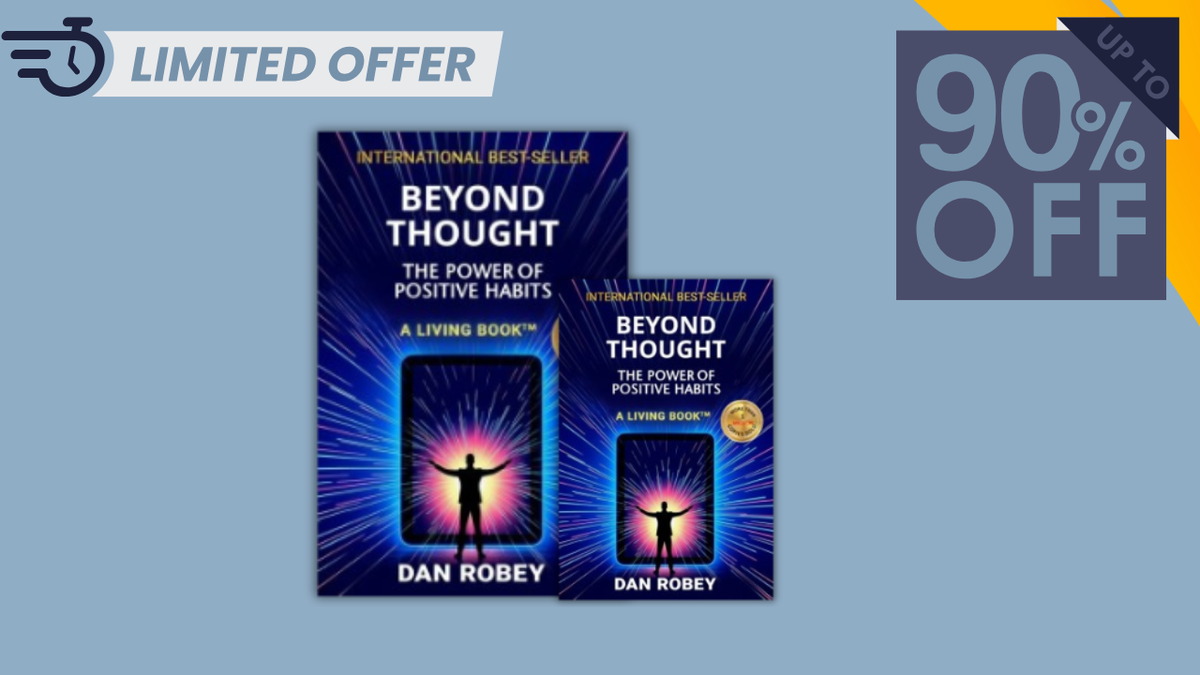
The Power of Positive Habits, connected to Dan Robey and the newer Beyond Thought: The Power of Positive Habits Living Book edition, has been publicly described as a digital “Living Book” with built-in audiobooks, multimedia-style “Quantum Portals,” and 12 months of upgrades. A May 2026 release announcement also says the digital edition is available for $49 through platforms including ClickBank and Digistore24.
So yes, there is a real product conversation here.
But the advice around it? Messy. Sticky. Sometimes useful, often ridiculous.
Let’s break the bad stuff open.
Misleading Lie #1: “If The Power of Positive Habits Is Legit, It Should Work Automatically”
This is the big one.
The classic.
The king of bad self-improvement advice sitting on a plastic throne.
People see the word “autopilot” and suddenly think, “Great, I’ll buy it and my brain will become a disciplined Navy SEAL by Tuesday.”
No.
That is not how habits work.
That is not how people work.
That is barely how coffee machines work.
A product can guide you, push you, organize your thinking, maybe even slap your mental laziness a little. But it cannot live your Tuesday morning for you. It cannot stop your hand from reaching for the phone at 6:07 a.m. It cannot whisper, “Do the workout” while you are emotionally negotiating with your blanket.
And trust me, the blanket usually wins.
The flaw in this advice is that it turns personal growth into passive consumption. Buy the thing. Own the thing. Become the thing.
That is not transformation. That is shopping with hope attached.
In the USA especially, people are used to speed. Same-day shipping. Instant streaming. Food delivered before you finish complaining about being hungry. So when someone buys a habit product, they sometimes expect the same delivery model: “Where is my new personality? I paid already.”
But behavior change is not Amazon Prime.
It is repetition.
It is noticing your patterns.
It is making the better choice when the old choice is sitting there like a smug little villain.
The reality is this: The Power of Positive Habits can only help if you use it as a system, not as a souvenir.
Public product pages position the newer Beyond Thought edition as more than a static ebook, describing built-in audio and monthly updates inside a Living Book format. That is useful, but only if the buyer actually returns to the material and applies it.
Here’s what actually works.
Pick one habit. Not eleven. Not a complete personality renovation with scented candles and a new notebook.
One.
Maybe it is morning phone scrolling. Maybe it is procrastination. Maybe it is negative self-talk. Maybe it is stress eating. Maybe it is the “I’ll start Monday” disease, which has probably ruined more dreams than bad Wi-Fi.
Use the product around that one habit.
Track it.
Repeat it.
Fail once, continue anyway.
That is where results begin. Quietly. Annoyingly. Like a faucet drip in the other room.
Misleading Lie #2: “Complaints Mean It Must Be a Scam”
This one is lazy thinking dressed up as caution.
Someone sees the word “complaints” next to a product name and immediately goes, “Aha! Scam!”
Slow down, detective.
Every product has complaints.
Apple has complaints. Netflix has complaints. Amazon has complaints. Your favorite restaurant has complaints. Someone, somewhere, has probably complained that a beach had too much sand. Humans are gifted like that.
So when you search The Power of Positive Habits complaints USA, don’t just panic because the word complaint exists. Read what people are actually complaining about.
Is it about access?
Billing?
Refund confusion?
The content?
The expectations?
Or is it someone who opened the product once, ignored it, then declared it useless with the confidence of a man reviewing a gym he never entered?
Those are not the same thing.
A complaint about checkout terms is different from a complaint about product quality. A complaint from someone who expected overnight transformation is different from a genuine delivery issue.
Bad advice says: “Complaints = bad product.”
Better thinking says: “What pattern do the complaints show?”
That’s the grown-up version.
The consequence of following this lie is simple: you become scared of every product that has normal buyer feedback. You avoid tools that might help you. Or worse, you only buy products with fake-looking perfect reviews, which is like trusting a restaurant where every review says “best food in universe!!!” and somehow nobody mentions the fries.
The reality?
A product can be legitimate and still have mixed opinions.
A product can be helpful and still not fit everyone.
A product can be reliable-looking and still require you to check the checkout terms, refund rules, and what exactly is included.
That’s not negativity. That’s being awake.
Misleading Lie #3: “This Is Just Another Motivational Ebook”
I get why people say this.
The self-help market is packed. Stuffed. Overflowing like a suitcase someone sat on.
Every week there is a new “breakthrough” book, a new 21-day reset, a new habit hack, a new morning routine from someone who probably has three assistants and no school drop-off.
So when people see The Power of Positive Habits, they may shrug and say, “Another ebook.”
But that is not the full picture.
The newer Beyond Thought version is publicly described as a Living Book, not just a static PDF. Launch materials mention built-in full audiobooks, multimedia coaching-style experiences, and 12 monthly upgrades.
Now, does that automatically mean it is perfect?
No.
But it does mean the “just another ebook” label is too thin. Too lazy. Like calling a smartphone “a rectangle that makes noise.”
Technically? Sure.
Useful? Not really.
The flaw in this advice is that it makes buyers underuse the product. They skim it. They treat it like content to consume, not a tool to practice. Then they walk away unimpressed.
That’s like buying a treadmill and reviewing it based on how it looked in the corner.
“Nice machine. Didn’t lose weight.”
Amazing.
The truth is that a product like this should be used in layers.
First pass: understand the concept.
Second pass: choose the habit problem.
Third pass: apply the exercises or audio guidance.
Fourth pass: review what changed.
Then repeat.
Sounds boring? Good. Real progress is often boring. That is the dirty secret.
People want lightning. But most lasting change is more like laundry. Repeated, ordinary, slightly irritating, and weirdly powerful when ignored too long.
For USA buyers juggling work, stress, kids, debt, news fatigue, and 400 unread emails, a product like this only makes sense if it becomes part of a routine.
Ten minutes.
Fifteen minutes.
One section.
One action.
That beats reading the whole thing once and pretending your life should now rearrange itself out of respect.
Misleading Lie #4: “If It Doesn’t Work in 3 Days, It’s Useless”
This is not advice.
This is impatience with a microphone.
People try something for three days and then announce, “Nothing happened.”
Of course nothing happened.
Your habits did not move in overnight and build a new house.
Your nervous system did not file paperwork, approve changes, and send you a congratulatory email.
Three days is not transformation. Three days is barely enough time to realize you have a problem.
This belief is dangerous because it teaches people to quit during the most important phase: the awkward beginning.
The beginning is when things feel clumsy. You forget. You resist. You feel silly. You want to go back to old behavior because old behavior feels familiar, even if it is ruining your life in tiny little spoonfuls.
The USA self-improvement market is full of fast-result language. Drop 20 pounds. Make $10k. Change your brain. Fix your life. Wake up rich. Sleep like a baby. Smile like a toothpaste ad.
It’s loud.
But habit change is quieter.
The reality that works is not “three days.”
It is repetition over time.
If you use The Power of Positive Habits, give yourself a real test window. Try 14 days. Better, 30. Not because there is magic in those numbers, but because repeated behavior gives you data.
You start seeing where you sabotage yourself.
You see which time of day breaks you.
You see what triggers the bad loop.
That is valuable.
For example, maybe you think your problem is lack of motivation. But after tracking, you realize your real problem is sleep. Or stress. Or your phone. Or that you are trying to build a morning routine when your mornings are chaos and cereal dust.
That insight matters.
And that is exactly why quitting after three days is foolish.
It robs you of the pattern.
Misleading Lie #5: “Positive Thinking Alone Will Fix Everything”
No. Please no.
Positive thinking is useful.
Positive thinking is not a forklift.
It cannot lift every problem by itself.
Some reviews and promotional-style content make habit change sound like smiling harder at your problems until they surrender. That is cute. And false. Maybe even dangerous if someone takes it too far.
You can think positively and still need structure.
You can repeat affirmations and still need boundaries.
You can visualize success and still need to do the boring work.
This is where people misunderstand products like The Power of Positive Habits. The value is not simply “think happy thoughts.” The stronger angle is habit restructuring: changing repeated thought-behavior loops that shape your daily life.
That is a different beast.
Positive thinking says, “I can do this.”
Habit training says, “Here is when I will do it, how I will reduce resistance, what trigger starts it, and what I will do when I fail.”
See the difference?
One is a spark.
The other is wiring.
A spark is nice. Wiring keeps the lights on.
The consequence of believing “positive thinking is enough” is that you may blame yourself when life does not magically improve. You start thinking, “Maybe I’m not positive enough.” And now we’ve added guilt to the pile. Wonderful.
The reality is healthier:
Use positivity as fuel, but build systems as the engine.
The Power of Positive Habits seems best approached as a practical self-improvement framework, not a wish machine.
Misleading Lie #6: “All Reviews Are Equal”
Absolutely not.
Some reviews are helpful.
Some reviews are affiliate copy with glitter.
Some reviews are written by people who clearly did not read the product.
Some are angry because the buyer misunderstood the offer.
Some are positive but empty. “Amazing product!” Okay, why? What changed? Did you use it? Did your dog write this?
In 2026, USA readers need to be more skeptical because online search is crowded with low-quality review content. Google itself has warned against search-engine-first content and spam tactics, and its documentation says ranking systems are designed to reward helpful, reliable, people-first content rather than material created mainly to manipulate rankings.
That matters for affiliate reviews.
Because if a review only exists to rank and push a button, it may not help you make a smart decision.
Here is a simple rule.
Good reviews explain:
What the product is.
Who it is for.
What it is not.
What buyers may misunderstand.
How to use it.
Where expectations need adjusting.
Bad reviews scream:
“Buy now!”
or
“Scam!”
and then provide the intellectual nutrition of cotton candy.
The consequence of trusting all reviews equally is obvious. You make emotional decisions. You get pushed around by whichever article had the loudest headline.
The reality is this:
Read reviews like a buyer, not a fan.
Look for specifics.
Look for balance.
Look for warnings.
Look for someone willing to say, “This is good, but not for everyone.”
That line is usually more trustworthy than “100% guaranteed life-changing miracle.” Because come on.
Misleading Lie #7: “If It Has Strong Marketing, It Must Be Fake”
This is the skeptic’s favorite shortcut.
And I understand it.
Strong marketing can feel annoying. Big claims. Bright buttons. Countdown energy. Testimonials. Price drops. The whole thing can smell like a carnival funnel cake — sweet, loud, slightly suspicious.
But strong marketing does not automatically mean fake.
It means the product is being sold.
That’s business.
The question is not “Does the sales page use persuasion?”
Of course it does.
The better question is: Is there a real product behind the persuasion?
From available public information, Beyond Thought: The Power of Positive Habits has release materials describing the Living Book edition, monthly upgrades, digital distribution, and author Dan Robey’s connection to the original million-copy book.
So the conversation should not be reduced to “marketing = scam.”
That’s too simple.
The flaw in this advice is that it makes people reject anything with a bold sales page while still falling for quiet nonsense elsewhere. A boring page can sell junk too. Trust me, scams can wear beige.
The reality?
Separate the marketing from the mechanism.
Marketing says: “This can change your life.”
Mechanism asks: “How?”
If the product gives you a way to identify thought loops, build repeatable habits, and engage with ongoing content, then there is at least a structure worth evaluating.
You can dislike the hype and still like the tool.
That is allowed.
Adults can hold two thoughts at once. Sometimes even three, before coffee.
Misleading Lie #8: “Everyone in the USA Will Use It the Same Way”
Nope.
A remote worker in Austin does not have the same day as a nurse in Chicago.
A college student in California is not dealing with the same schedule as a truck driver in Ohio.
A parent in Florida with two kids and a leaking dishwasher is not living the same life as a single entrepreneur in New York drinking overpriced espresso and saying “bandwidth” too much.
Habits are personal.
Context matters.
This is where generic advice fails.
Someone might say, “Use it every morning.”
Great. What if mornings are chaos?
Someone says, “Journal for 30 minutes.”
Lovely. What if you have 8 minutes and a toddler yelling about socks?
Someone says, “Do breathwork before work.”
Fine. What if your shift starts at 5 a.m. and your soul is still buffering?
The consequence of one-size-fits-all thinking is frustration. People think the system is failing when really the routine is poorly designed for their life.
The reality is customization.
Use The Power of Positive Habits around your real schedule, not your fantasy schedule.
If mornings are impossible, use evenings.
If reading feels heavy, use audio.
If you are overwhelmed, start with one section.
If your main issue is overthinking, do not begin with ten health goals. Begin with the mental loop.
Small. Specific. Repeatable.
That is the rhythm.
Not glamorous. Works anyway.
Misleading Lie #9: “A Legit Product Must Guarantee My Outcome”
This one needs to be thrown into a lake.
A product being legitimate does not mean your outcome is guaranteed.
A gym can be real and you can still not go.
A cookbook can be excellent and you can still order pizza.
A budgeting app can work and you can still buy things at 1 a.m. because “it’s self-care.”
Same principle.
The Power of Positive Habits may be legitimate and useful, but your result depends on your behavior. That is not a flaw. That is the nature of self-improvement.
The consequence of believing in guaranteed outcomes is that you outsource responsibility. You wait for the product to prove itself while you stay passive.
But the product is waiting on you too.
Awkward little standoff.
The reality is more honest:
The product can increase your chances of building better habits if you apply it consistently.
That is the strongest fair claim.
And honestly, that is enough.
A good system does not have to promise miracles. It just needs to help you take better action more often.
Misleading Lie #10: “You Need to Change Everything at Once”
This advice feels productive.
It is actually chaos wearing running shoes.
People get excited and decide to change their whole life at once:
Wake up at 5.
No sugar.
Daily workout.
Meditation.
Reading.
Journaling.
Cold shower.
Budgeting.
Meal prep.
Gratitude.
No phone.
Learn Spanish.
Start a side hustle.
Call your mother.
By Wednesday, they are face-down in a bagel wondering what happened.
Too much change creates friction. Friction creates failure. Failure creates shame. Shame creates quitting. Then the cycle repeats and now you hate the word “habits.”
The truth?
One habit at a time is not slow.
It is stable.
The Power of Positive Habits is most useful when you narrow your focus. Take one concept. Apply it to one behavior. Build a small win. Then move.
Like stepping stones across a river. Not like trying to pole vault across the Grand Canyon because you watched a motivational reel.
Misleading Lie #11: “The Loudest Review Is the Most Honest One”
No.
Loud is not honest.
Loud is just loud.
Some of the most useful advice is calm, boring, specific, and maybe not very clickable. That’s the problem. Search pages reward attention. Social media rewards outrage. Affiliate pages reward conversion. Somewhere in there, real buyer help can get squeezed like a lemon at a roadside stand.
So when you search The Power of Positive Habits Reviews and Complaints 2026 USA, don’t just trust the headline that punches hardest.
Trust the explanation that helps most.
Does it explain the product?
Does it admit limitations?
Does it help you avoid mistakes?
Does it tell you who should skip it?
Does it separate scam concerns from expectation problems?
That is the content worth reading.
So, What Is the Honest Take on The Power of Positive Habits?
Here is the simple version.
I like the product concept.
I think it is worth considering for USA buyers who want a structured habit and mindset tool.
It appears legitimate from public product pages and launch materials.
It is highly recommended for people who are actually ready to engage with the content.
It is not recommended for people who want passive miracles.
That’s the line.
No smoke machine needed.
The product is built around a powerful idea: your life is shaped by repeated patterns. Change the patterns, change the direction. Not instantly. Not perfectly. But gradually, and sometimes deeply.
That idea is not hype.
That idea is life.
Every person in the USA has some habit quietly shaping their future right now. A spending habit. A thinking habit. A food habit. A procrastination habit. A sleep habit. A relationship habit. A habit of quitting as soon as things stop feeling exciting.
The product can help you look at those patterns.
But you must be willing to look.
That part is uncomfortable.
I remember once trying to fix my own “morning routine” and realizing the issue was not my morning at all. It was the night before. Too much scrolling, bad sleep, waking up tired, then blaming the morning like it personally betrayed me. Stupid? Yes. Common? Also yes.
That is what habit work does.
It shows you the hidden wire.
Then you decide whether to rewire it.
Reject the Misinformation and Use Your Brain
The internet will always have loud opinions.
Some will tell you The Power of Positive Habits is magic.
Some will tell you it is worthless.
Both can be wrong.
The smarter move is to ignore extremes and evaluate the product like an adult with goals, not like a desperate person chasing fireworks.
Ask better questions.
Will I use it?
Do I need structure?
Am I ready to focus on one habit?
Do I understand that results require effort?
Have I checked the official price and refund terms?
Can I commit to using it for more than three half-hearted days?
If yes, then The Power of Positive Habits may be a strong fit.
If no, then don’t buy it just because a headline made your emotions stand up and clap.
The truth is blunt but freeing:
Your habits are already building your future.
The only question is whether they are building something you want.
So reject the nonsense.
Filter the hype.
Ignore the lazy complaints.
Use what works.
And if The Power of Positive Habits gives you the structure to finally change one stubborn pattern, even one, that may be the beginning of something bigger than the sales page ever promised
FAQs About The Power of Positive Habits Reviews and Complaints 2026 USA
1. Is The Power of Positive Habits legit?
Based on available public information, The Power of Positive Habits and the newer Beyond Thought Living Book edition appear to be legitimate digital self-improvement products connected to Dan Robey. Public pages describe the product, its Living Book format, monthly upgrades, and digital distribution. Still, buyers should always purchase through the official page and verify the current offer.
2. Is The Power of Positive Habits a scam?
I would not call it a scam from the available information. It looks reliable and real. But that does not mean every buyer will get the same result. It is a habit and mindset product, so your outcome depends heavily on whether you use it consistently.
3. Why are there complaints about The Power of Positive Habits?
Complaints can happen with almost any digital product. Some may involve checkout confusion, refund questions, access issues, or unrealistic expectations. The smart move is to look for patterns in complaints instead of reacting to one dramatic comment.
4. Is The Power of Positive Habits good for USA buyers?
Yes, it can be a good option for USA buyers who want help with consistency, mindset, overthinking, procrastination, and habit change. It is especially useful for people who like structured self-improvement content and can commit to actually applying it.
5. Should I buy The Power of Positive Habits in 2026?
Consider buying it if you want a practical habit-building system and you are ready to use it daily. I like the product concept and highly recommend it for motivated buyers. But skip it if you expect instant results, zero effort, or a product that magically fixes your life while you do nothing.
Related Hastags
#ThePowerOfPositiveHabits #ThePowerOfPositiveHabitsReview #ThePowerOfPositiveHabitsReviews2026 #ThePowerOfPositiveHabitsAppReview2026 #ThePowerOfPositiveHabitsBonus #ThePowerOfPositiveHabitsProduct #ThePowerOfPositiveHabitsPrice #ThePowerOfPositiveHabitsOffers #ThePowerOfPositiveHabitsBonuses #ThePowerOfPositiveHabitsBuy #ThePowerOfPositiveHabitsWebsite #ThePowerOfPositiveHabitsSite #ThePowerOfPositiveHabitsApp #ThePowerOfPositiveHabitsHonestReviews #ThePowerOfPositiveHabitsLatestReviews #ThePowerOfPositiveHabitsUsersExperience #ThePowerOfPositiveHabitsUsersReview #ThePowerOfPositiveHabitsDemo #ThePowerOfPositiveHabitsTutorial #ThePowerOfPositiveHabitsPurchaseOnline #ThePowerOfPositiveHabitsBuyit