11 Brutal Truths About Smart Water Box Scam Reviews and Complaints 2026 USA — The Internet Keeps Feeding Buyers These Misleading Lies
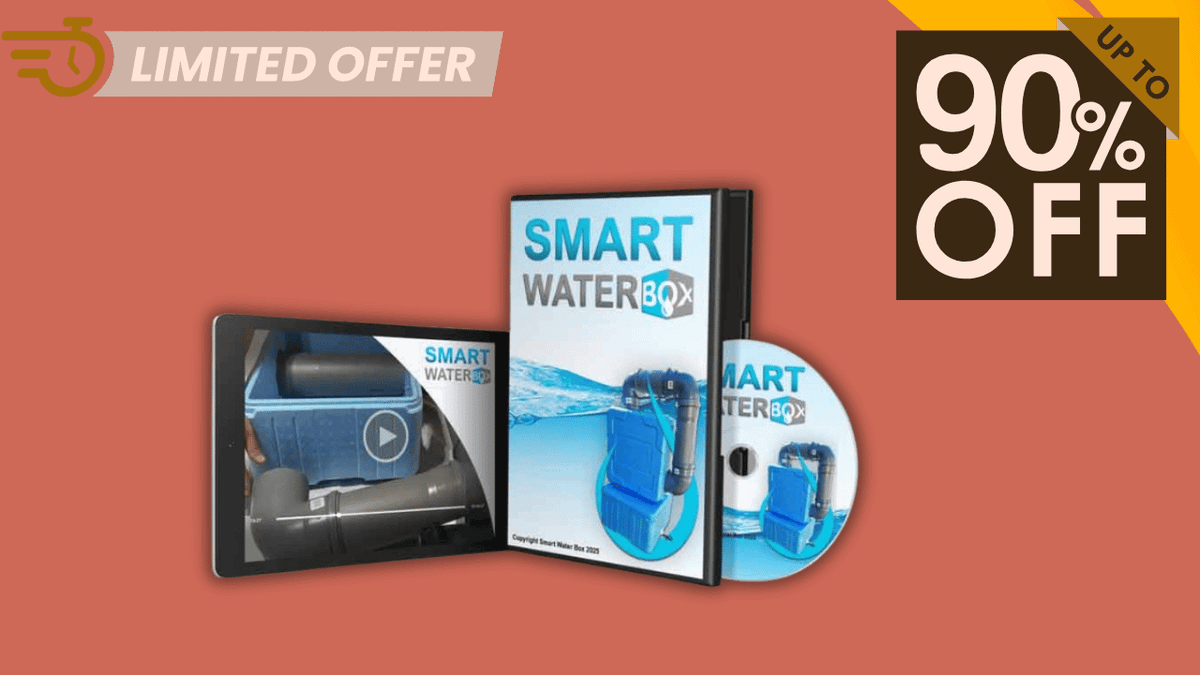
⭐ Ratings: 5/5 ⭐⭐⭐⭐⭐ (at least according to the loudest promo pages online)
📝 Reviews: Over 20,000 glowing reviews, dramatic testimonials, survival-forum comments, and emotionally overloaded “THIS CHANGED EVERYTHING” reactions
💵 Original Price: $149 (commonly advertised)
💵 Usual Price: $39
💵 Current Deal: $39 — though these “limited-time” countdowns somehow survive longer than some Hollywood marriages
⏰ Results Begin: Depends on humidity, setup quality, power availability, climate, maintenance, and whether reality decides to cooperate that day
📍 Made In: Not always clearly explained, which is… interesting
🧘♀️ Core Focus: DIY atmospheric water generation, emergency preparedness, survival-style water independence
✅ Who It’s For: USA homeowners, off-grid thinkers, emergency preppers, curious DIY people, and honestly some mildly paranoid dads with garages full of batteries
🔐 Refund: Usually promoted with refund-style guarantees — but always check the official terms yourself, don’t just vibe your way through checkout
🟢 Our Say? Interesting concept, maybe genuinely useful in certain conditions, BUT the internet advice around Smart Water Box in 2026 USA is an absolute carnival of exaggeration, confusion, emotional overreactions, and weird survival-fantasy nonsense.
The internet has become emotionally exhausting. There, I said it.
One minute you’re peacefully looking up baseball highlights or maybe trying to order a cheap camping chair — next thing you know, some dramatic ad explodes across your screen telling you the American water system is one bad Tuesday away from collapse and only a “military-inspired Smart Water Box” can protect your family from dehydration, chaos, and apparently the apocalypse too. The soundtrack in these ads always sounds like drums from a Viking funeral. Very subtle.
And honestly… part of me gets it.
Water anxiety in the USA is real now. Drought headlines, wildfires in California, weird infrastructure failures, hurricane seasons that look angrier every year, water contamination stories popping up on local news — it affects people emotionally. Fear crawls into the brain quietly, like cold air slipping under a door. Then marketing grabs that fear and turns it into a sales funnel with countdown timers and giant red buttons screaming ACT NOW BEFORE IT’S TOO LATE.
That’s where bad advice starts spreading.
Fast.
People online repeat things without checking details. Someone posts “I love this product, highly recommended, reliable, no scam, 100% legit,” and suddenly the comment section behaves like they discovered hidden treasure buried under a Bass Pro Shop parking lot.
Meanwhile, other people scream “TOTAL SCAM!” after watching half a YouTube video recorded by a guy eating sunflower seeds in his truck.
Nobody slows down anymore. Nobody sits quietly with information like a normal human being. Everything becomes emotional theater. Loud opinions. Bigger thumbnails. Bigger panic. Bigger promises.
So this article is different. Or at least trying to be. We’re going to expose the biggest misleading beliefs surrounding smart water box scam Reviews and Complaints 2026 USA — not with fake drama, but with blunt honesty, uncomfortable logic, a little sarcasm, and maybe a few side roads because human thoughts rarely move in perfect straight lines. Mine certainly don’t. I once spent twenty minutes thinking about whether raccoons understand mirrors. So. Here we are.
Anyway.
Let’s talk about the lies.
Lie #1: “If Thousands of People Gave It 5 Stars, It Must Be Completely Legit.”
Ah yes, the modern internet religion:
⭐ = truth.
By this logic, every viral TikTok recipe should taste amazing and every influencer selling “detox coffee” should receive a Nobel Prize in medicine.
Look — positive reviews matter. Of course they do. Humans naturally look for social proof. We want reassurance from the crowd because deep down we’re nervous little monkeys wearing sneakers and pretending we understand finance apps.
But online review culture in 2026? It’s messy. Like trying to eat spaghetti during turbulence.
A lot of Smart Water Box promotional pages throw around phrases like:
“I love this product!”
“No scam!”
“100% legit!”
“Highly recommended!”
“Changed my life!”
And maybe some of those reviews are genuine. Maybe. Probably some are. But emotional praise without detailed explanation doesn’t automatically equal proof. That’s important.
The FTC actually strengthened rules around deceptive testimonials and fake reviews because manipulated online feedback became such a widespread issue in America.
That alone should make buyers pause for a second.
Real reviews usually contain little imperfections. Tiny frustrations. Weird details. Human fingerprints.
Something like:
“Worked okay in humid Florida weather but setup took me an entire weekend.”
That sounds believable.
But when every review reads like:
“This revolutionary miracle restored my faith in humanity and healed my emotional aura…”
Yeah. Maybe don’t hand over your credit card quite yet.
And honestly? I’ve seen people buy products entirely because the review section felt emotionally comforting. That’s dangerous. Comfort isn’t proof. A scented candle can feel comforting too. Doesn’t mean it can produce drinking water from air.
The Reality Nobody Wants To Hear
Quantity of reviews matters less than quality of evidence.
Buyers in the USA should look for:
- detailed user experiences
- climate-specific results
- actual setup photos
- videos showing water output
- maintenance discussions
- honest criticism
- refund experiences
Perfect reviews are weird. Human experiences are usually messy, slightly contradictory, and occasionally irrational. Kind of like family road trips.
Lie #2: “Military Technology Means It Works Perfectly Everywhere.”
The phrase “military-inspired” has become internet catnip.
Military-grade flashlight. Military-grade protein powder. Military-grade socks probably. Somewhere out there, a man named Chad is absolutely selling military-grade beard oil beside a Jeep with oversized tires.
Smart Water Box marketing leans heavily into this atmosphere — survival vibes, emergency independence, futuristic technology, off-grid living, freedom from utility systems. It taps into something emotional in people. Especially Americans. We love rugged independence narratives. Give us dramatic music and phrases like “take control of your own water supply,” and suddenly everyone feels like they’re starring in a survival documentary narrated by Dennis Quaid.
But emotional atmosphere is not technical proof.
Atmospheric water generation is real, yes. Condensation technology exists. Dehumidifiers literally pull water from air every day. Science isn’t the issue here.
The issue is exaggeration.
Because some buyers start assuming:
“If it’s military-inspired, it must work flawlessly in every climate.”
Nope.
Humidity matters. Temperature matters. Airflow matters. Electricity matters. Maintenance matters. Physics stubbornly refuses to care about motivational slogans.
A system working in humid Louisiana may behave very differently in dry Arizona air. That’s not negativity. That’s literally how moisture works.
Nature doesn’t negotiate with marketing copy. Which feels poetic somehow.
What Actually Works
Instead of obsessing over dramatic labels, ask boring questions:
- What’s the real output?
- Under what conditions?
- How much electricity does it use?
- Does it work in dry climates?
- Has water quality been independently tested?
- Is this a guide or finished device?
Boring questions save people money.
Exciting slogans mostly sell hoodies and cryptocurrency courses.
Lie #3: “You Don’t Need To Read The Refund Policy If The Product Sounds Amazing.”
This one physically hurts my brain.
People will research pizza restaurants for forty-five minutes but buy emergency-preparedness products without reading refund terms. Incredible species we are. Truly.
And honestly, this is where many complaints around smart water box scam Reviews and Complaints 2026 USA probably begin — not necessarily because the product itself is fake, but because expectations and refund realities slam into each other like shopping carts in a Walmart parking lot during holiday season.
A page may scream:
“Risk-free!”
“No questions asked!”
“60-day guarantee!”
Sounds comforting.
But buyers still need to inspect:
- refund conditions
- digital product rules
- billing terms
- upsells
- recurring charges
- support response times
Because sometimes “easy refunds” become surprisingly complicated after payment. Like assembling furniture where every screw suddenly looks emotionally hostile.
I learned this lesson years ago after buying a “premium online masterclass” that promised effortless refunds. Effortless! Beautiful word. Took me six emails, three days, and one strangely aggressive chatbot named Trevor to get my money back.
Trevor knew what he did.
The Smarter Approach
Before purchasing anything online:
- screenshot sales claims
- save refund policies
- keep receipts
- document pricing
- save customer support details
It sounds paranoid until something goes wrong. Then suddenly you feel like Batman carrying emotional paperwork.
Transparent companies shouldn’t fear clear refund policies anyway.
Lie #4: “Smart Water Box Will Solve Every Water Problem Forever.”
This is where internet survival culture gets weird.
Some people online talk about Smart Water Box like it’s a magical infinite-water machine blessed by desert monks and NASA engineers working under moonlight.
Relax.
No single product should become your entire emergency water strategy.
Especially in the USA where environmental conditions vary wildly:
- hurricanes in Florida
- droughts in Arizona
- wildfires in California
- winter freezes in Texas
- infrastructure issues in older cities
Preparedness works best in layers.
Stored water. Portable filters. Purification tablets. Backup power. Emergency planning. Maybe atmospheric water systems too — if appropriate.
But the internet LOVES miracle narratives. One hidden trick. One revolutionary device. One “they don’t want you to know this” secret solution.
That’s fantasy thinking.
Real preparedness is actually kind of boring sometimes. Lists. Storage containers. Maintenance. Planning ahead. It’s less Mad Max and more organized garage shelves.
The Truth That Helps People
Treat Smart Water Box — or any similar system — as one possible tool, not a magical answer to civilization itself.
Because emergencies are unpredictable. They don’t care about sales pages or dramatic YouTube thumbnails with glowing red arrows.
Lie #5: “Anyone Asking Questions Is Just A Hater.”
This mindset is exhausting.
The internet turned products into sports teams. Either worship it completely or attack it violently. Nuance vanished somewhere around 2018 and never returned from vacation.
If someone asks:
“Can I see independent testing?”
Suddenly they’re accused of negativity.
If someone says:
“Humidity conditions matter.”
Apparently they hate innovation now.
No. They’re just thinking critically.
And honestly? Critical thinking has become weirdly rare online. Everything is emotional now. Fast reactions. Quick outrage. Instant certainty. Nobody pauses anymore. Nobody sits with uncertainty like a normal human being staring out a rainy window holding coffee. That image felt oddly specific just now.
Anyway.
Healthy skepticism is smart. Especially when emergency preparedness and water safety are involved.
Because this isn’t just some novelty gadget shaped like a banana or whatever. Water affects health. Safety. Survival planning. Families. Real-world consequences.
The Better Mindset
Ask uncomfortable questions:
- Is this a physical device or DIY guide?
- What’s the actual cost after materials?
- Is water testing required?
- Does it need electricity?
- What happens during power outages?
- Can beginners realistically build it?
Trustworthy products survive scrutiny.
Weak marketing campaigns fear it.
Simple.
The Emotional Truth Nobody Likes Admitting
Here’s what’s really happening underneath all this hype.
People are scared.
Not irrationally either.
Water concerns in the USA are becoming emotionally charged because environmental instability feels more visible now. News cycles amplify fear. Social media amplifies fear. Algorithms practically feed on fear like raccoons attacking leftover pizza.
So when a product appears promising:
“independence,”
“security,”
“control,”
“survival,”
…people emotionally lean toward it.
That doesn’t make buyers stupid.
It makes them human.
But emotional vulnerability mixed with aggressive marketing creates chaos. And the internet profits from chaos beautifully. Loud opinions spread faster than careful analysis every single time.
That’s why balanced conversations around smart water box scam Reviews and Complaints 2026 USA are so rare. Extreme opinions get attention. Calm nuance gets ignored.
Still important though.
Like vegetables.
Stop Letting Online Hype Borrow Your Brain
The internet rewards emotional intensity now. Not patience. Not nuance. Definitely not calm thinking.
The loudest people discussing Smart Water Box in 2026 USA are often the least balanced. One side screams “miracle survival breakthrough!” The other screams “total scam apocalypse!” Meanwhile reality sits quietly in the middle eating crackers while everybody fights in comment sections.
Smart buyers don’t blindly trust glowing reviews.
They also don’t panic because of scary accusations.
They investigate.
They verify claims.
They compare evidence.
They inspect refund policies.
They question emotional marketing.
They think slowly in a world addicted to fast reactions.
That’s how intelligent decisions happen now.
And honestly? Learning how to filter internet nonsense might be one of the most valuable survival skills of modern life. Not even exaggerating there. Once you stop reacting emotionally to every flashy headline or fear-based advertisement, something changes in your brain. You become calmer. Harder to manipulate. More difficult to pressure.
It feels strangely freeing.
Like finally leaving a noisy casino after standing under flashing lights for six straight hours.
So yes — maybe Smart Water Box works well for certain buyers in certain conditions. Maybe some people genuinely love it. Maybe some users absolutely believe it’s reliable, highly recommended, no scam, 100% legit.
But confidence should come from verified information.
Not emotional chaos disguised as certainty.
That’s the real lesson here.
FAQs About Smart Water Box Scam Reviews and Complaints 2026 USA
1. Is Smart Water Box actually a scam?
Not enough verified public evidence proves it’s a scam outright. But buyers should absolutely research carefully before purchasing. Check refund terms, independent demonstrations, climate suitability, and whether the offer is a digital guide or physical device.
2. Can Smart Water Box really create water from air?
Atmospheric water generation is a real scientific process. However, output depends heavily on humidity, temperature, airflow, power availability, and setup quality. Results in humid USA states may differ dramatically from dry regions.
3. Why are people searching for Smart Water Box complaints in 2026 USA?
Usually because buyers want clarity beyond emotional marketing. Common concerns include refund confusion, unrealistic expectations, setup difficulty, unclear product format, water output questions, and missing technical details.
4. Should USA buyers trust online reviews completely?
No. Reviews can help, but buyers should focus on detailed evidence rather than emotional praise alone. Look for realistic experiences, photos, videos, climate-based results, and balanced criticism.
5. What’s the smartest way to evaluate Smart Water Box?
Slow down. Seriously. Research humidity requirements, electricity costs, refund terms, maintenance expectations, water safety, and real-world user experiences before buying. Emotional urgency is terrible financial advice.
Related Hastags
#SmartWaterBox #SmartWaterBoxScam #SmartWaterBoxReview #SmartWaterBoxReviews2026 #SmartWaterBoxAppReview2026 #SmartWaterBoxBonus #SmartWaterBoxProduct #SmartWaterBoxPrice #SmartWaterBoxOffers #SmartWaterBoxBonuses #SmartWaterBoxBuy #SmartWaterBoxWebsite #SmartWaterBoxSite #SmartWaterBoxApp #SmartWaterBoxHonestReviews #SmartWaterBoxLatestReviews #SmartWaterBoxUsersExperience #SmartWaterBoxUsersReview #SmartWaterBoxDemo #SmartWaterBoxTutorial #SmartWaterBoxPurchaseOnline #SmartWaterBoxBuyit #SmartWaterBoxFraud #SmartWaterBoxWarning #SmartWaterBoxComplaint #SmartWaterBoxAlert